

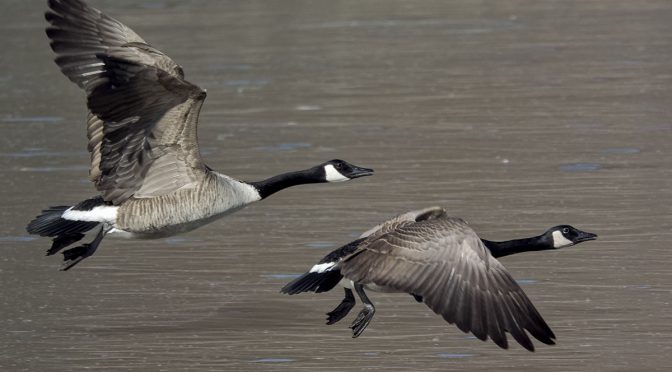
In the spring many bird species are migrating and finding mates. This can create some aggressive bird behaviour. During a recent visit to Hendrie Valley I had the opportunity to photograph a goose chase. This article shares a selection of eleven consecutive images.
Category Archives: Nikon 1 (1″ CX sensor)

Watching Tern Tail Feathers
Many bird photographers enjoy photographing terns. These quick, small birds can be a challenge to photograph, especially if one focuses on them fishing. Terns can also be quite aerobatic in their flight patterns. This can also yield some interesting images. Watching tern tail feathers can signal potential aerobatic flight moves or fishing behaviour.

Waterford Crystal Factory Tour
During a recent trip to Ireland my wife and I participated in the House of Waterford Crystal factory group tour. This hour long tour reviews the history of the company. It then walks participants through the company’s manufacturing facility in Waterford, Ireland. Even though my wife and I do not collect Waterford Crystal, we both enjoyed the informative tour.
All of the images in this article were captured hand-held while the tour was in progress. I used a Nikon 1 J5 and a 1 Nikkor 10-100 mm f/4-5.6 zoom lens.

Mute Swan In Flight At 60 FPS
This article features a series of 12 photographs of a mute swan in flight at 60 fps. After doing some experimentation last year, using this frame rate has become one of my favourite settings for bird photography.

Goose Taking Off From Water at 30 FPS
As a follow up to my article Geese In Flight at 30 FPS, this new posting shares a collection of 9 images of a goose taking off from water at 30 fps. All images were captured hand-held with a Nikon 1 V3 and a 1 Nikkor CX 70-300 mm f/4.5-5.6 zoom lens. When shooting at 30 frames per second with Nikon 1 gear, the first frame locks exposure and auto-focus for the balance of an image run. All photographs in this article were captured at 138 mm (efov 372.6 mm), f/5.6, 1/1600, ISO-250.
Geese in Flight at 30 FPS
In late March I had a bit of time to experiment photographing geese in flight at 30 fps. I haven’t used this frame rate very much in the past, deciding it was time I spent an entire outing shooting at 30 frames per second.

Trumpeter Swans in Flight
Back in early March, as I was returning home from doing some lighting checks for a client video project, my ‘little voice’ told me to make a quick stop at LaSalle Park. Luckily I had a Nikon 1 V3 fitted with a 1 Nikkor CX 70-300 mm zoom with me, which allowed me to photograph some trumpeter swans in flight.

Favourite Images from a Recent Visit to Bird Kingdom
My world has been a pretty significant blur as of late, with a number of client projects taking high priority. This article features a selection of my favourite images from a recent visit to Bird Kingdom. Well… not that recent… it was back in February… but I only had time to go through my photographs this evening.
Continue reading Favourite Images from a Recent Visit to Bird Kingdom

Benefits of Catch-as-Catch-Can Travel Photography
As photographers we may have different views on how to approach travel photography. Some folks like to allow multiple days to photograph key locations. This increases their chances of having ideal conditions. No doubt this can contribute to some truly spectacular photographs. It’s likely that this level of photographic quality wouldn’t have been possible if lighting and weather had been left to chance. A completely different approach is to purposely allow oneself to be at the mercy of Mother Nature’s whims. This article discusses the benefits of ‘catch-as-catch-can’ travel photography.
Continue reading Benefits of Catch-as-Catch-Can Travel Photography

Compression as a Composition Tool
This article discusses compression as a composition tool. It illustrates how our choice of focal length impacts image compression. When we’re first starting out on our photographic journeys, we sometimes see focal length choice in a binary manner. For example… telephoto focal lengths for nature, and wide angle focal lengths for landscape. Broadening our use of focal lengths increases our creative latitude.