

This article features a selection of photographs of small perched birds captured handheld during a recent visit to Hendrie Valley.
NOTE: Click on images to enlarge. To view this article in a range of other languages click on the Canadian flag in the upper right corner.
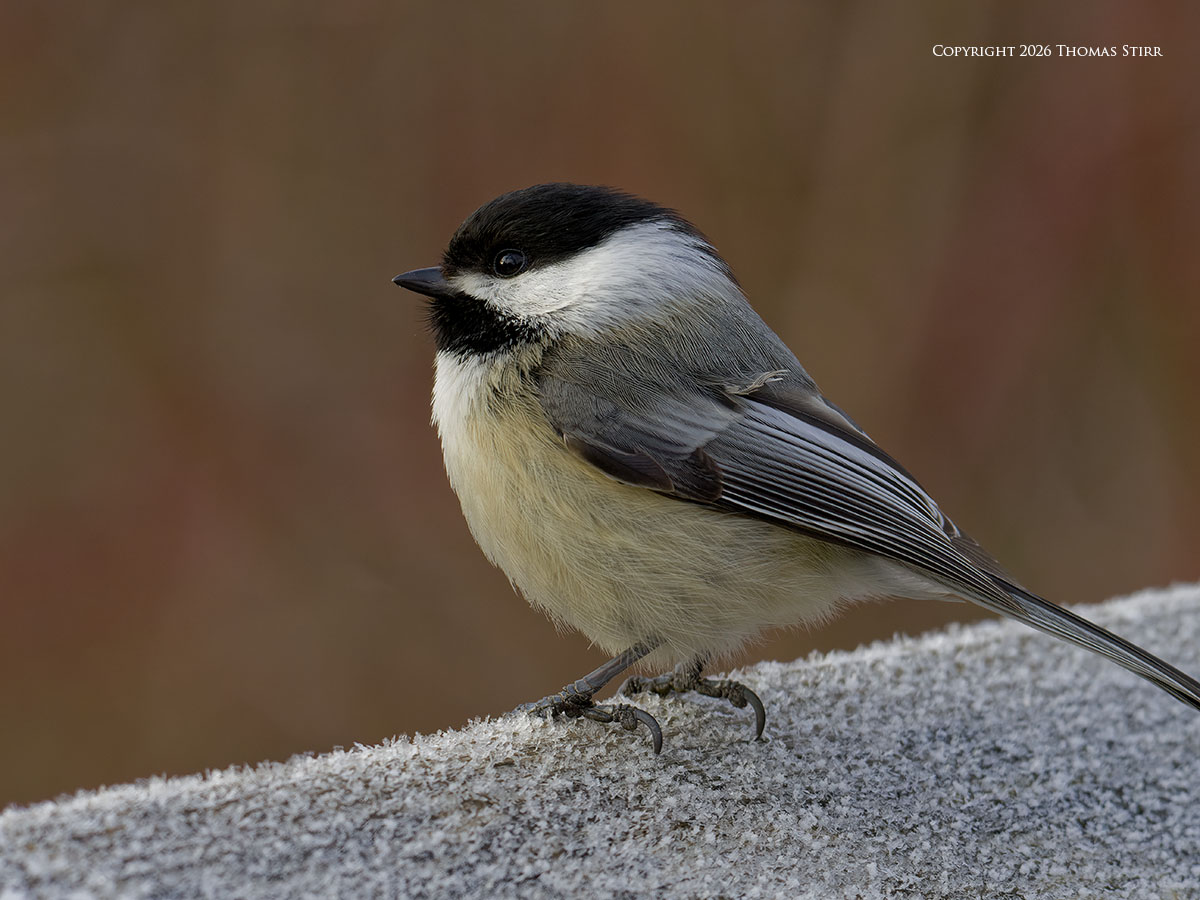
Before the spring migration is in full swing its important for me to get out in the field to practice photographing small perched birds.
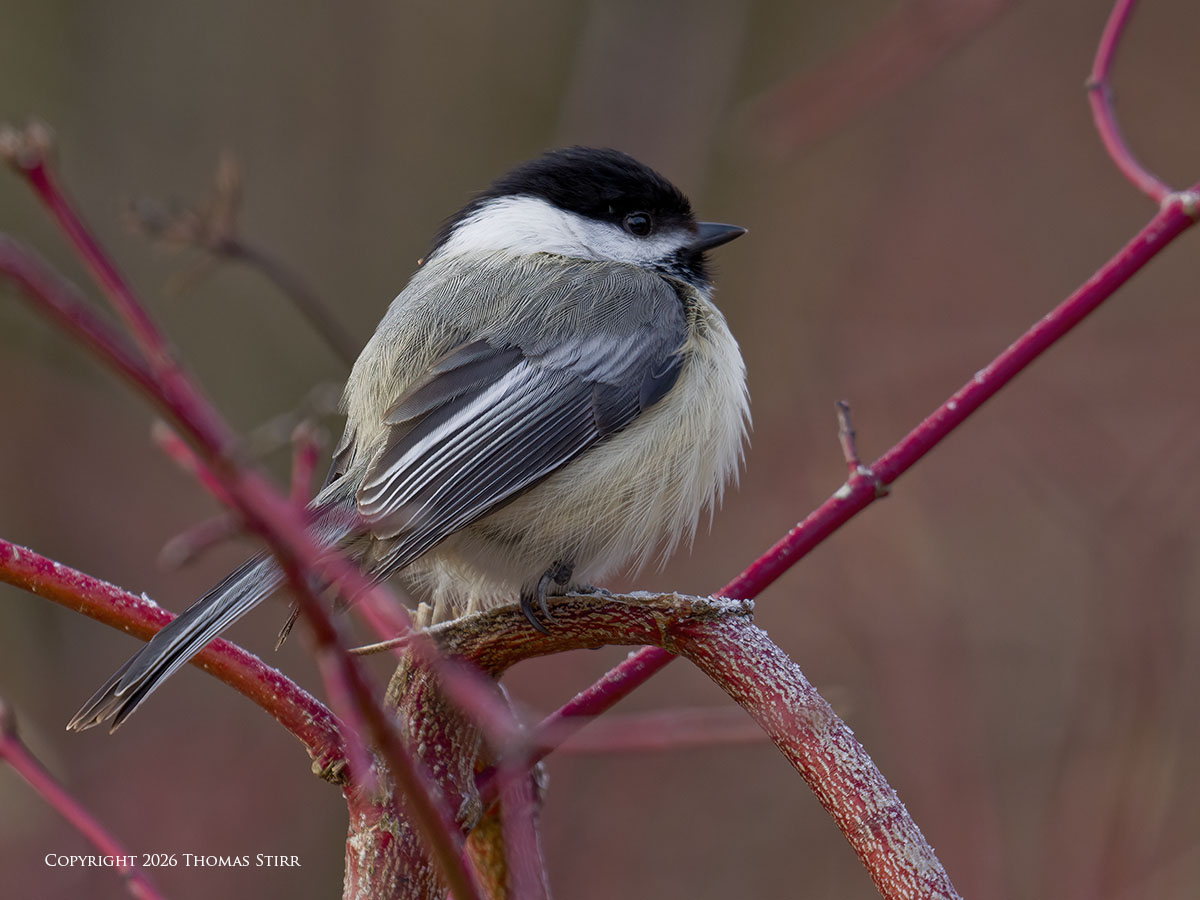
The fact that there isn’t a wide variety of local species available to photograph this time of year is irrelevant. As is the case with all of my practice sessions, it doesn’t matter to me if I end up with any keepers.
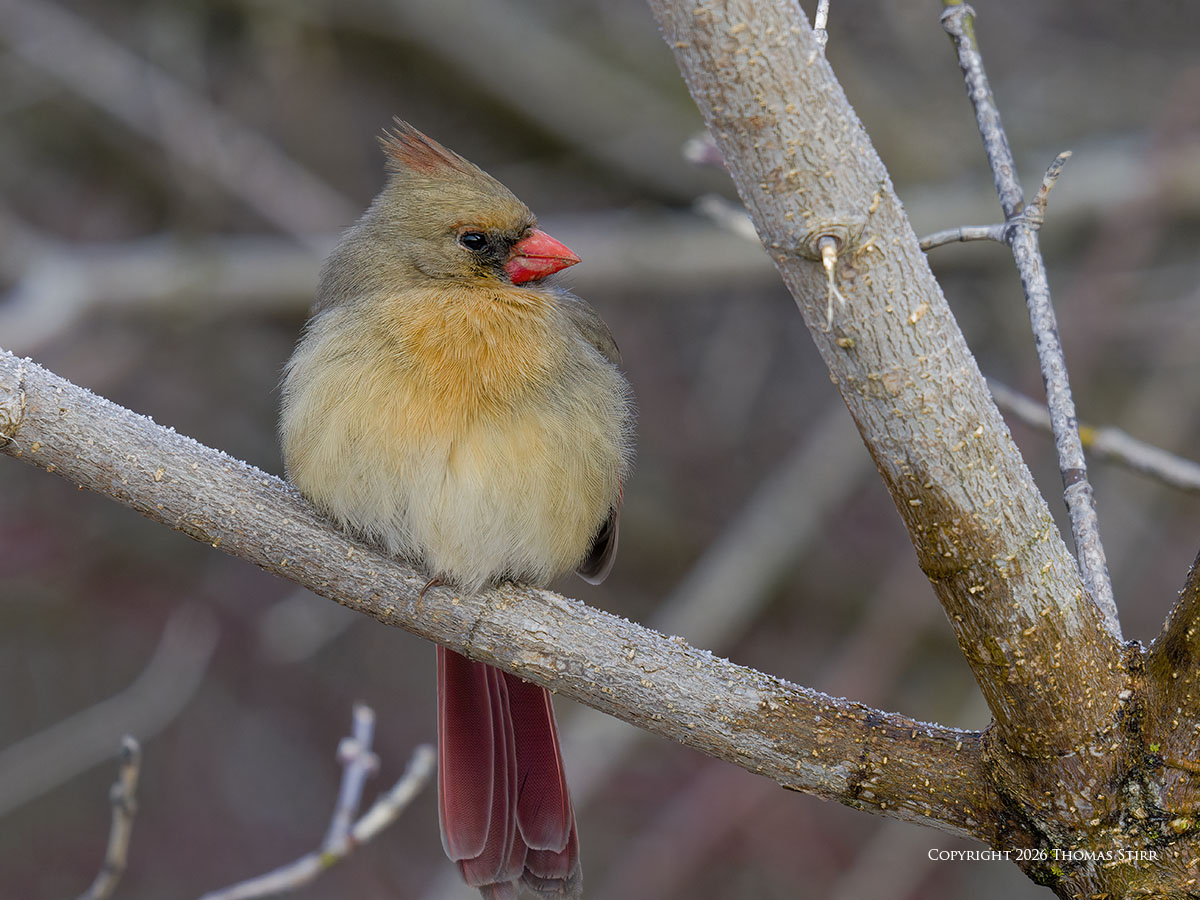
What is important is to reinforce my eye/hand coordination, practice soft eyes technique to improve my peripheral vision, and recognize potential bird compositions.
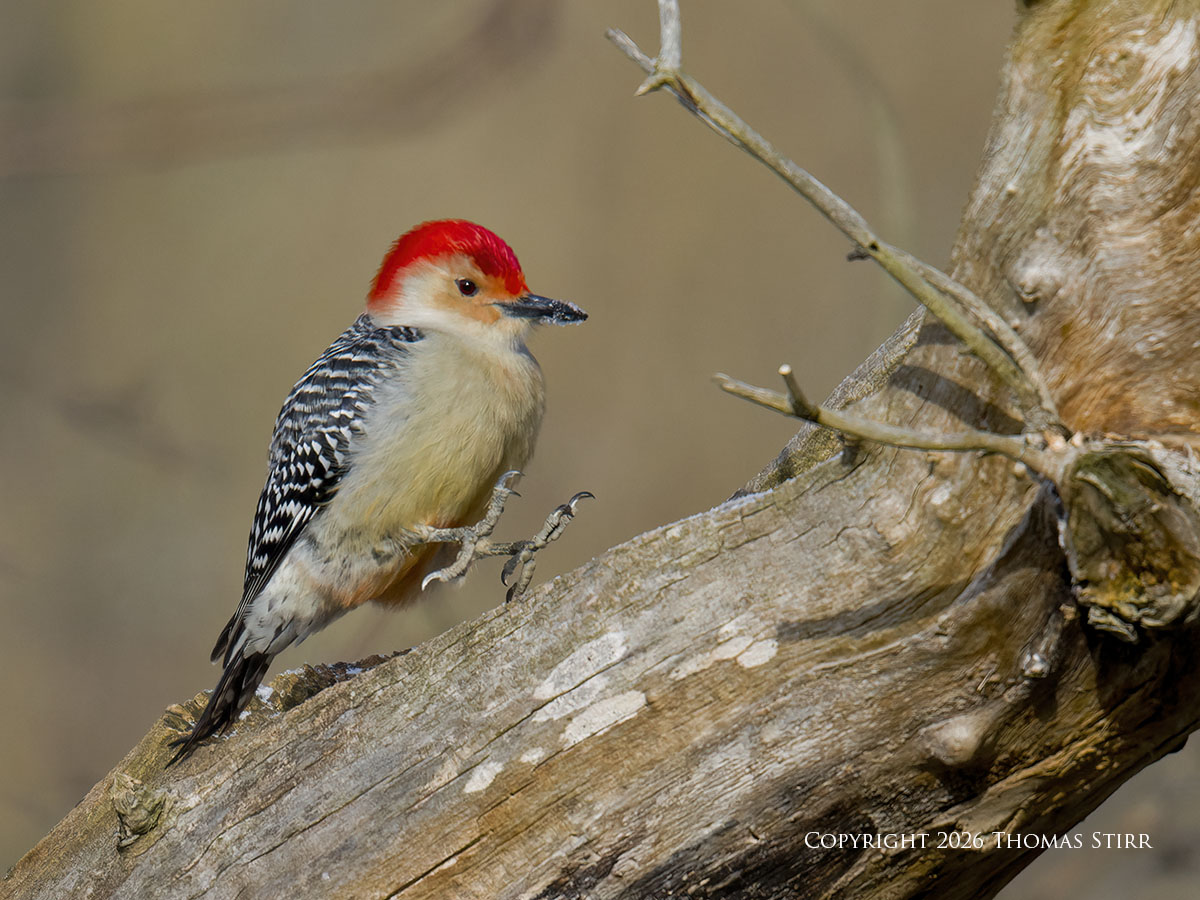
For example, practicing soft eyes allowed me to notice some small movements on some tree branches about 20 metres away. I quickly switched my Custom Mode so I could photograph the woodpecker above using Pro Capture H. This enabled me to capture some images of it in mid-hop.
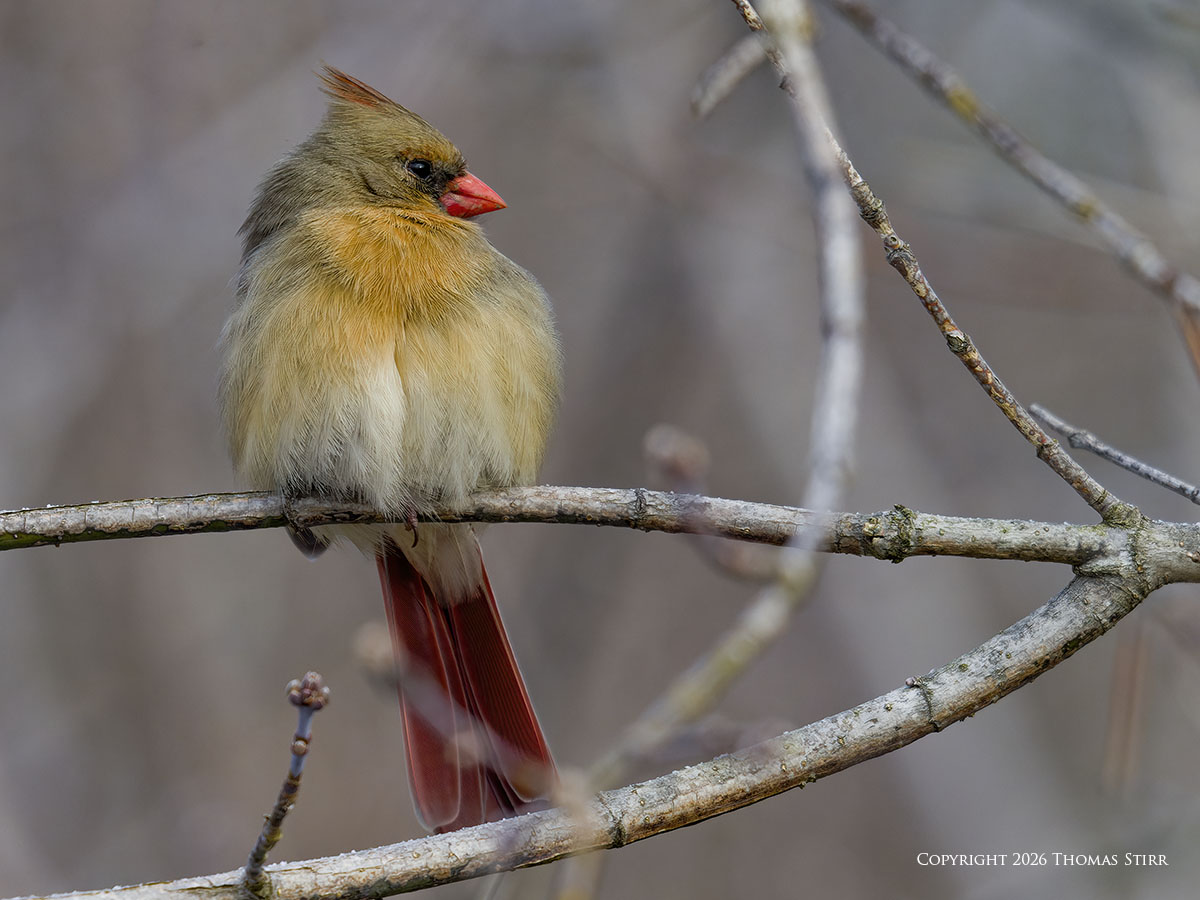
During a pre-migration practice session I observe small birds and attempt to create images when their bodies are in interesting positions and there is some catch light in their eyes.
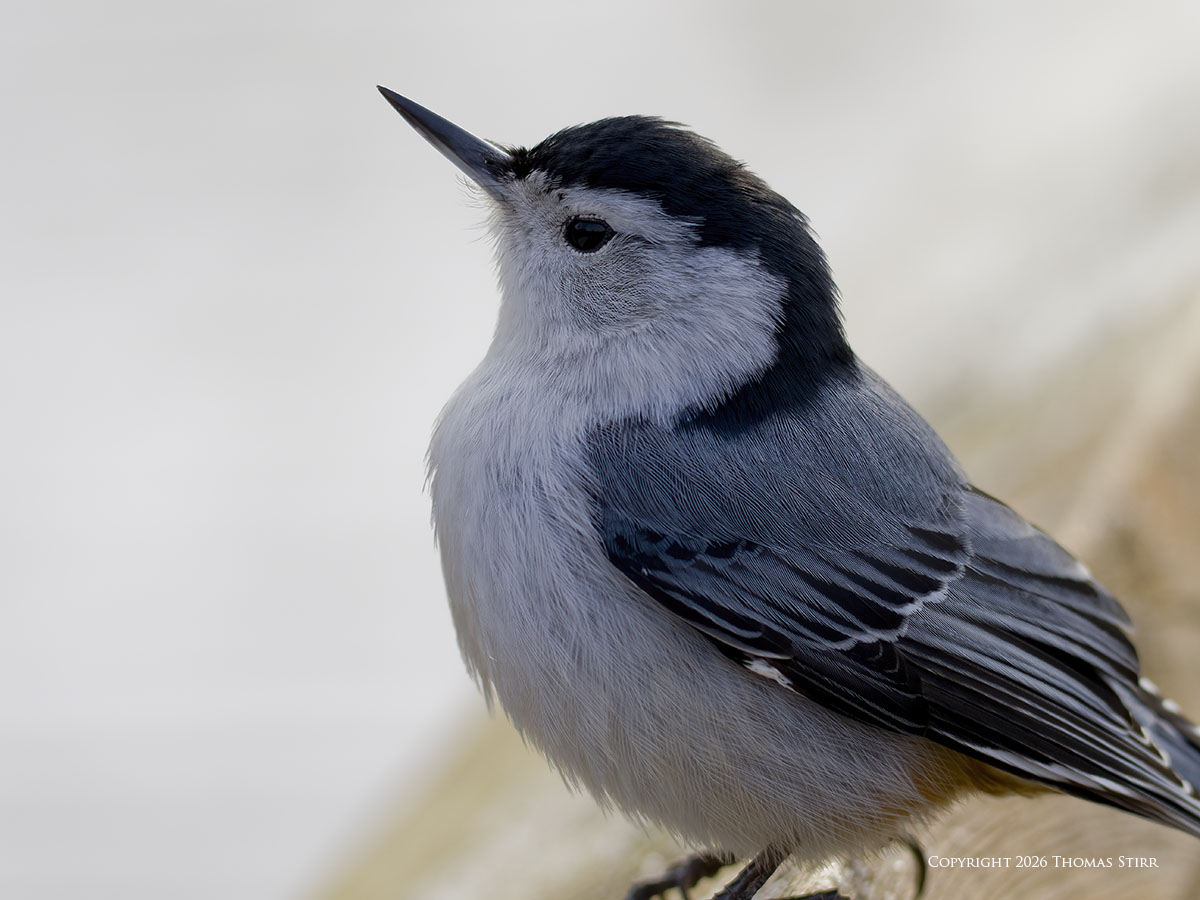
Some unexpected things can happen, like this friendly nuthatch moving to within 1.2 metres of me. I had to quickly change the Focus Limiter setting on my lens in order to capture this image. There is no catch light in the nuthatch’s eye as my body put the bird in shade.
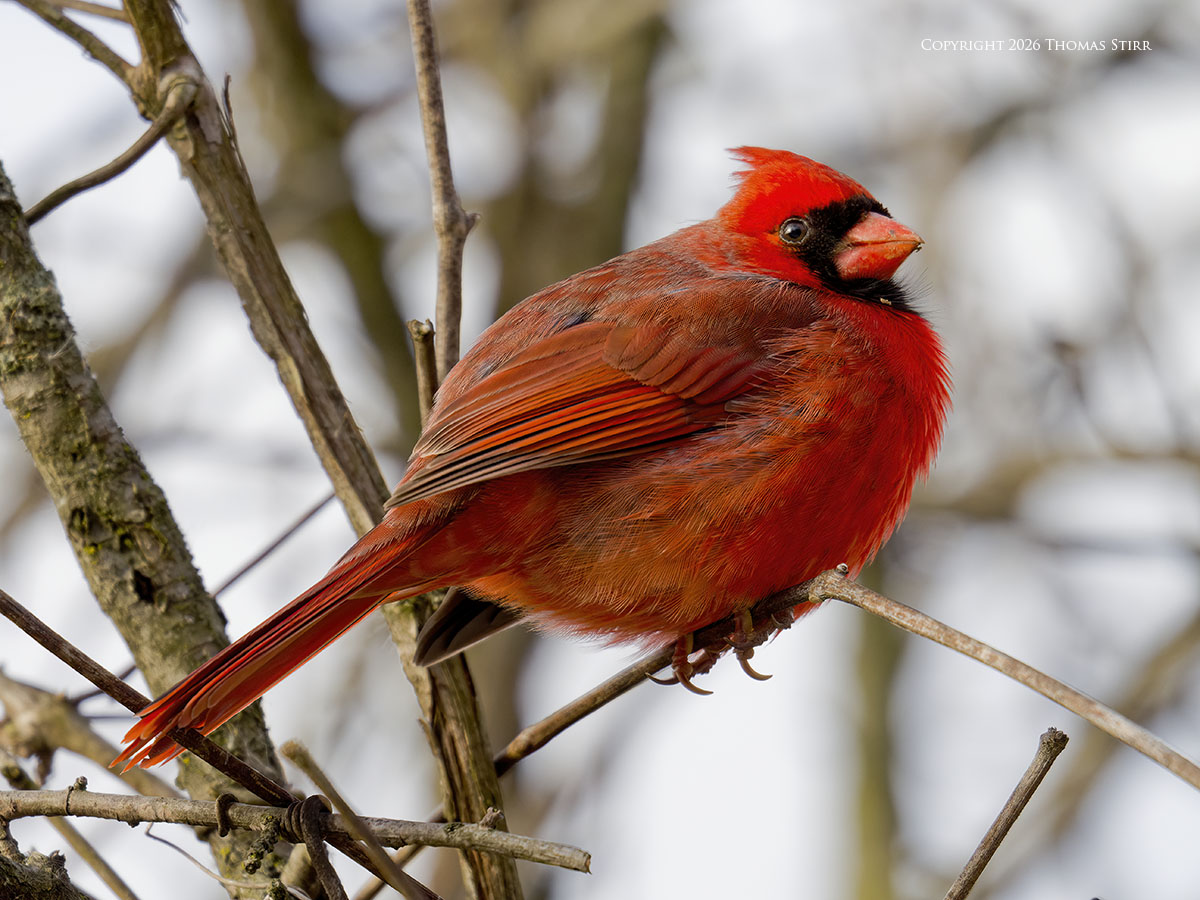
I find it useful to try to compose my images as full frame captures whenever possible. This helps to reinforce shot discipline.
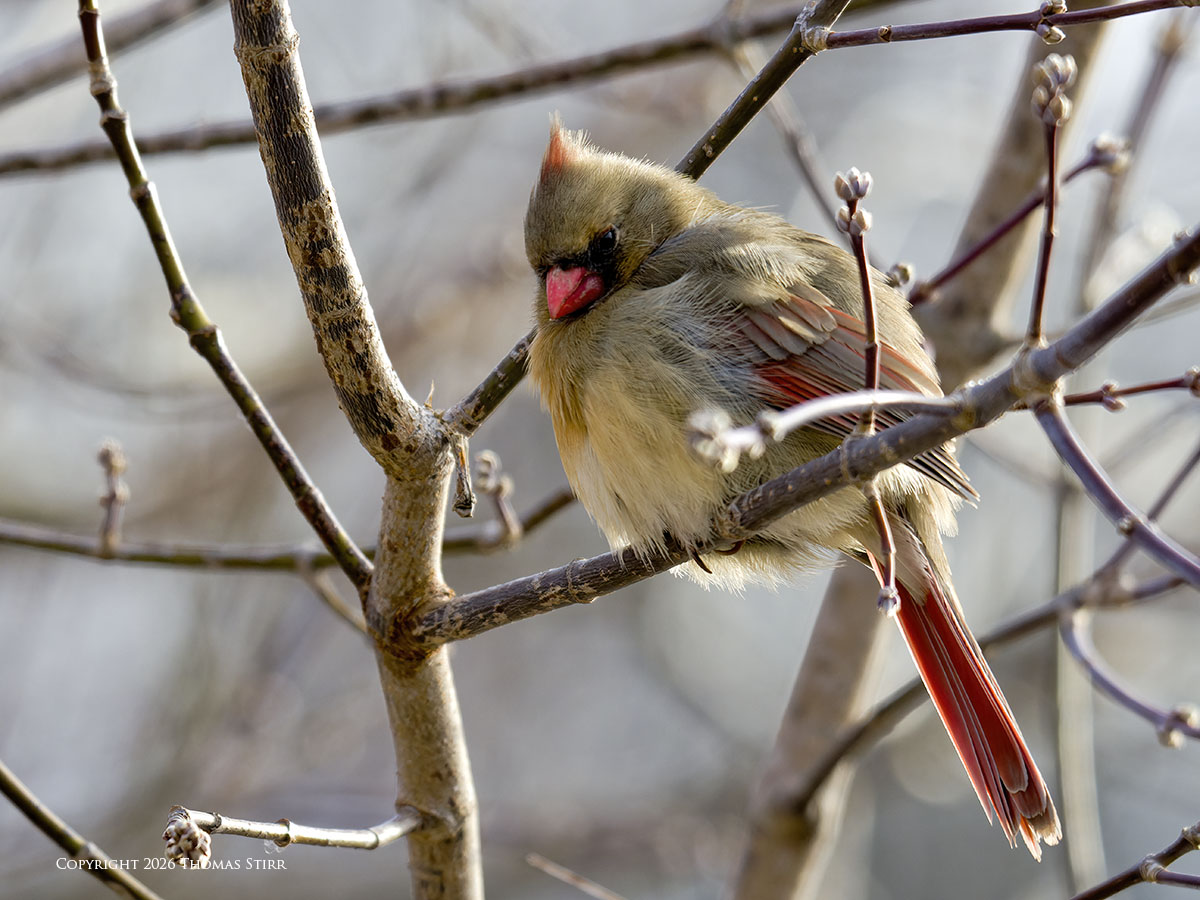
Given how quickly small birds move around from branch to branch this isn’t always possible. Creating photographs of small perched birds are challenging in their own right.
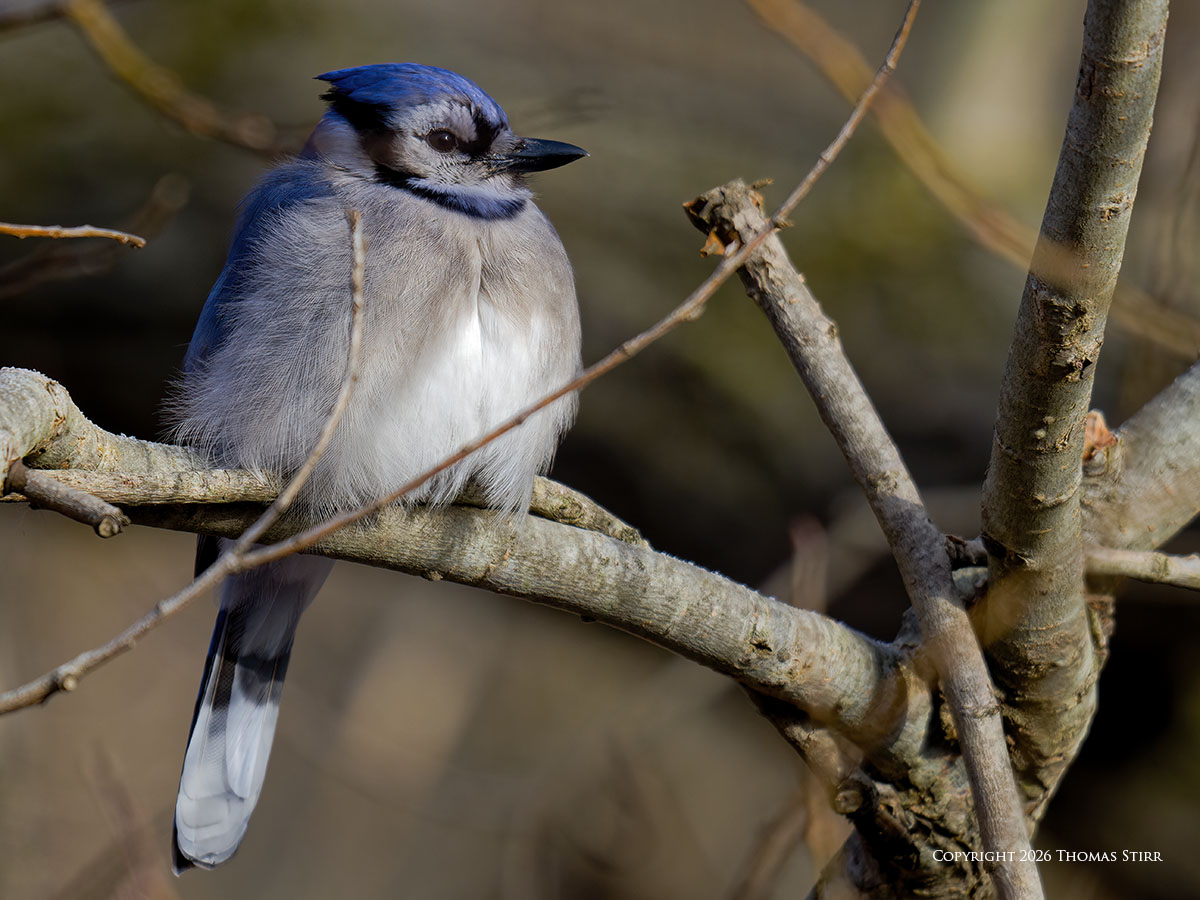
Dedicating at least a portion of my time trying to create photographs of small perched birds using full frame captures is of benefit as it helps to improve my composition response time.
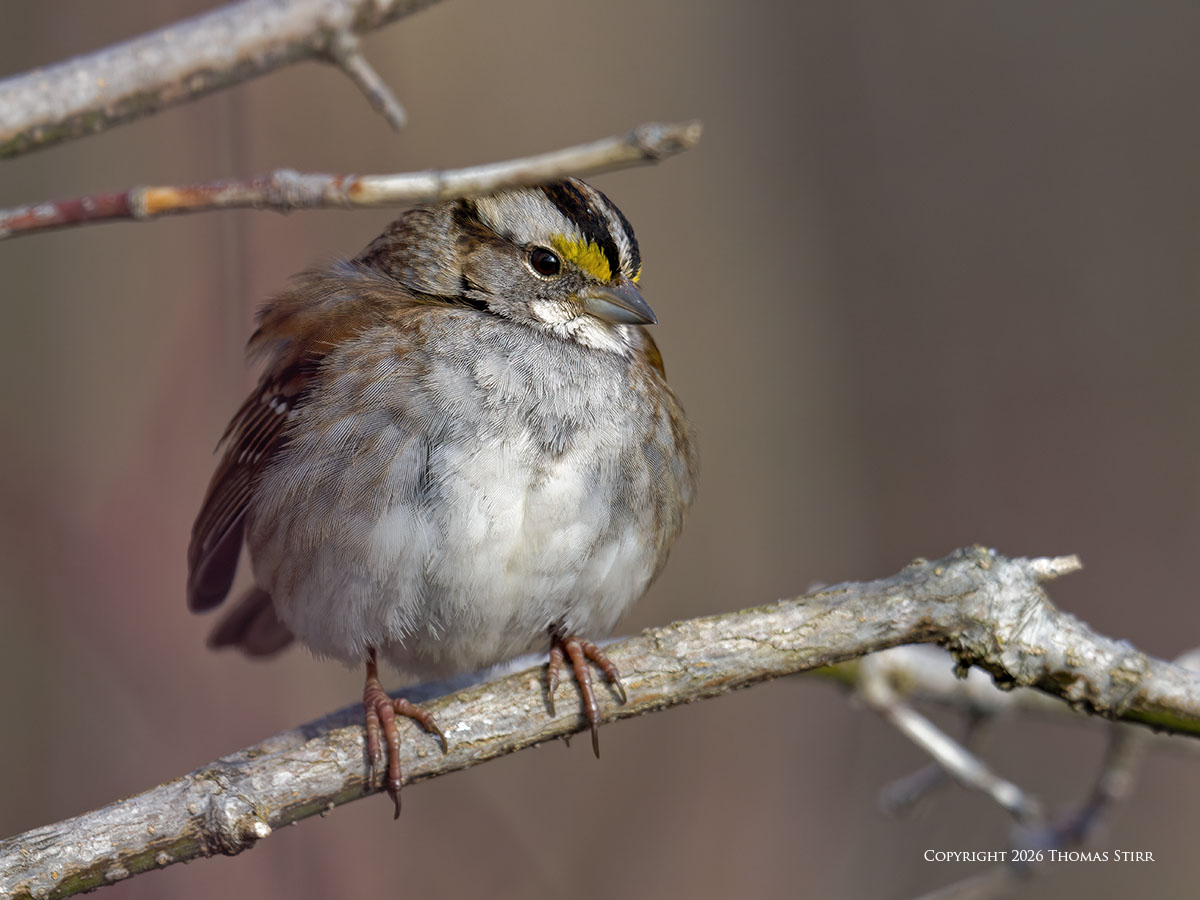
Reminding myself about the nuances of using Bird Detection AI is also something that I try to fit into practice sessions early in the birding season.
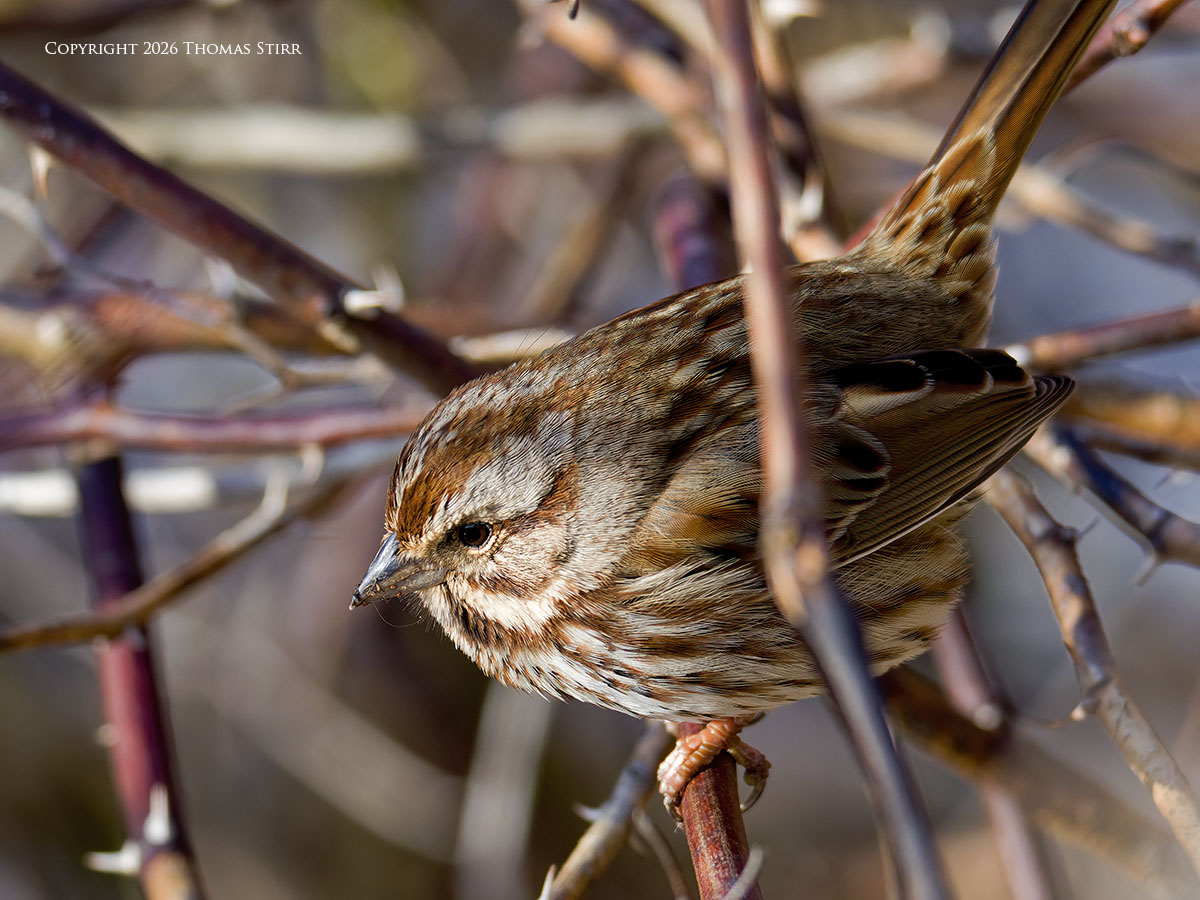
As is the case with all of my other photography, I always use a single auto-focus point when shooting with Bird Detection AI. I actively move this single point around in my composition to adjust for twigs and branches in a composition. This can be very helpful when creating photographs of small perched birds with potential distractions in the foreground.
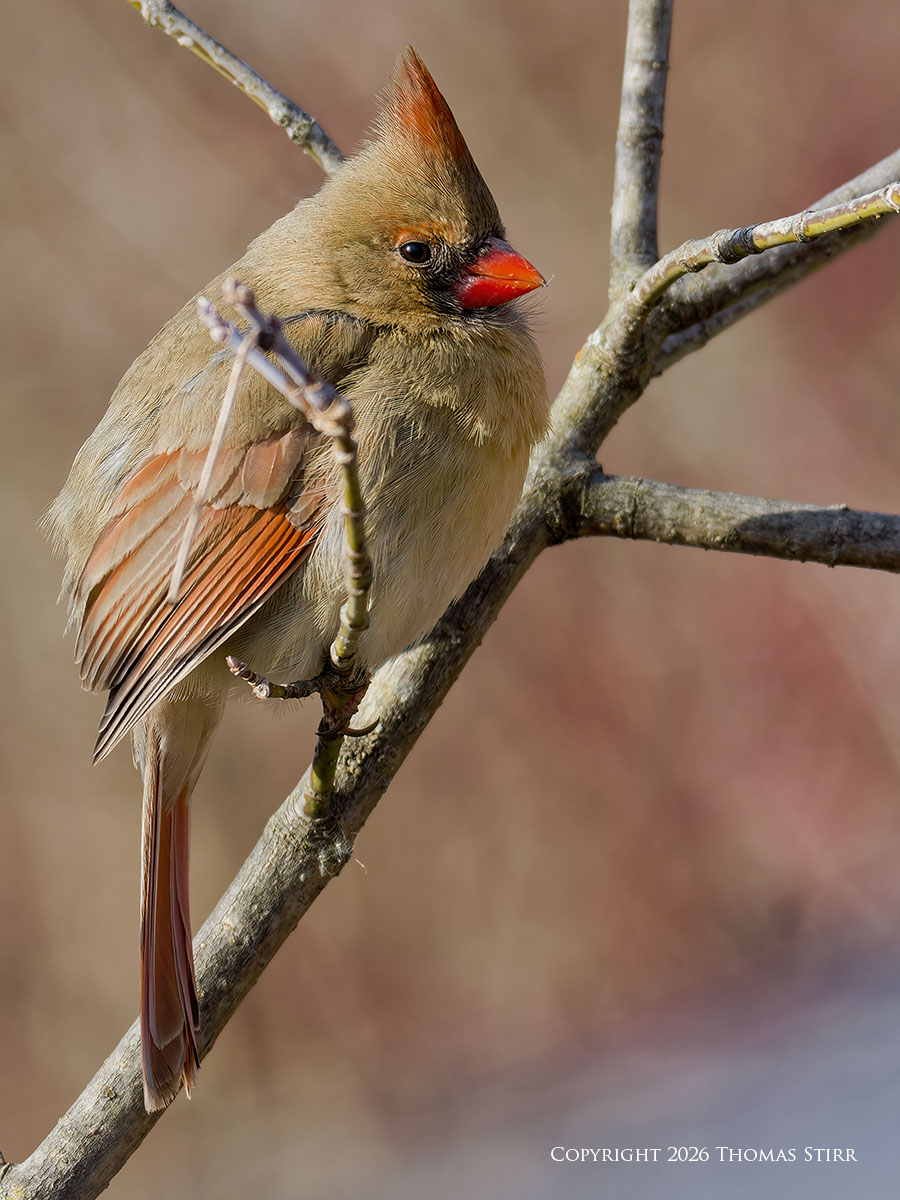
Depending on the environment in which a subject bird is perched it can be challenging to find muted backgrounds for my compositions. Actively looking for smooth backgrounds is part of a practice session. I typically shoot my lenses wide open when creating photographs of small perched birds.
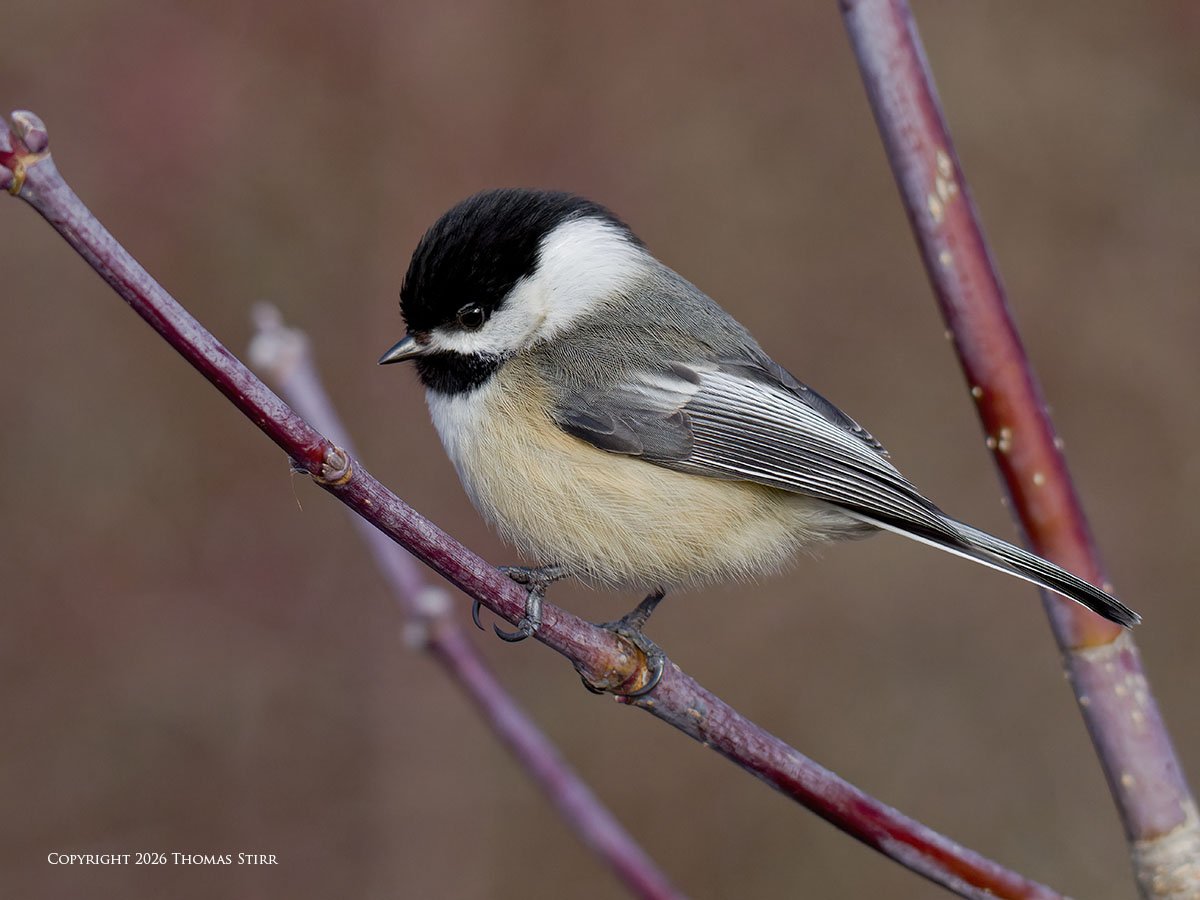
Some small perched birds can be cooperative and stay in one general area for a few minutes… giving me time to ‘work the subject’. For example, in the image above I was able to incorporate a corner exit into one of my full frame captures.
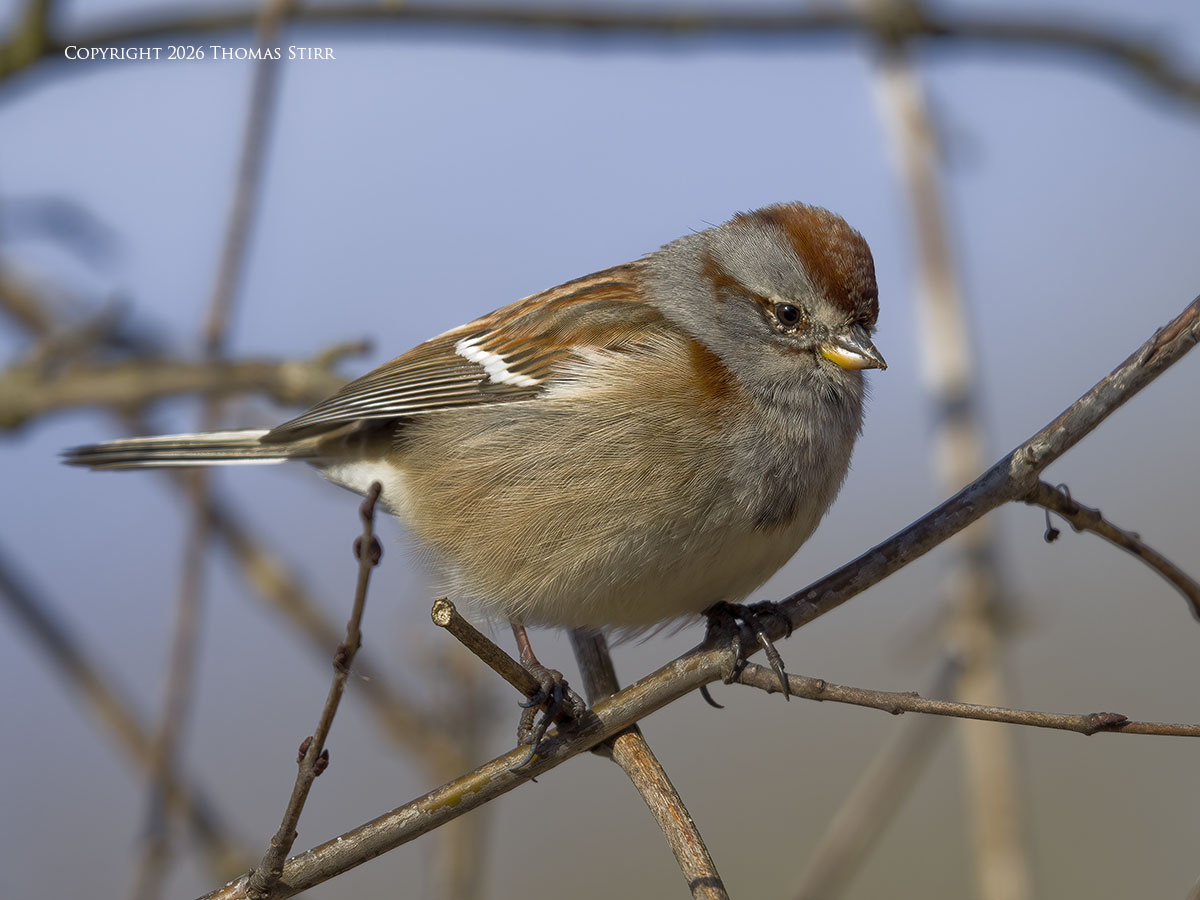
Practicing before spring migration with commonly found small perched birds gets me ready to photograph more unusual species that pass through our area.
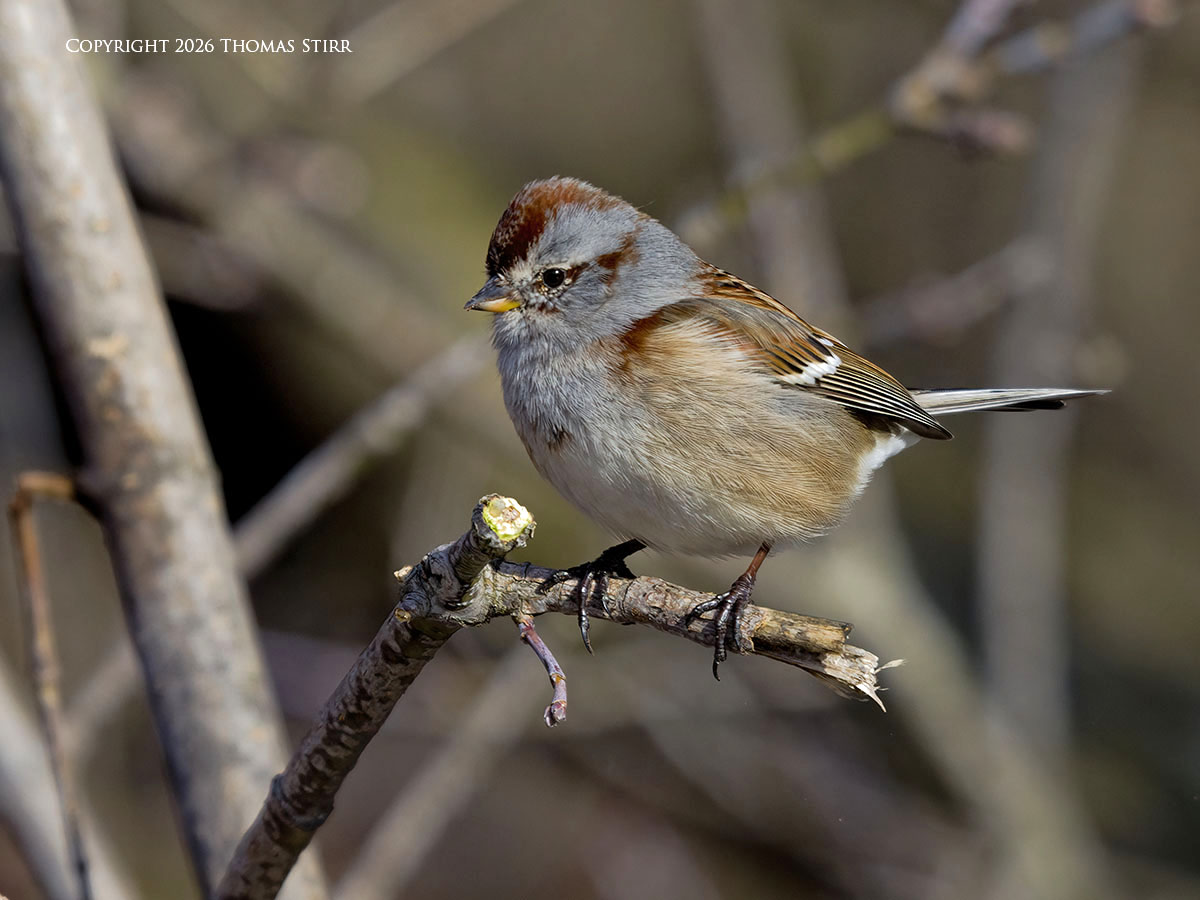
I have the Custom Modes on my E-M1X set up so I can quickly switch back and forth between the modes I use most frequently. For me this means that C-1 is dedicated to Pro Capture L. C-2 is programmed for Pro Capture H. C-3 is my setting for Bird Detection AI. And, C-4 is used for Handheld In-Camera Focus Stacking.
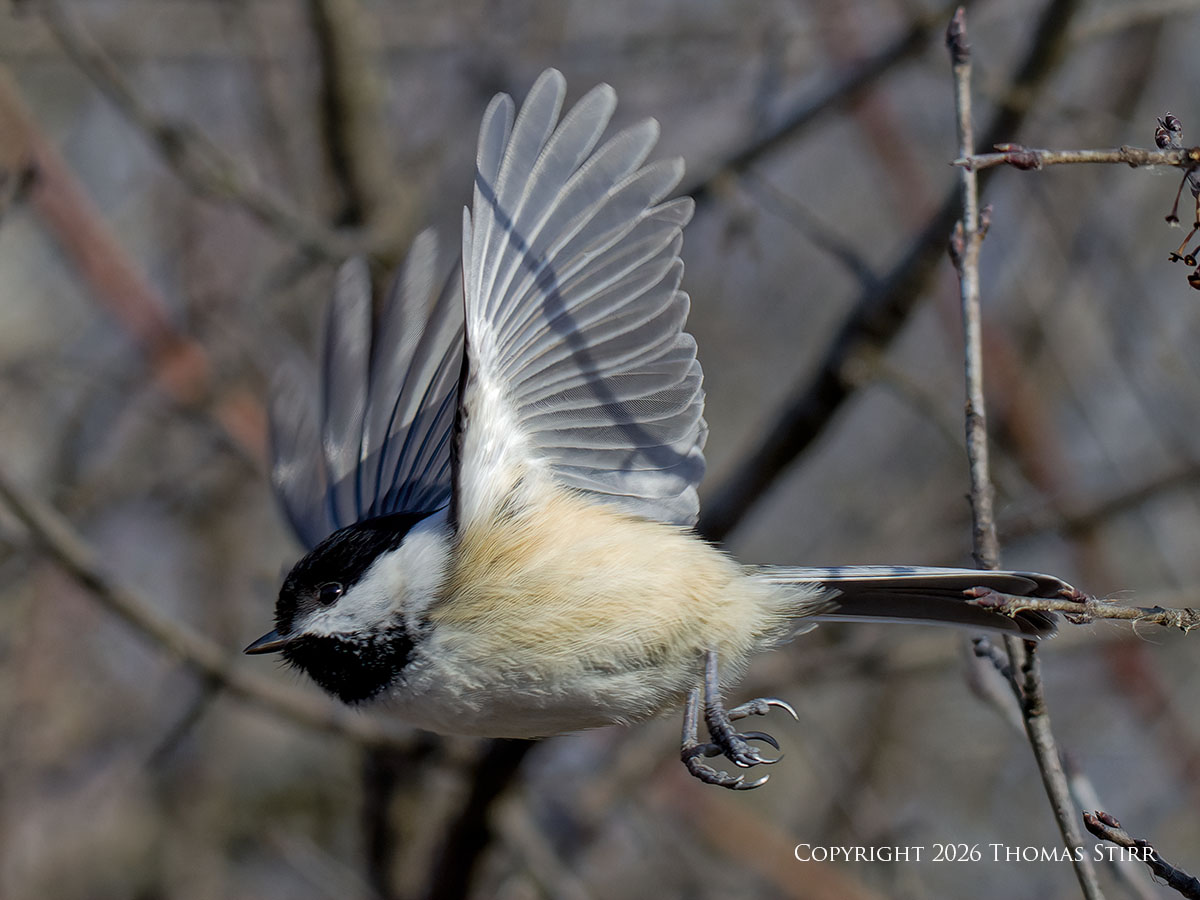
Regular readers know that one of my joys is to photograph birds-in-flight. Suffice to say that I couldn’t resist capturing a few action images during this visit to Hendrie Valley.
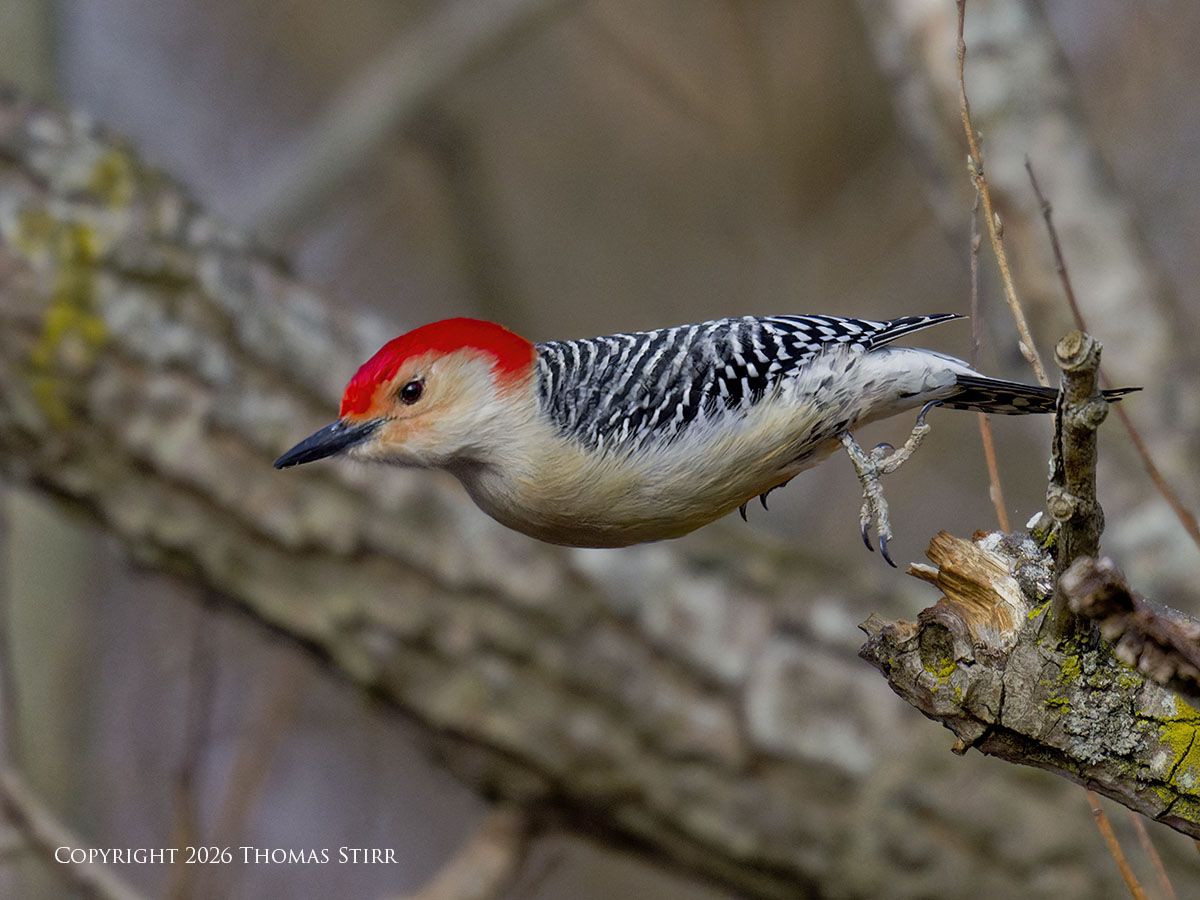
The reach of my M.Zuiko 150-600 mm f/5-6.3 IS came in handy when photographing this woodpecker launching into flight from 16 metres away. My zoom was fully extended to 600 mm (efov 1200 mm) to capture this image.
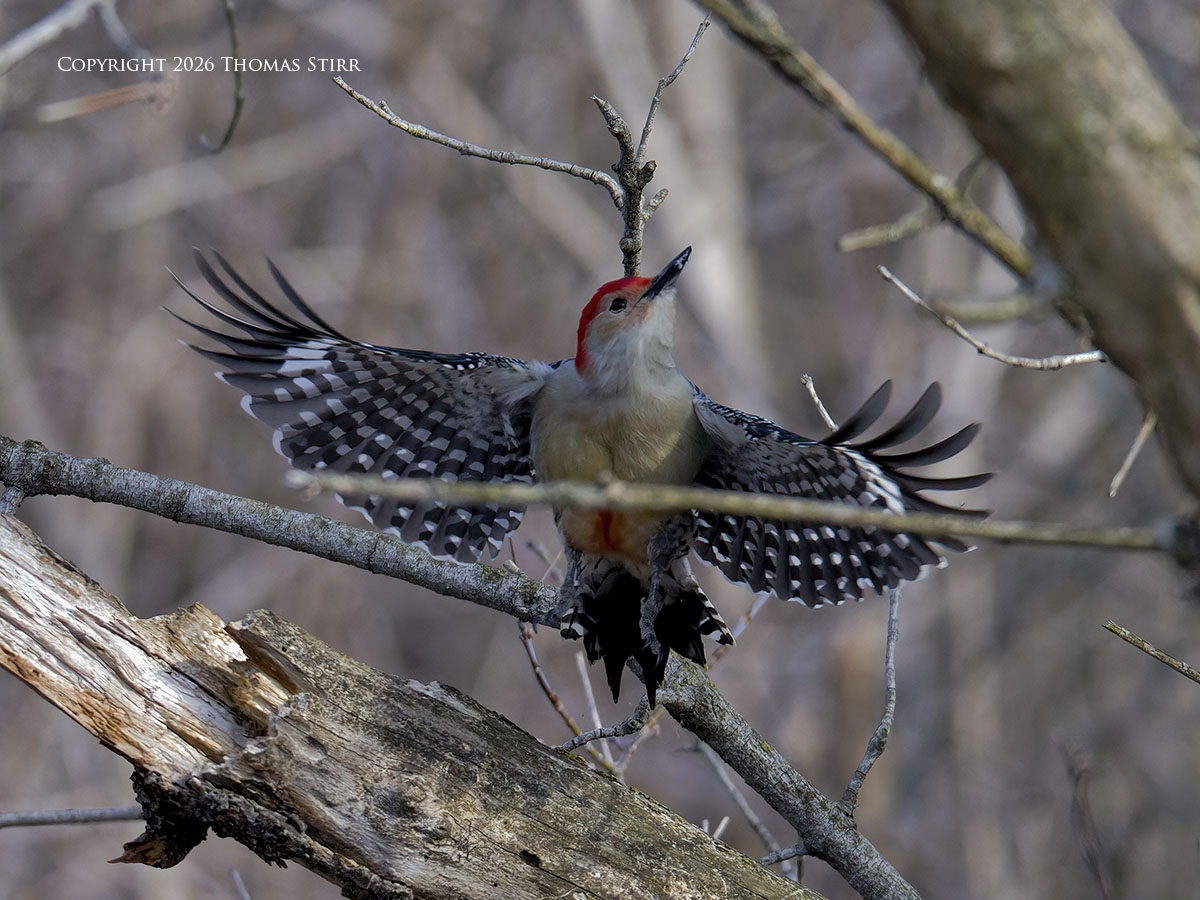
This unplanned image of a woodpecker taking flight from inside a maze of branches was one of my favourite photographs from my recent visit to Hendrie Valley.
Technical Note
Photographs were captured handheld using camera gear as noted in the EXIF data. All images were created from RAW files using my standard process in post. This is the 1,517 article published on this website since its original inception in 2015.
How you can keep this website advertising free
My intent is to keep this photography blog advertising free. If you enjoyed this article and/or my website and would like to support my work, you can purchase an eBook, or make a donation through PayPal (see Donate box below). Both are most appreciated.
You may enjoy bird photography, and if so our 188 page eBook Handheld Bird Photography may be of interest. It is available for download for an investment of $14.99 CDN. The best viewing experience of this eBook will be at 100% using Adobe Acrobat Reader.
Sometimes all we need as photographers is a bit of inspiration. We hope you can find some of that inside Finding Visual Expression II.

Finding Visual Expression II is available for download for an investment of $11.99 CDN. The best viewing experience of this eBook will be at 100% using Adobe Acrobat Reader.
You may be interested in all of the 30 concepts covered in both of these related eBooks. If so, you may want to also consider Finding Visual Expression.

Finding Visual Expression is available for download for an investment of $11.99 Cdn. The best viewing experience of this eBook will be at 100% using Adobe Acrobat Reader.
Our other eBooks include Images of Ireland, New Zealand Tip-to-Tip, Nikon 1: The Little Camera That Could, Desert & Mountain Memories, Images of Greece, Nova Scotia Photography Tour, and a business leadership parable… Balancing Eggs.
If you click on the Donate button below you will find that there are three donation options: $7.50, $10.00 and $20.00. All are in Canadian funds. Plus, you can choose a different amount if you want. You can also increase your donation amount to help offset our costs associated with accepting your donation through PayPal. An ongoing, monthly contribution to support our work can also be done through the PayPal Donate button below.
You can make your donation through your PayPal account, or by using a number of credit card options.
Word of mouth is the best form of endorsement. If you like our website please let your friends and associates know about our work. Linking to this site or to specific articles is allowed with proper acknowledgement. Reproducing articles, or any of the images contained in them, on another website or in any social media posting is a Copyright infringement.
Article and images are Copyright 2026 Thomas Stirr. All rights reserved. No use, duplication or adaptation of any kind is allowed without written consent. If you see this article reproduced anywhere else it is an unauthorized and illegal use. Posting comments on offending websites and calling out individuals who steal intellectual property is always appreciated!
Hi again Tom superb images as always.
I too love that final shot with the with the woodpecker in flight, it’s something I must try
Hi Mark,
I’m glad you enjoyed the images, and the woodpecker taking flight in particular. My wife and I are in the final proofreading stage of my new eBook so we are close to publishing that here on the website. I have taken some time to do some new photography the past couple of weeks so I should have more articles out that feature current images.
Tom