

This article features a selection of Handheld In-Camera Focus Stacked HHFS images captured with the M.Zuiko 150-600 telephoto zoom. All of the photographs featured in this article were unplanned captures.
NOTE: Click on images to enlarge. To view this article in a range of other languages click on the Canadian flag in the upper right corner.
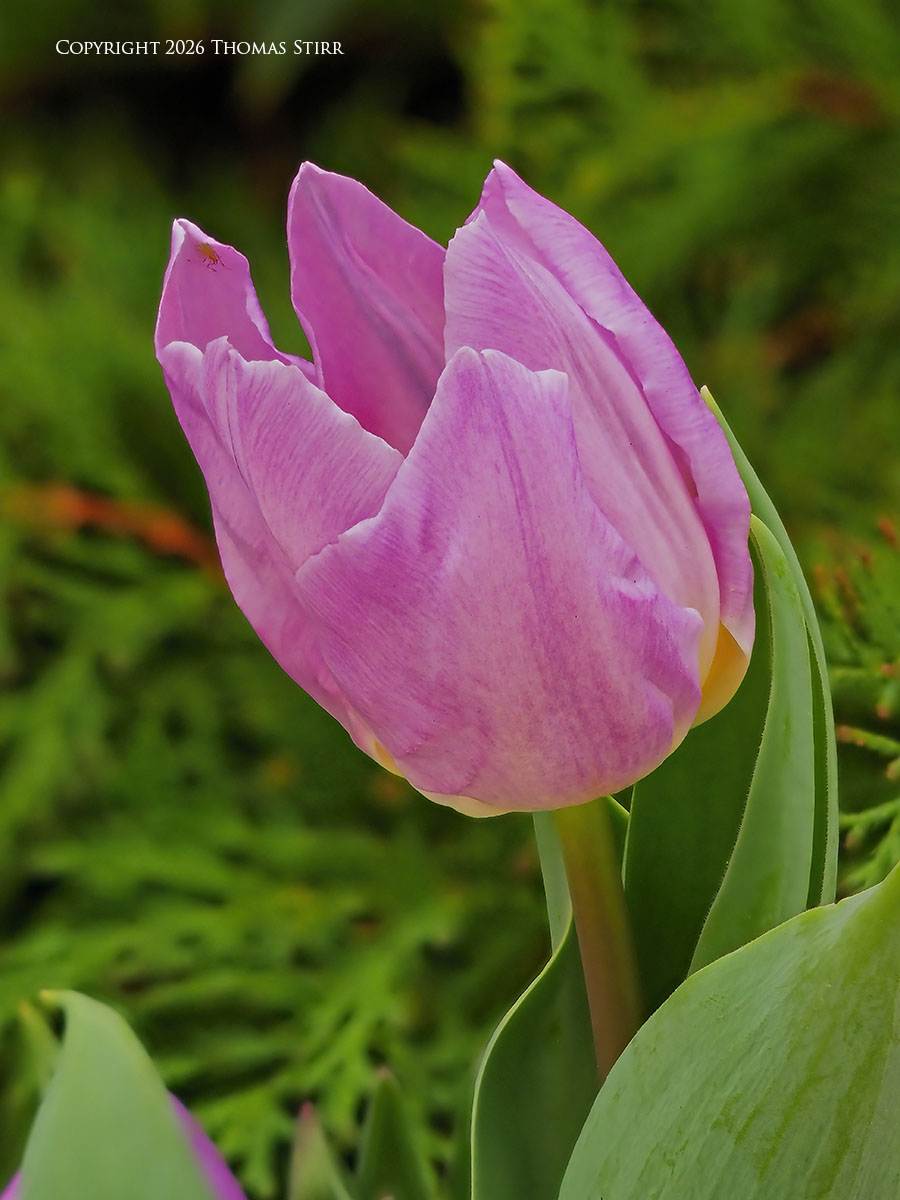
A friend and I had been out photographing birds at Hendrie Valley and LaSalle Park to get in some practice before the spring bird migration season.
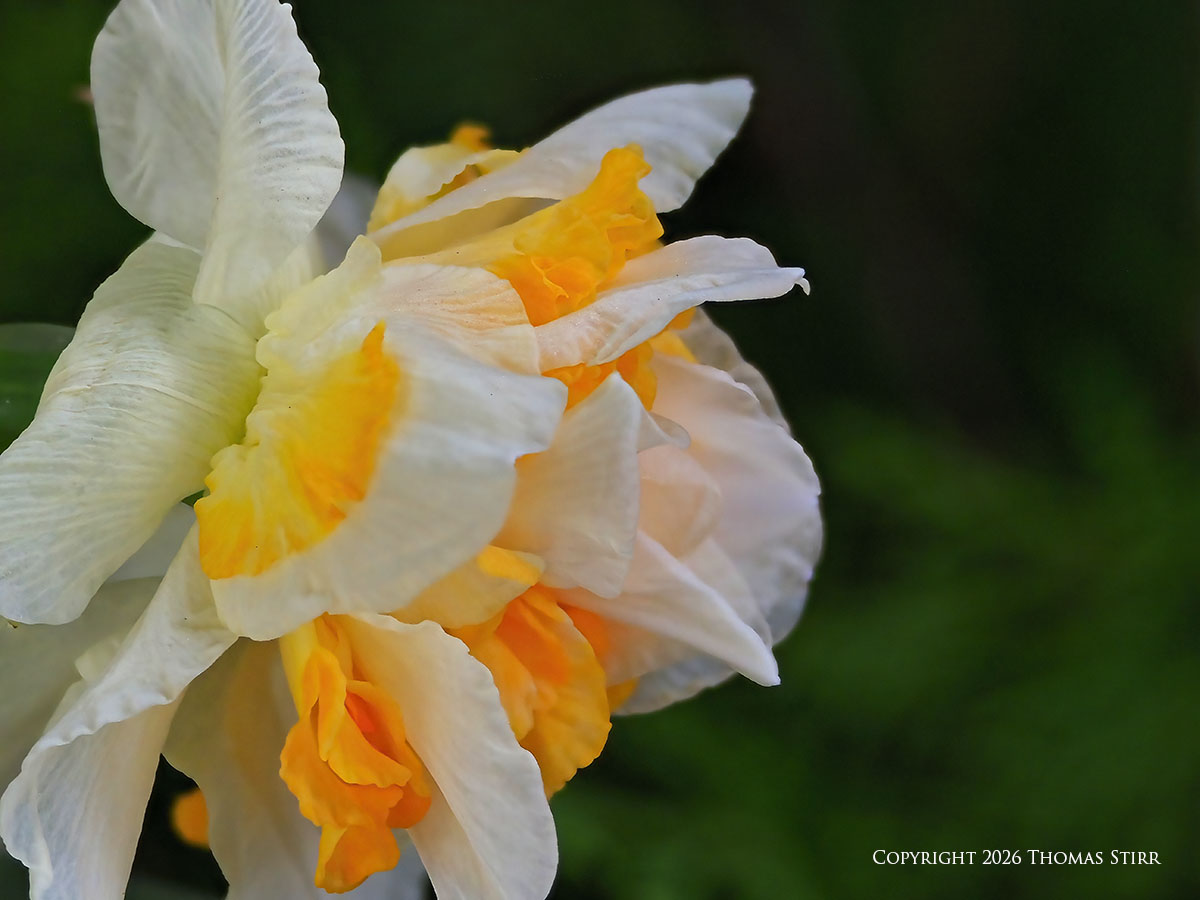
After leaving LaSalle Park he suggested that we visit the Gage Park Tropical Greenhouse in Hamilton. The only lens that I had brought with me was my M.Zuiko 150-600 mm f/5-6.3 IS telephoto zoom.
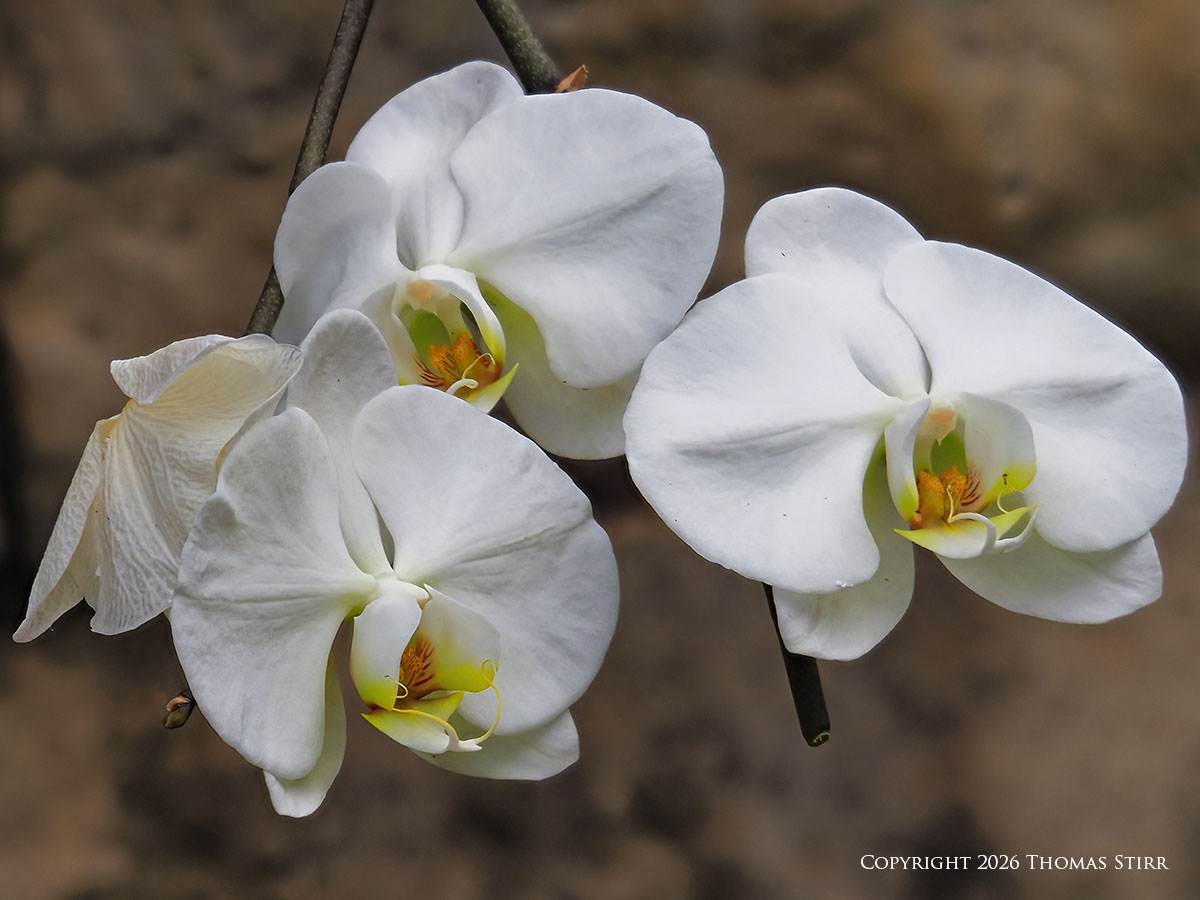
I agreed to go to the tropical greenhouse even though my initial thought was that the 150-600 wouldn’t have been my first choice of lens for that genre of photography.
As it turned out the 150-600 worked out much better than I had anticipated.
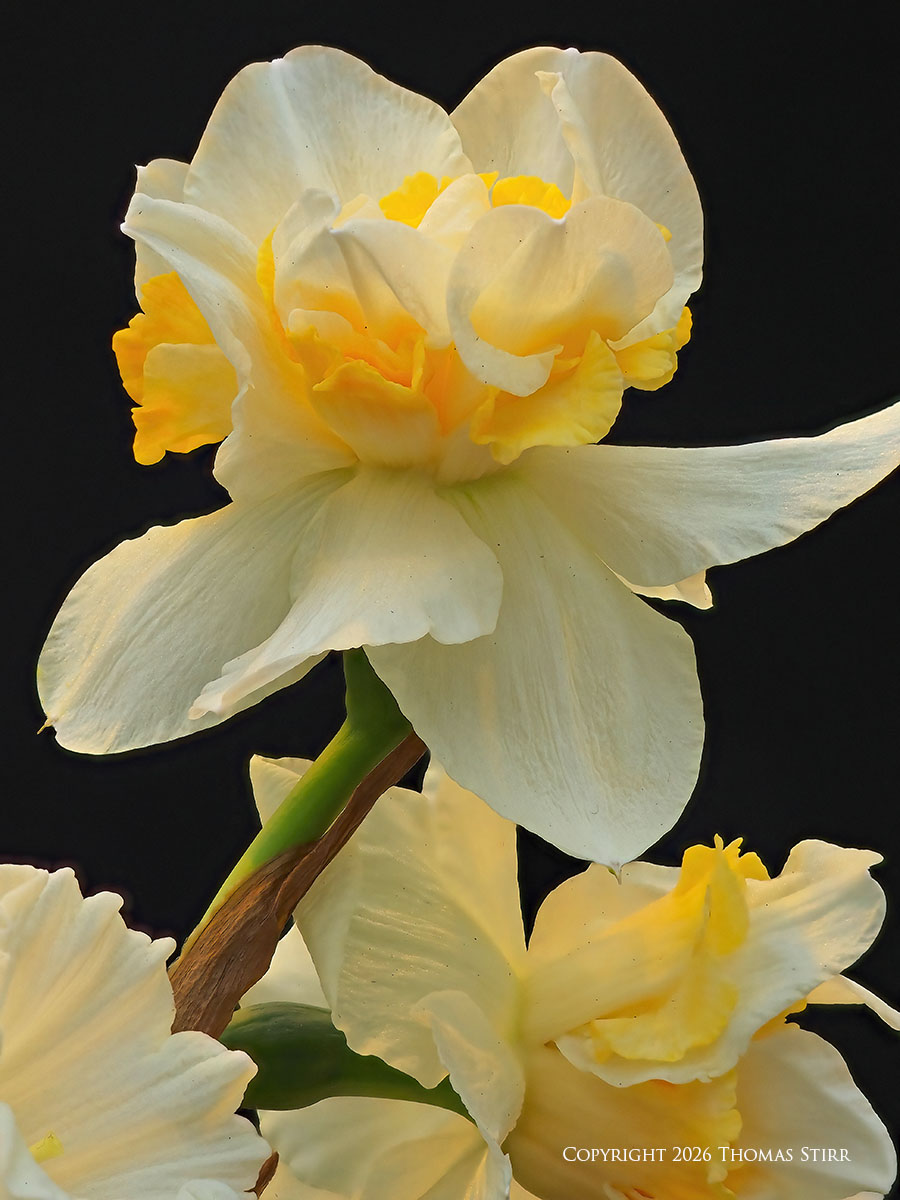
After capturing a few standard images, I decided to dedicate the rest of my time at the Gage Park Tropical Greenhouse to using Handheld In-Camera Focus Stacking.
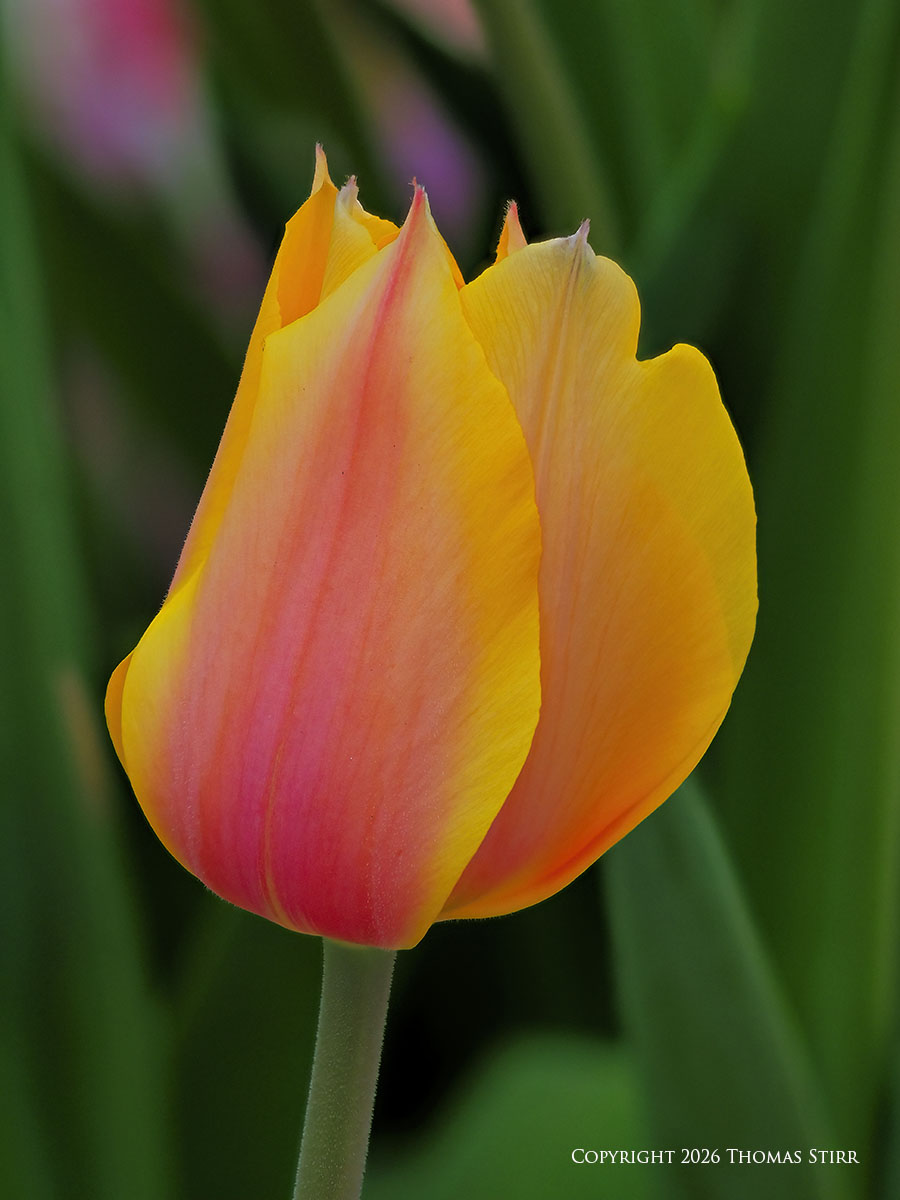
It took some patience to select the right cluster of blossoms, or individual flowers, to photograph.
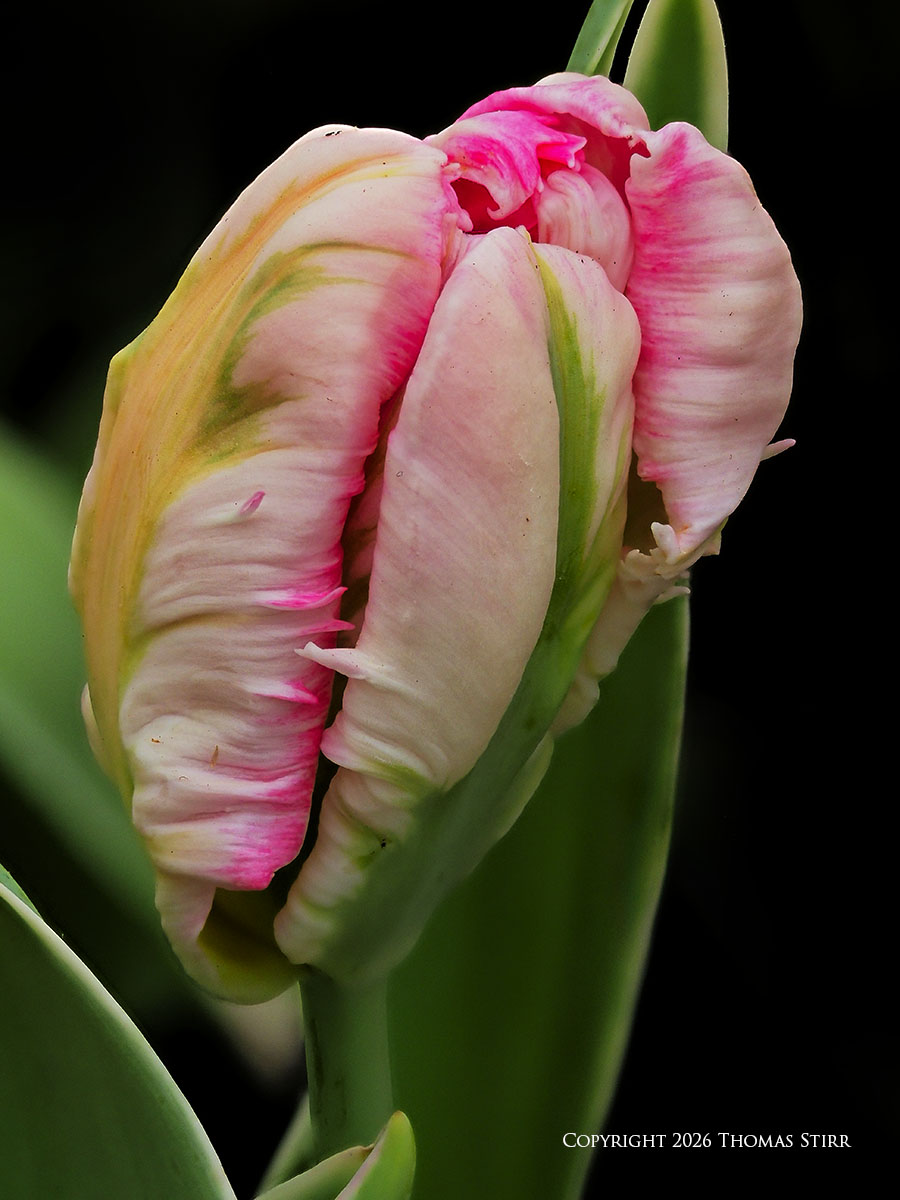
I was trying to find blossoms that were decently separated from others proximate to them, and provided me with opportunities to use my emerging from darkness technique, if possible.
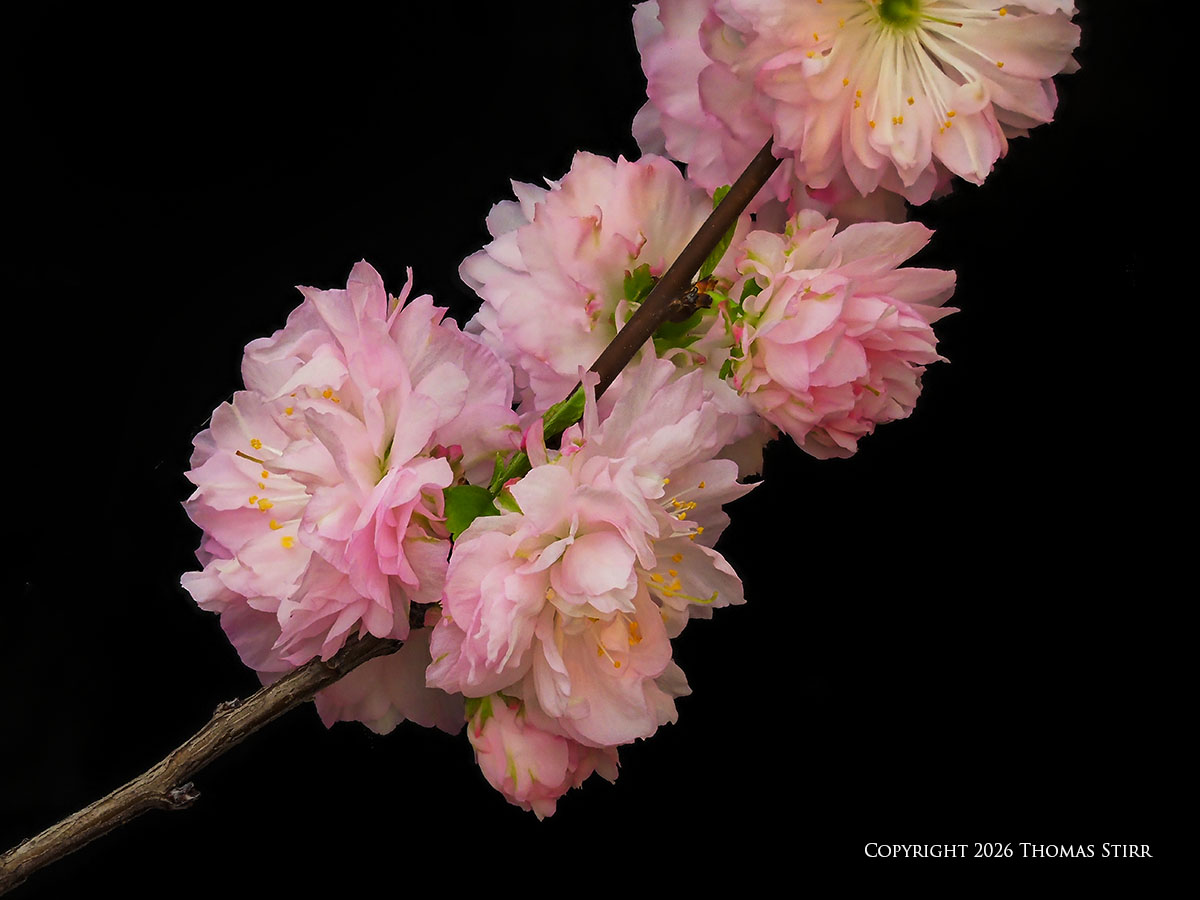
As you can see from the images featured in this article I had a modicum of success finding the right lighting to attempt emerging from darkness compositions.
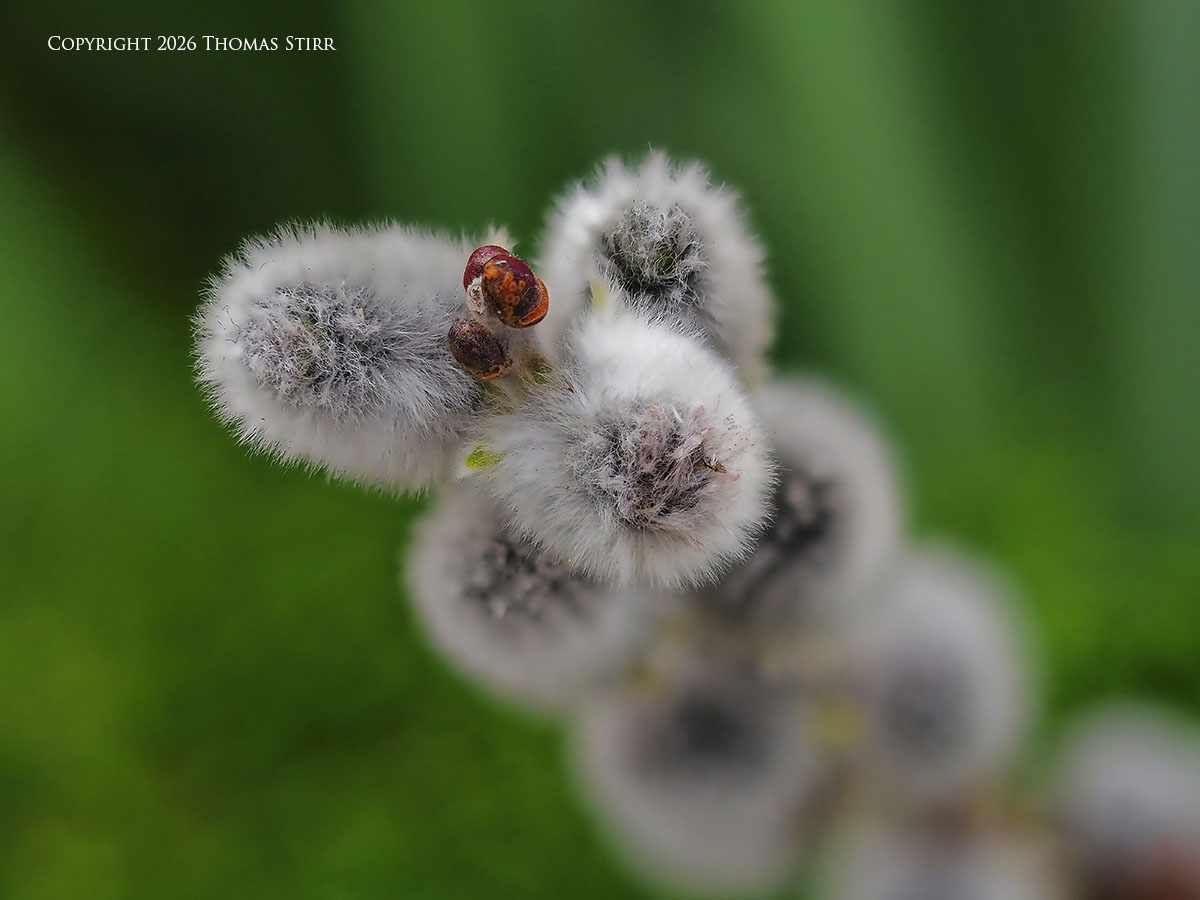
Since the M.Zuiko 150-600 mm f/5-6.3 IS telephoto zoom has a minimum focusing distance of only 560 mm (~ 22 inches) on the wide end of the zoom, I also experimented with depth-of-field using various apertures, focal lengths and distances to subject.
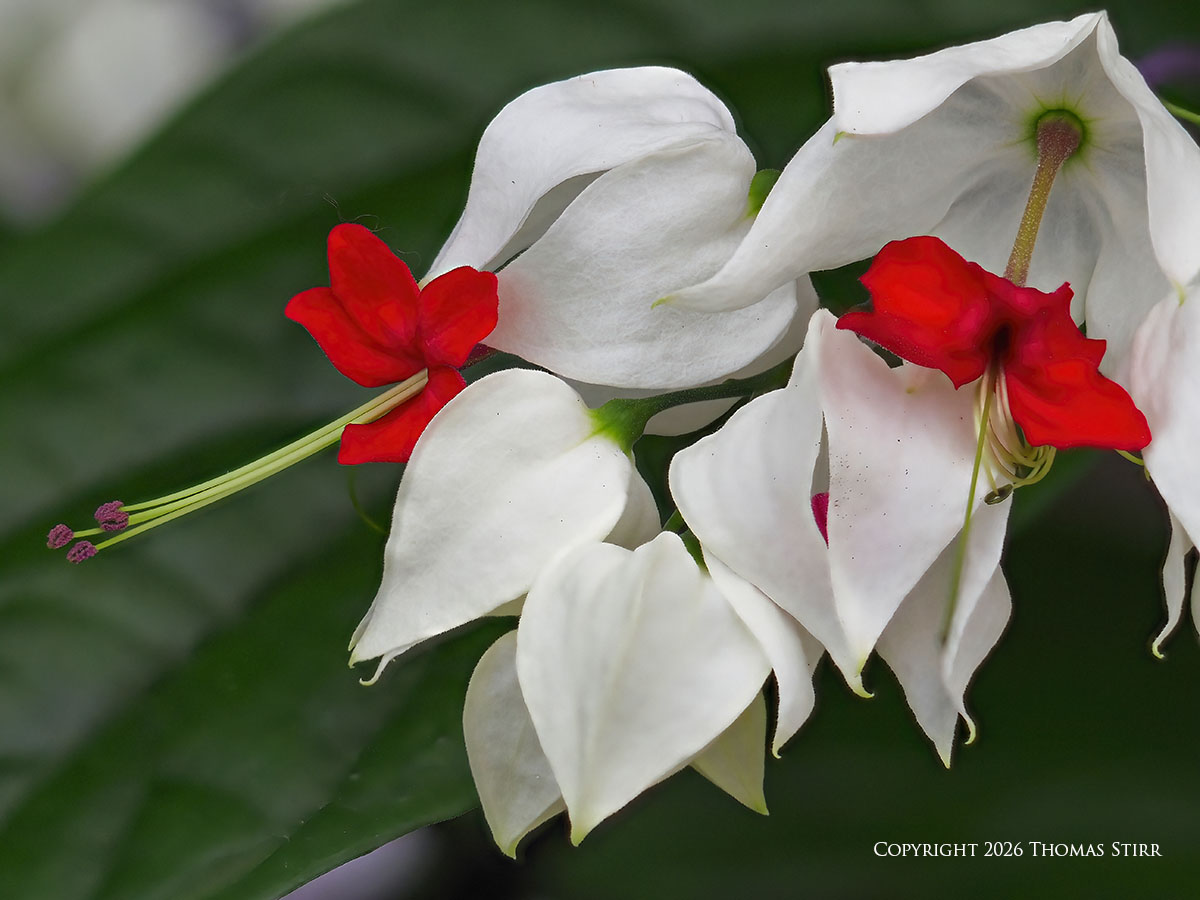
The Sync-IS of my M.Zuiko 150-600 telephoto zoom performed extremely well. I was able to get some useable out-of-camera jpeg images when using a shutter speed of 1/125. My E-M1X’s Handheld In-Camera Focus Stacking function was set to a stack of 15 images, and a Focus Differential of 3.
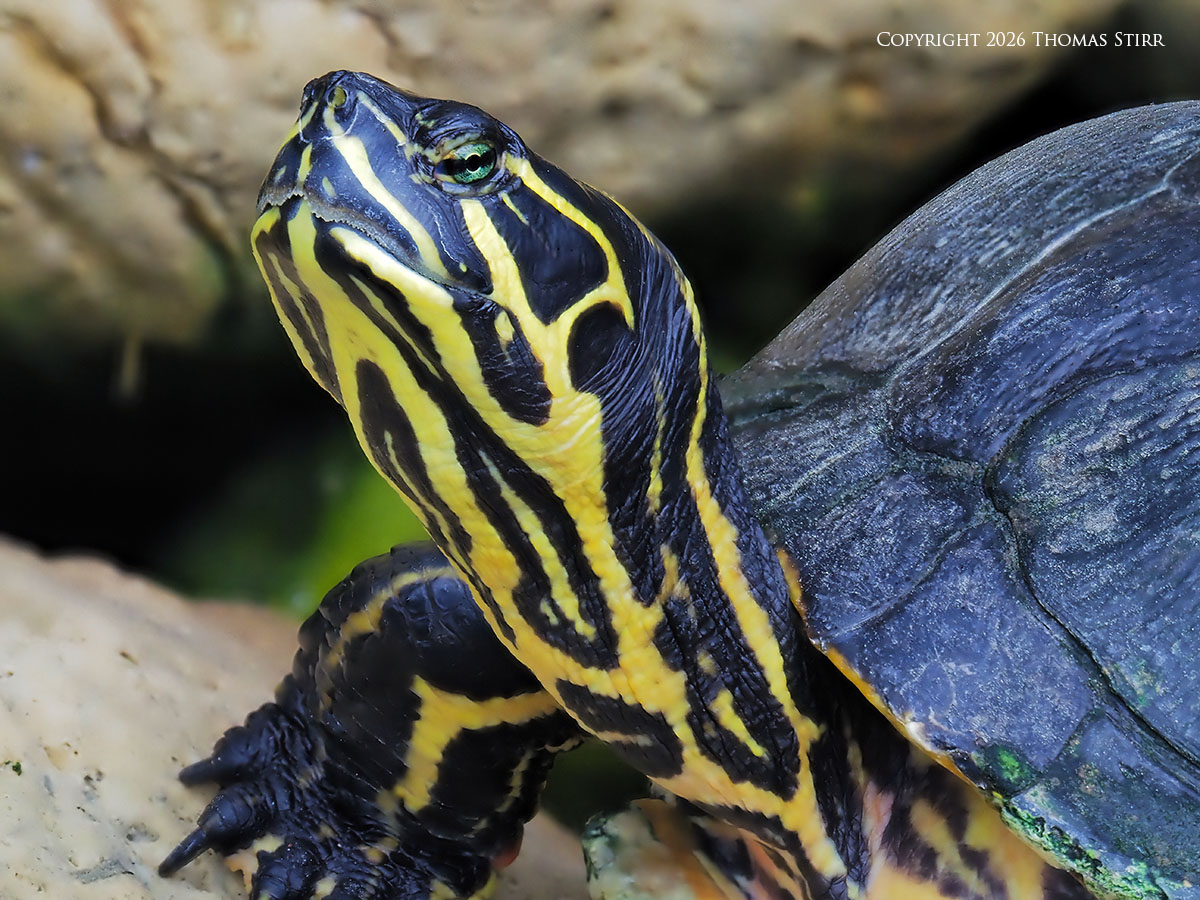
There is a waterfall and a small pond in the tropical greenhouse which houses a few turtles. I captured a couple of test images of the turtles. The photograph above was captured using Handheld In-Camera Focus Stacking at a distance of 4.4 metres (~ 14.4 feet) using a shutter speed of 1/125, at a focal length of 523 mm (efov 1046 mm).
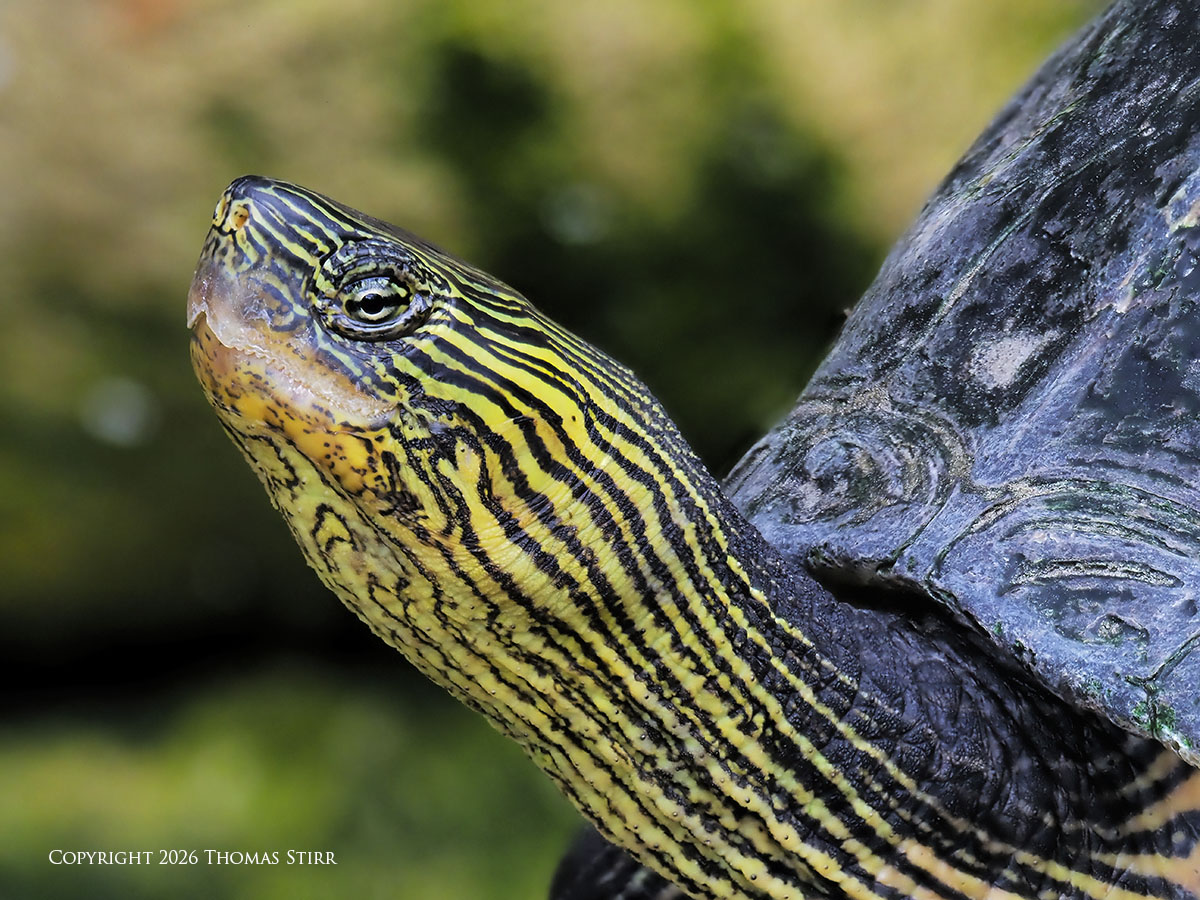
My second Handheld In-Camera Focus Stacked test turtle image was captured from a distance of 4 metres (~ 13.1 feet) using a shutter speed of 1/125, with my lens fully extended to 600 mm (efov 1200 mm). I was quite pleased with both of the resulting turtle test images.
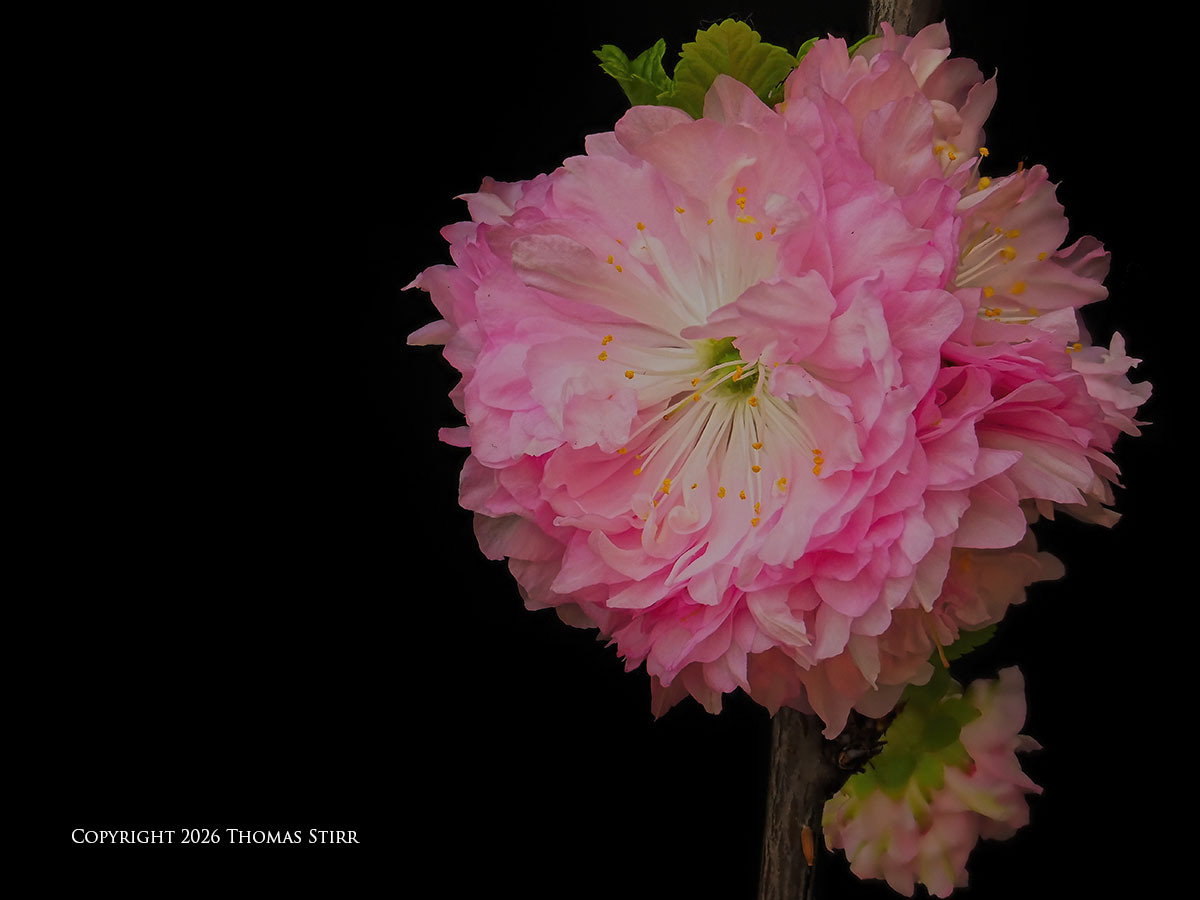
Throughout my visit to the Gage Park Tropical Greenhouse I did my best to compose my images as full frame captures so I could avoid having to do any cropping in post.
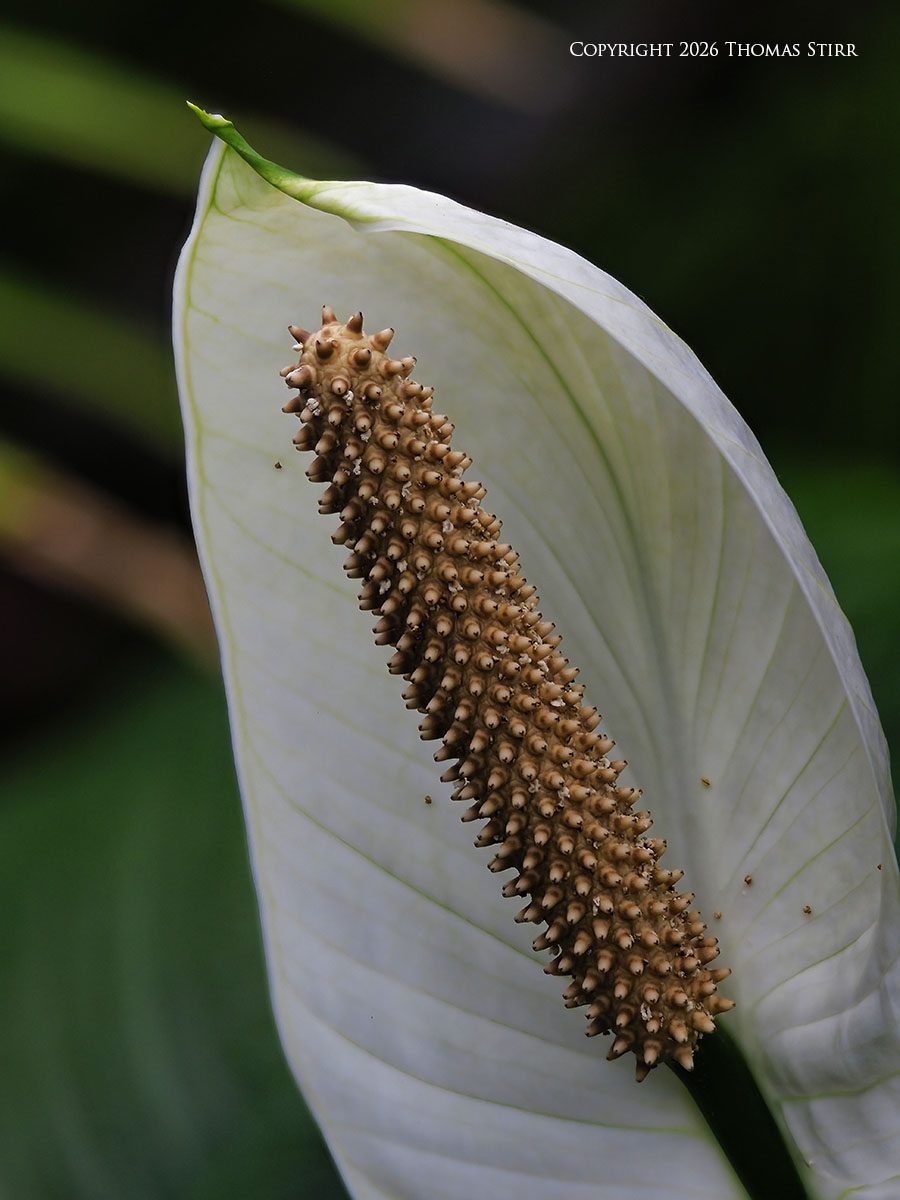
Save for a few isolated image captures I was able to accomplish this goal and was able to avoid any cropping.
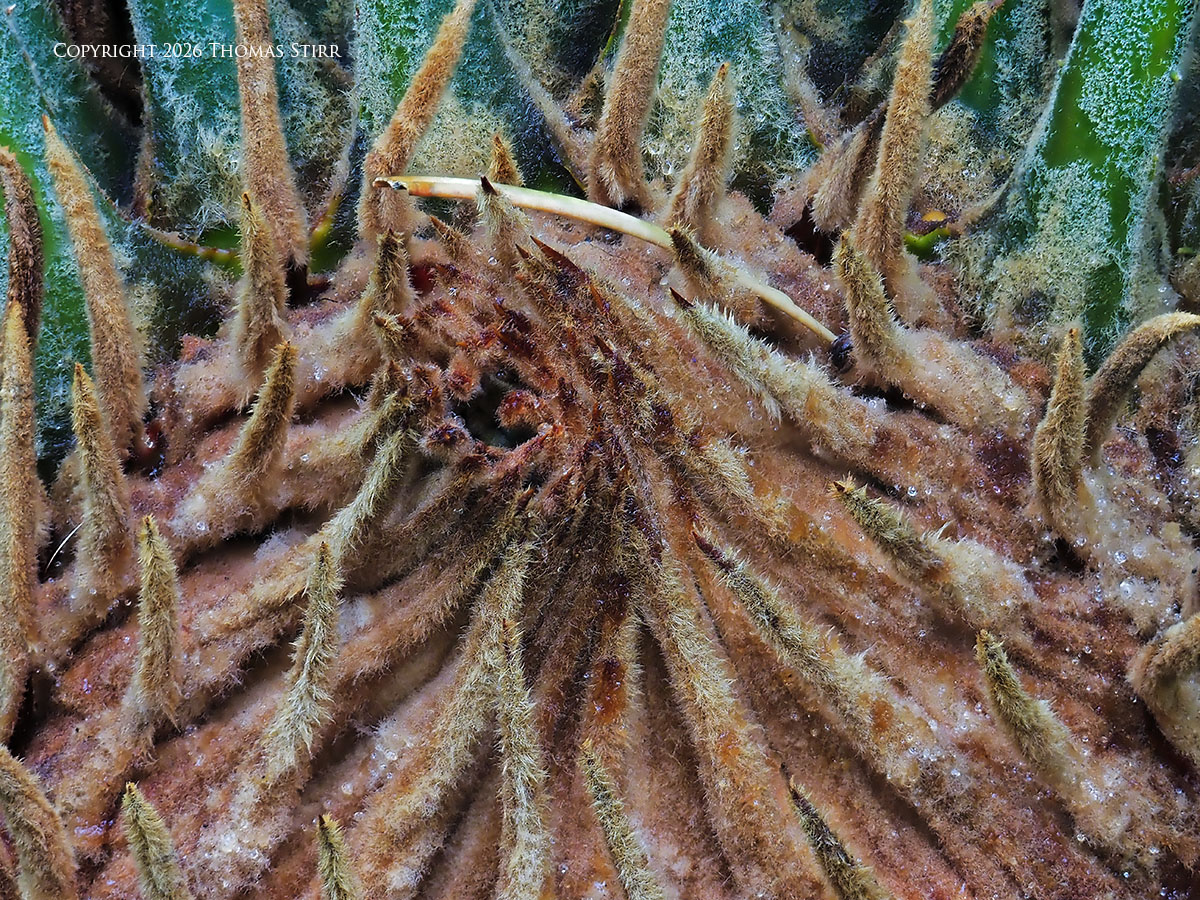
While I wouldn’t have initially though of using my M.Zuiko 150-600 mm f/5-6.3 IS zoom lens to photograph subject material at the tropical greenhouse, it turned out to be a very good piece of kit for this task.
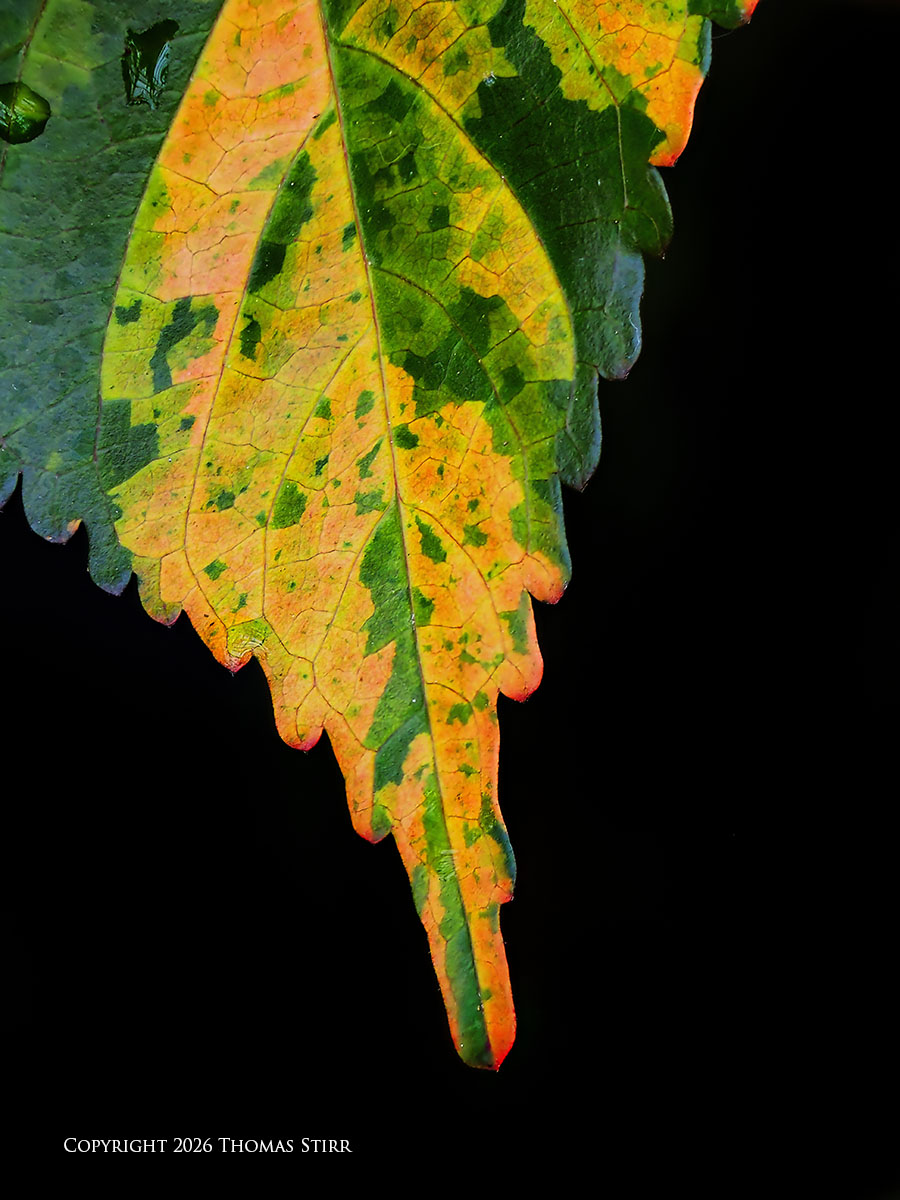
It was very easy to handle even at slower shutter speeds of 1/125 when using Handheld In-Camera Focus Stacking.
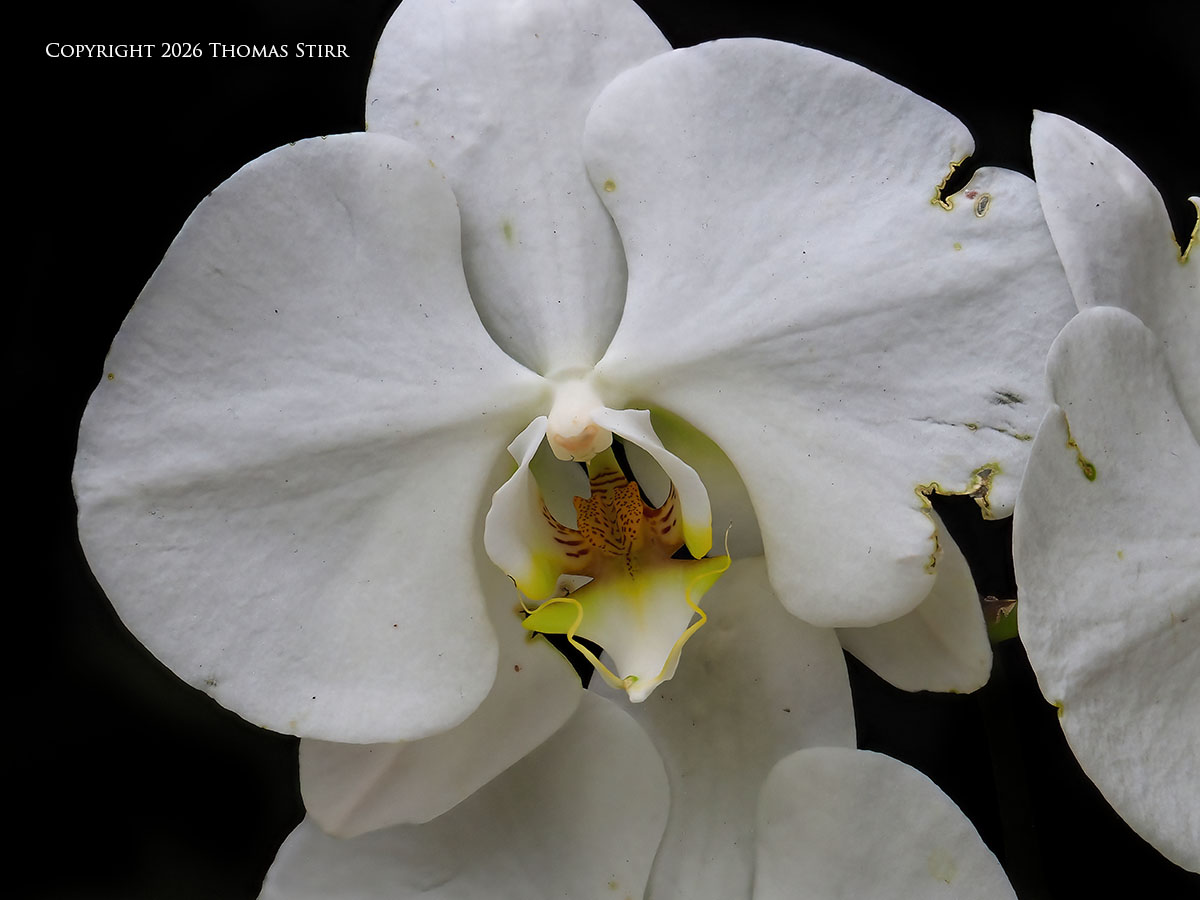
The resulting out-of-camera jpegs needed only a modicum of work in post processing.
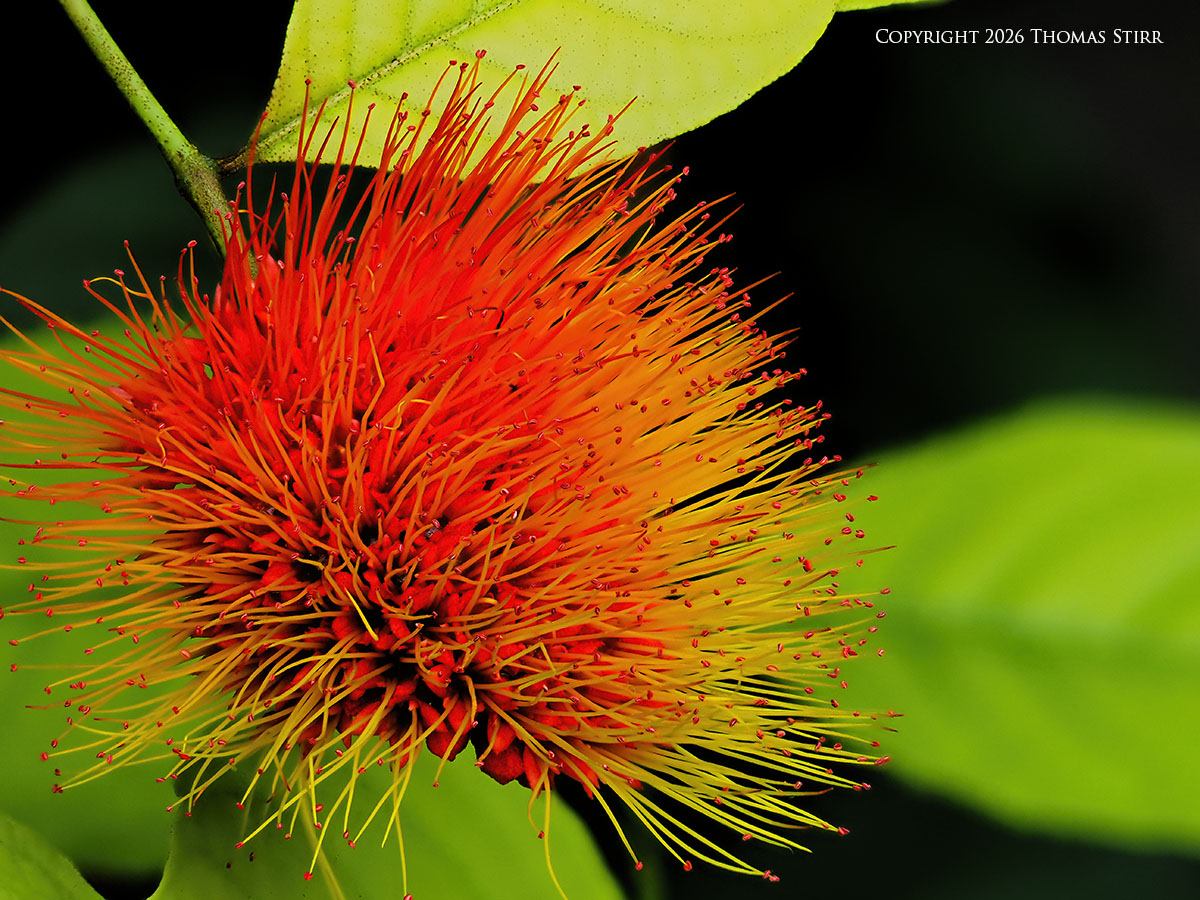
The image sharpness, level of details, and colour rendition when using Handheld In-Camera Focus Stacking all met my expectations.
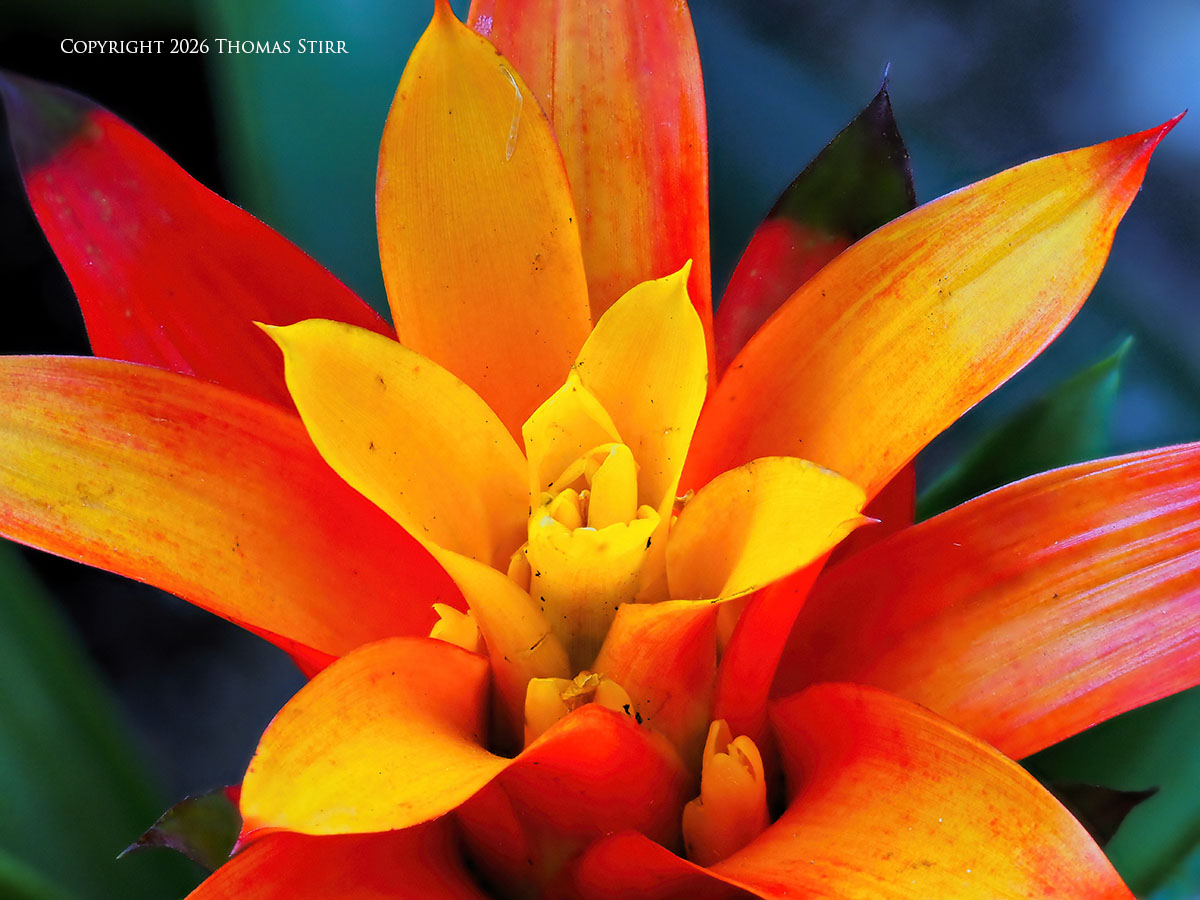
This unplanned session at the Gage Park Tropical Greenhouse expanded my understanding of what is possible with the M.Zuiko 150-600 mm f/5-6.3 IS telephoto zoom lens.
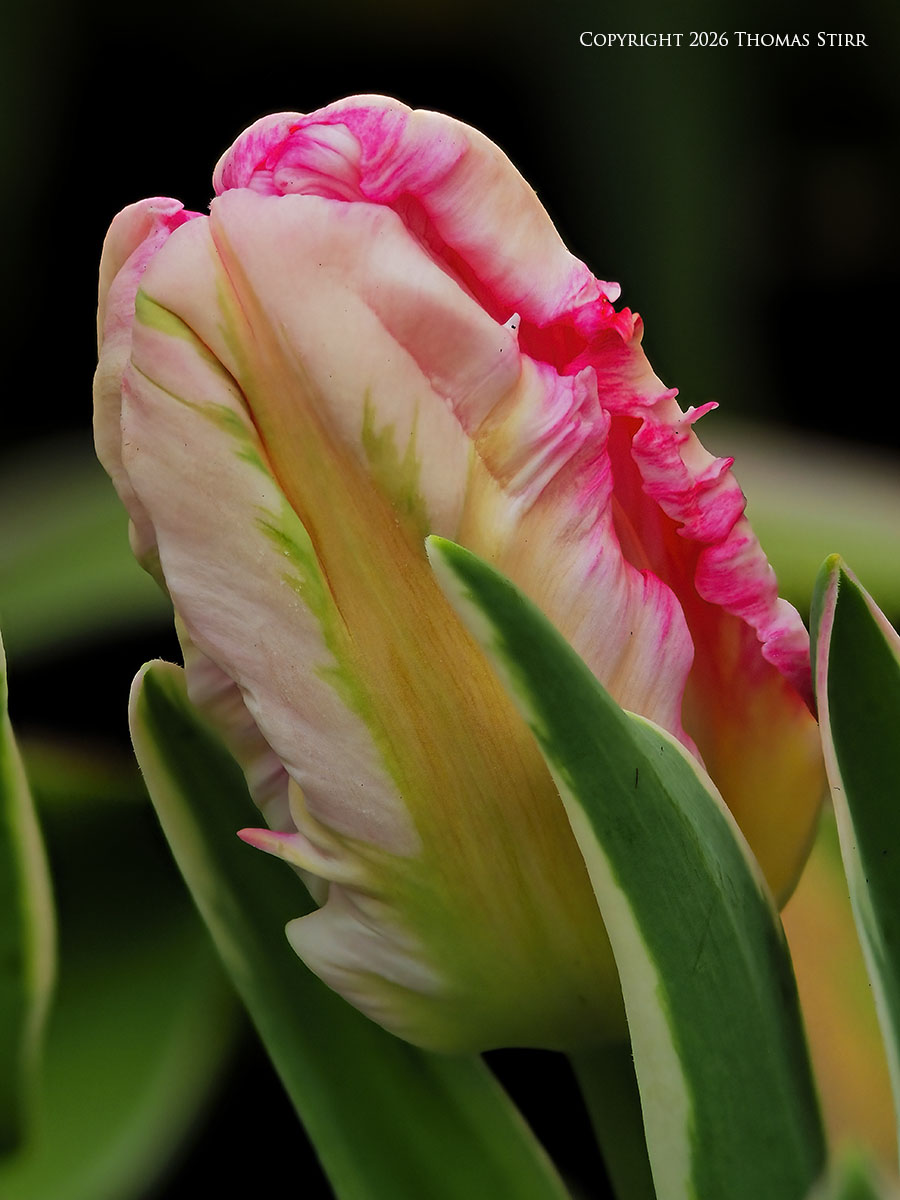
The M.Zuiko 150-600 is actually an excellent choice when photographing flowers in public gardens and greenhouses where the blossoms are situated at varying distances away from public walkways.
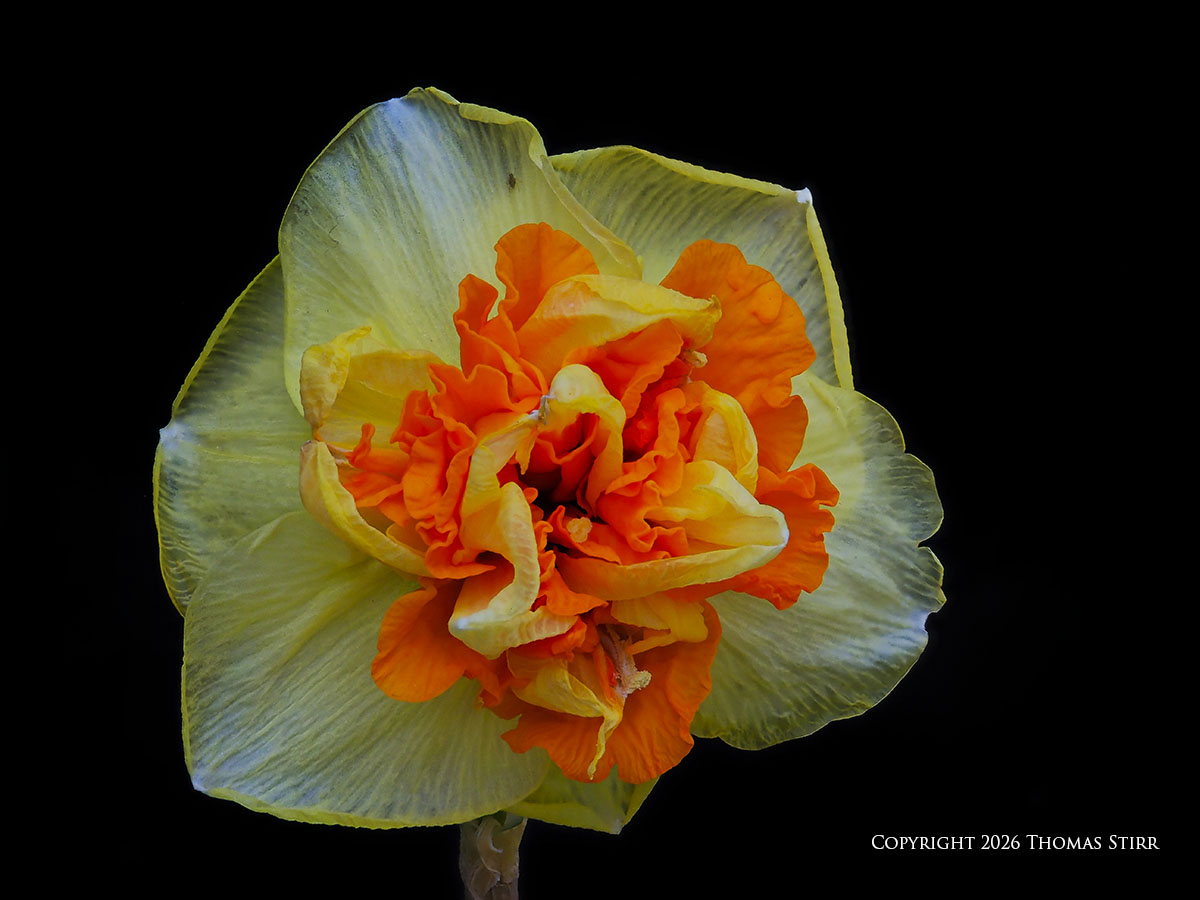
Our recent visit to the Gage Park Tropical Greenhouse reinforced how important it is to be open to photographic opportunities… even when we may question the camera gear that we have in hand at any given moment.
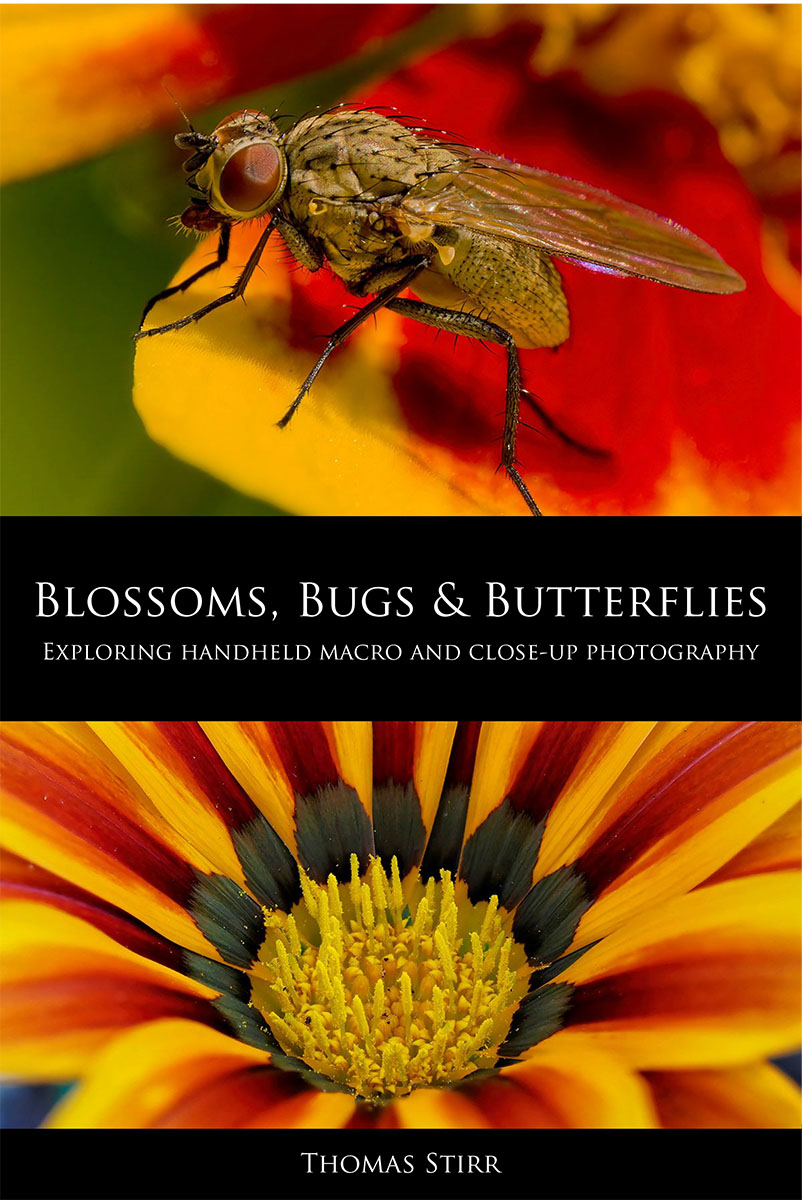
Blossoms, Bugs & Butterflies eBook coming soon!
Our newest eBook… Blossoms, Bugs & Butterflies is in the final stage of production and will be available soon. This 210 page eBook shares over 500 original photographs that were captured handheld with a range of camera gear. Various aspects of handheld macro and close-up photography, including the use of computational photography technologies, are discussed and illustrated. Stay tuned for the official launch of this new eBook!
Technical Note
Photographs were captured handheld using camera gear as noted in the EXIF data. All images were created from out-of-camera jpeg files using my standard process in post. All images were captured using Handheld In-Camera Focus Stacking, each photograph utilized a stack of 15 images and a Focus Differential of 3. This is the 1,518 article published on this website since its original inception in 2015.
How you can keep this website advertising free
My intent is to keep this photography blog advertising free. If you enjoyed this article and/or my website and would like to support my work, you can purchase an eBook, or make a donation through PayPal (see Donate box below). Both are most appreciated.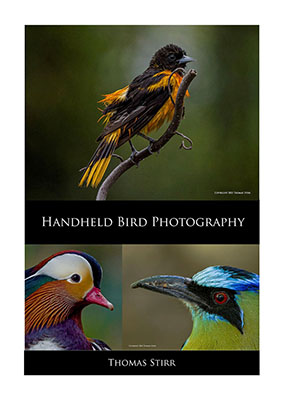
You may enjoy bird photography, and if so our 188 page eBook Handheld Bird Photography may be of interest. It is available for download for an investment of $14.99 CDN. The best viewing experience of this eBook will be at 100% using Adobe Acrobat Reader.
Sometimes all we need as photographers is a bit of inspiration. We hope you can find some of that inside Finding Visual Expression II.

Finding Visual Expression II is available for download for an investment of $11.99 CDN. The best viewing experience of this eBook will be at 100% using Adobe Acrobat Reader.
You may be interested in all of the 30 concepts covered in both of these related eBooks. If so, you may want to also consider Finding Visual Expression.

Finding Visual Expression is available for download for an investment of $11.99 Cdn. The best viewing experience of this eBook will be at 100% using Adobe Acrobat Reader.
Our other eBooks include Images of Ireland, New Zealand Tip-to-Tip, Nikon 1: The Little Camera That Could, Desert & Mountain Memories, Images of Greece, Nova Scotia Photography Tour, and a business leadership parable… Balancing Eggs.
If you click on the Donate button below you will find that there are three donation options: $7.50, $10.00 and $20.00. All are in Canadian funds. Plus, you can choose a different amount if you want. You can also increase your donation amount to help offset our costs associated with accepting your donation through PayPal. An ongoing, monthly contribution to support our work can also be done through the PayPal Donate button below.
You can make your donation through your PayPal account, or by using a number of credit card options.
Word of mouth is the best form of endorsement. If you like our website please let your friends and associates know about our work. Linking to this site or to specific articles is allowed with proper acknowledgement. Reproducing articles, or any of the images contained in them, on another website or in any social media posting is a Copyright infringement.
Article and images are Copyright 2026 Thomas Stirr. All rights reserved. No use, duplication or adaptation of any kind is allowed without written consent. If you see this article reproduced anywhere else it is an unauthorized and illegal use. Posting comments on offending websites and calling out individuals who steal intellectual property is always appreciated!
Hi Tom me again I do hope you are keeping well.
It’s interesting how using the ‘wrong’ lens for your photography can reveal such beautiful images.
The general opinion is obviously this is a wildlife lens but aren’t flowers a wonderful opportunity? My favourite image from this collection is the green leaf against the black background, did you spot meter this ?
Best wishes Mark
Hi Mark,
I used standard matrix metering, but I did underexpose the leaf somewhat. I used the black slider and did some very quick burning of the background to take it to black… then lightened the leaf in post.
Tom
Fabulous images with the lens you had with you. As you said I wouldn’t have thought of using the big zoom for this sort of work, but will definitely try with my 100-400 next time I take it out. Thank you for the inspiration and details of the stacking distance factor which I always think is just part of the OM magic. Looking forward to the new ebook.
Hi Andrew,
Thanks for your supportive comment… much appreciated.
Sometimes trying new things with a particular lens works out well… and other times not so much. I was very pleased with these results with the 150-600. A couple of weeks ago I was out with my M.Zuiko PRO 12-40 f/2.8. This was a rookie mistake on my part as I forgot to check the lens on my camera… thinking it was my PRO 12-100 f/4. I was too far from home to fix my oversight. So, I tried some Handheld In-Camera Focus Stacking with that lens anyway, and got very few useable captures. I had used my standard HHFS settings and they just didn’t work as planned. C’est la vie!
Tom