

This article features photographs of captive butterflies in flight captured handheld with the M.Zuiko 100-400 zoom at the Niagara Butterfly Conservatory.
NOTE: Click on images to enlarge. To view this article in a range of other languages click on the Canadian flag in the upper right corner.
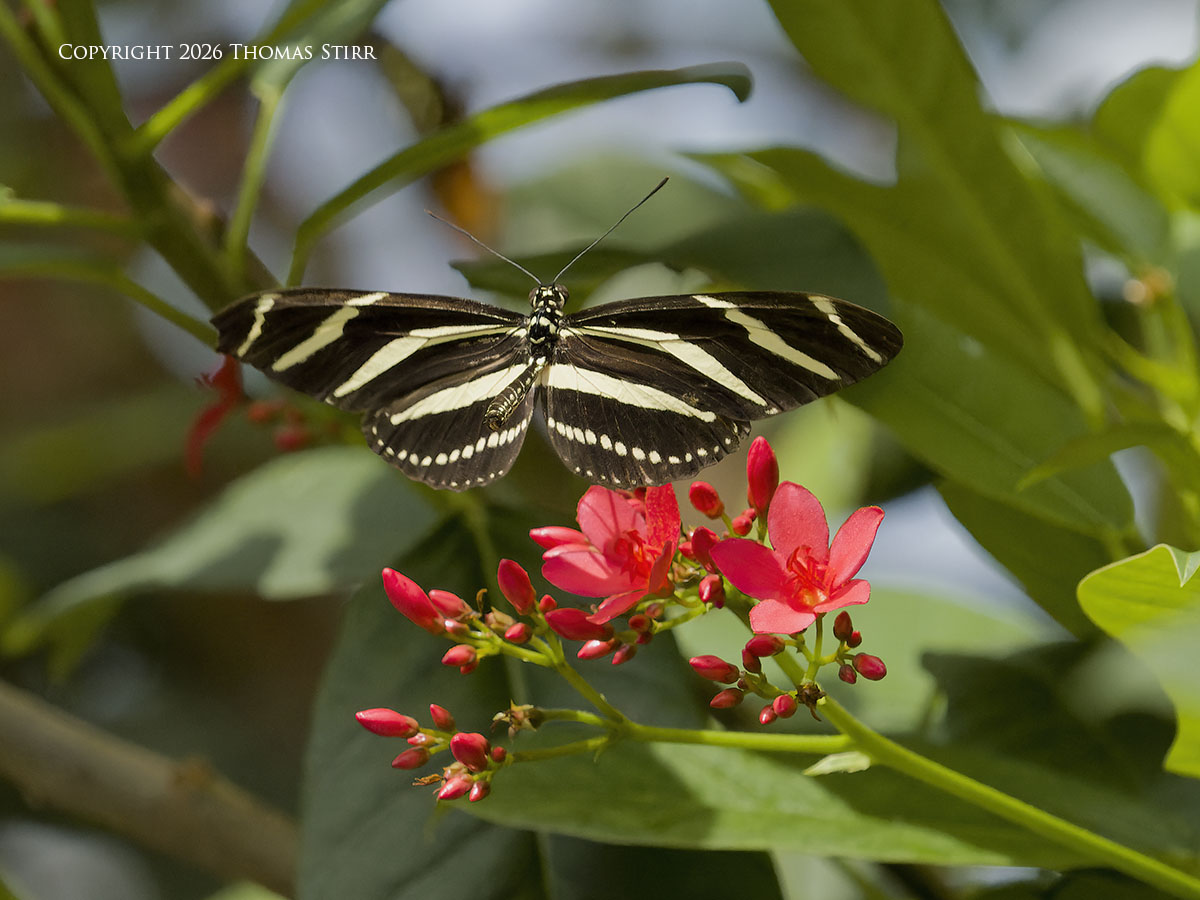
It has been quite a while since I used my M.Zuiko 100-400 mm f/5-6.3 IS zoom lens so I decided to get in some practice time with it.
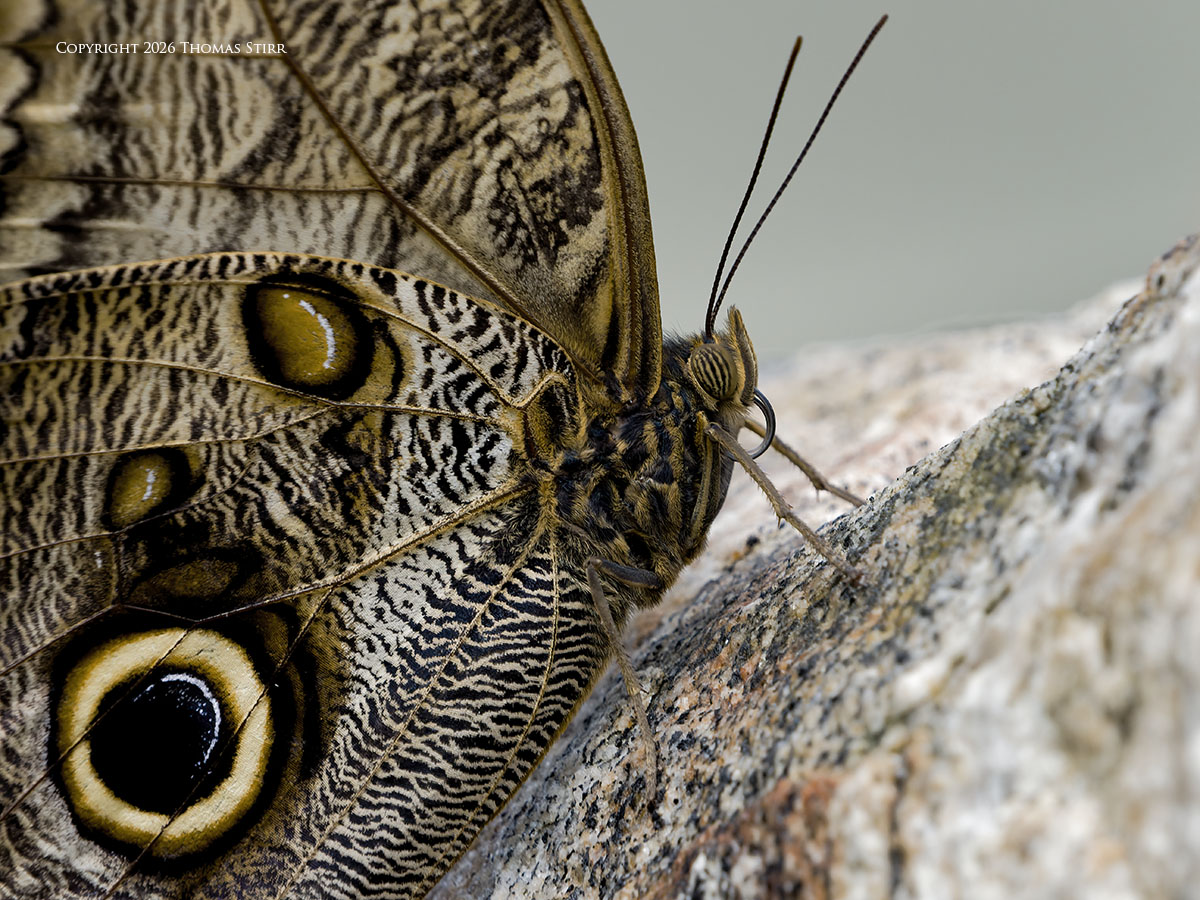
I started off photographing a few perched butterflies, but then quickly moved on to butterflies in flight.
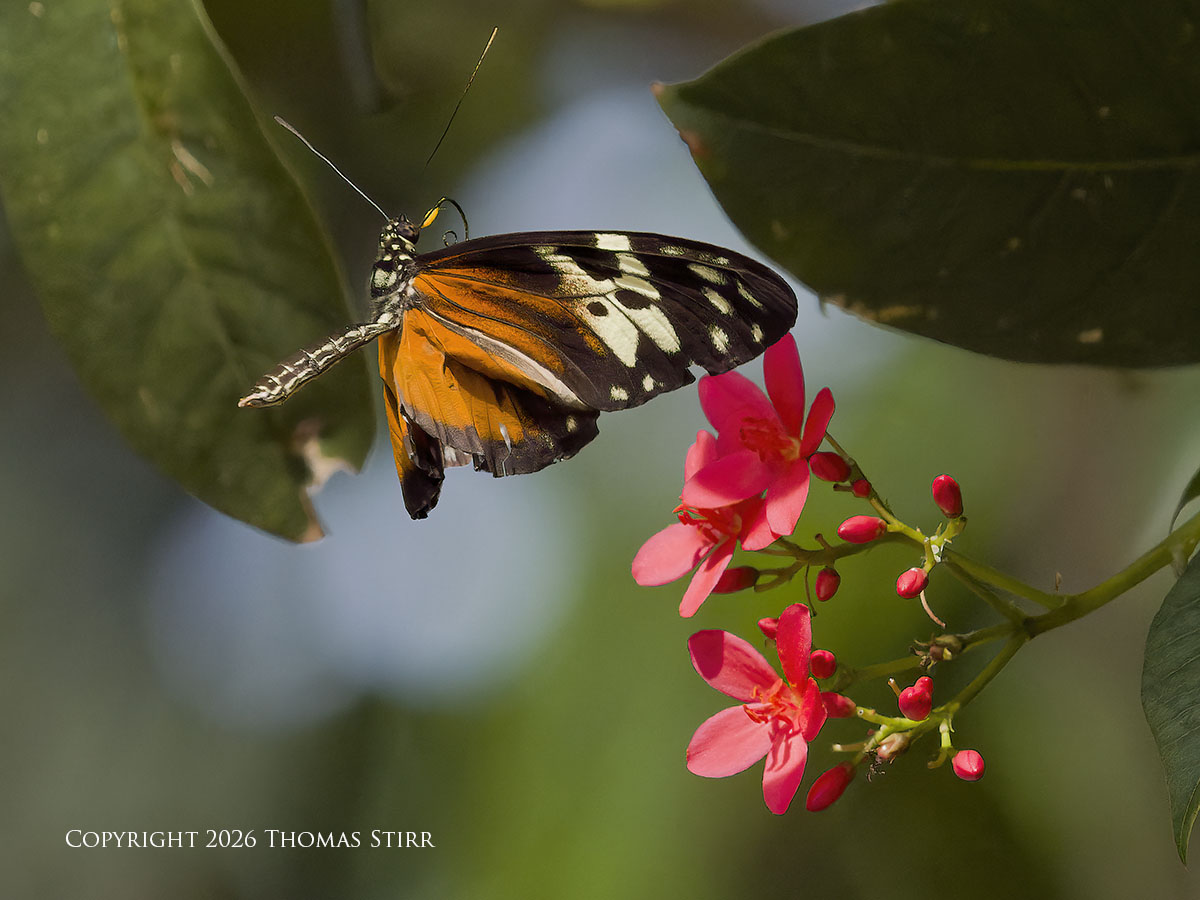
I ended up shooting primarily at one end of the indoor facility, with the majority of my images captured while I was sitting on a bench.
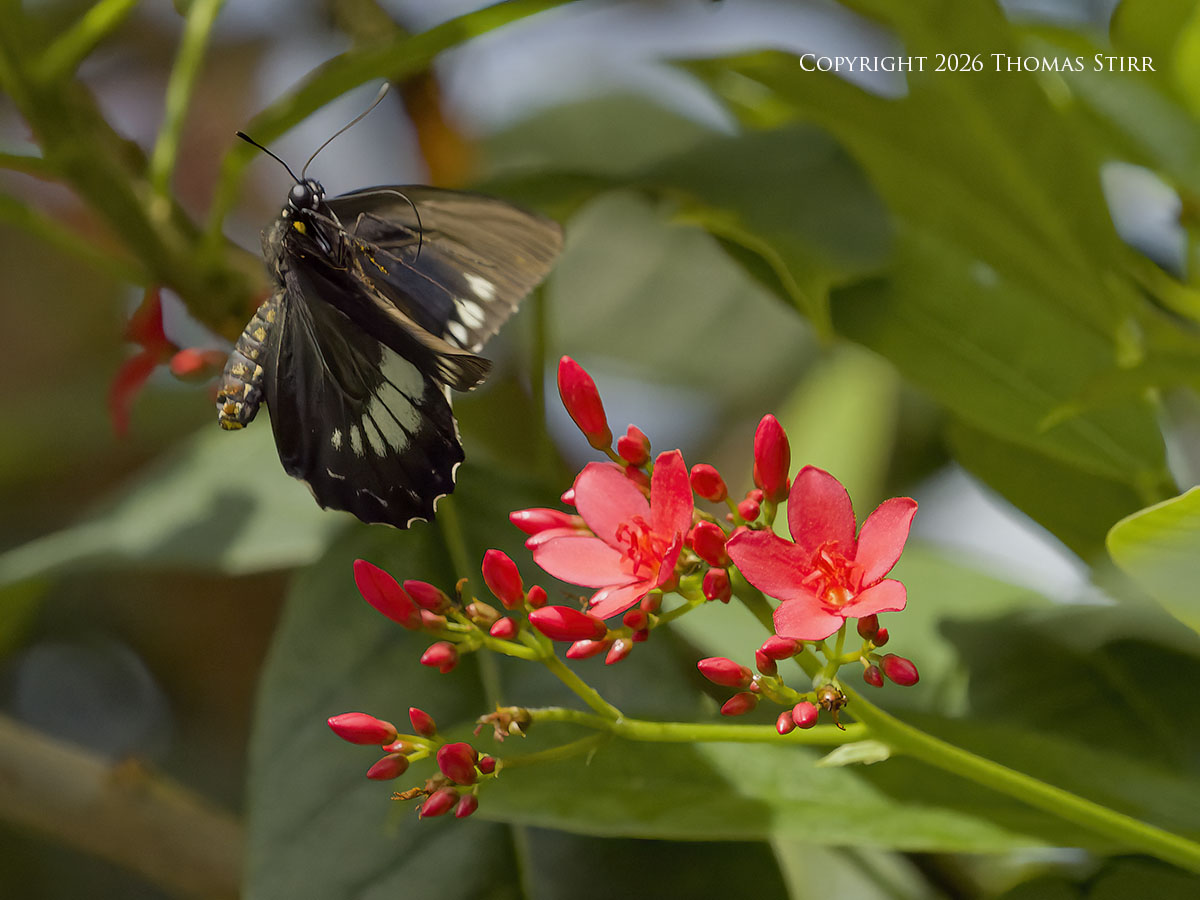
This shooting position gave me good sight lines to two different plantings of flowers that were attracting different species of butterflies. I used about a 45 degree shooting area from my seated position.
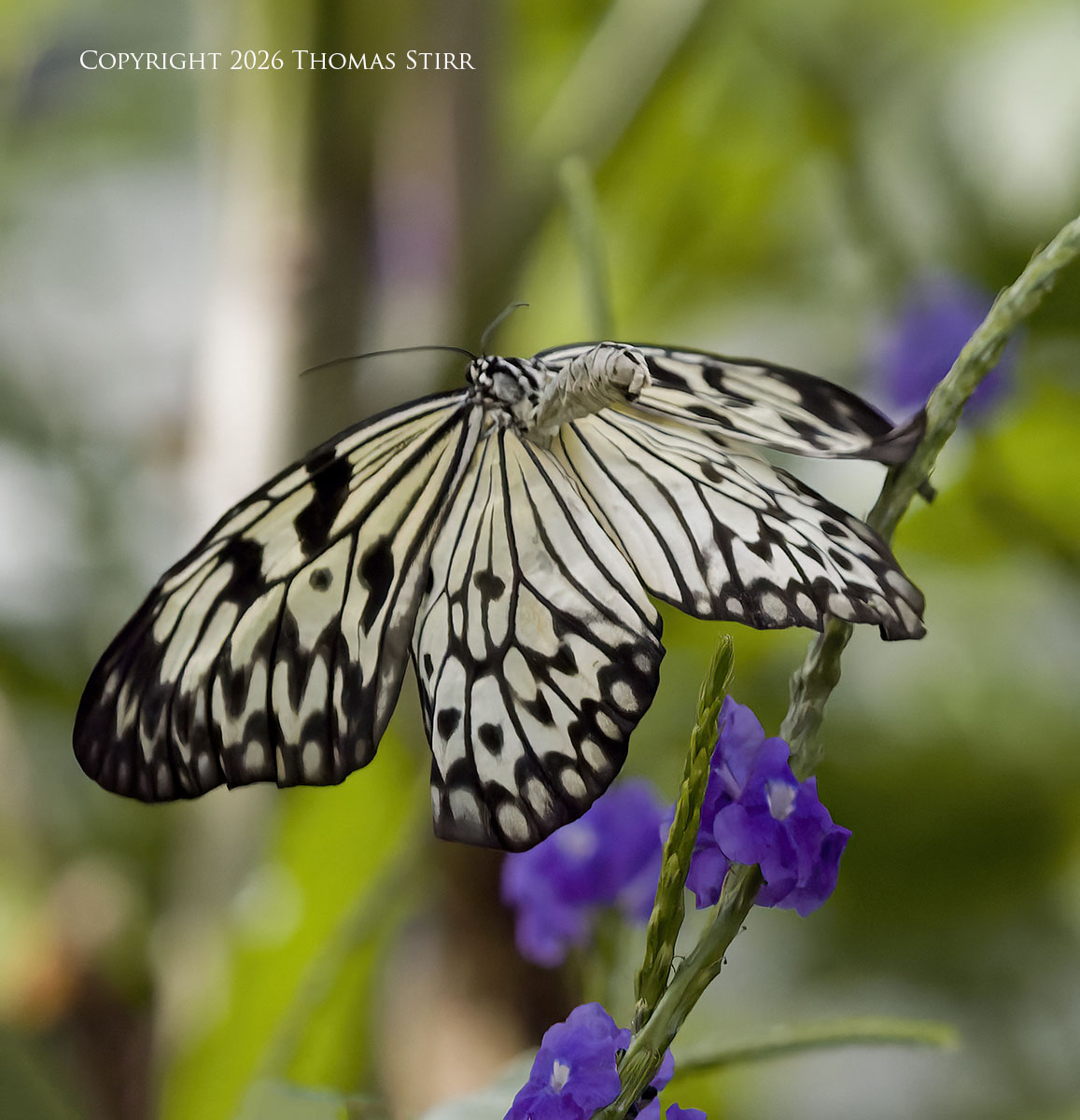
The same species of butterflies tended to congregate around specific blossoms. This gave me a good number of opportunities to capture these captive butterflies in flight.
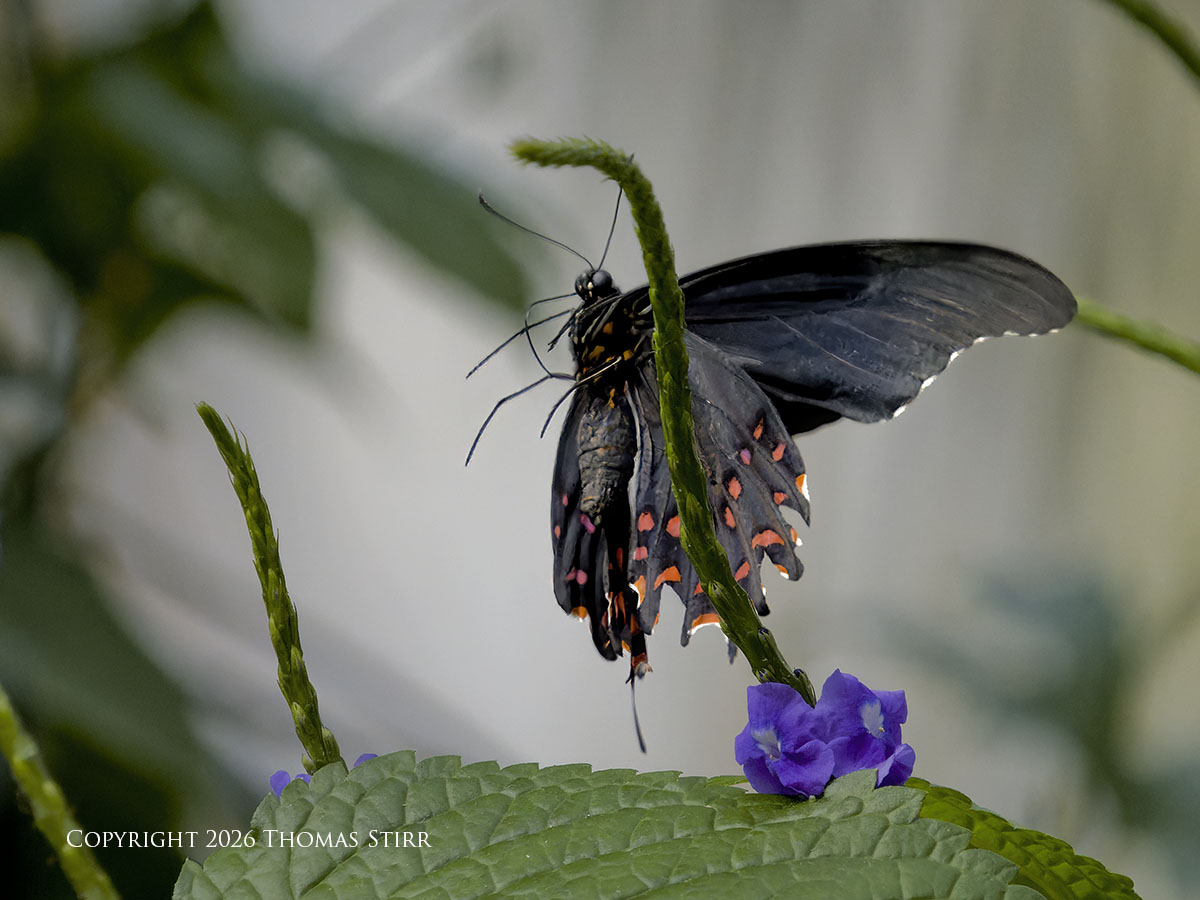
In took about 25 minutes to capture all of the captive butterflies in flight featured in this article.
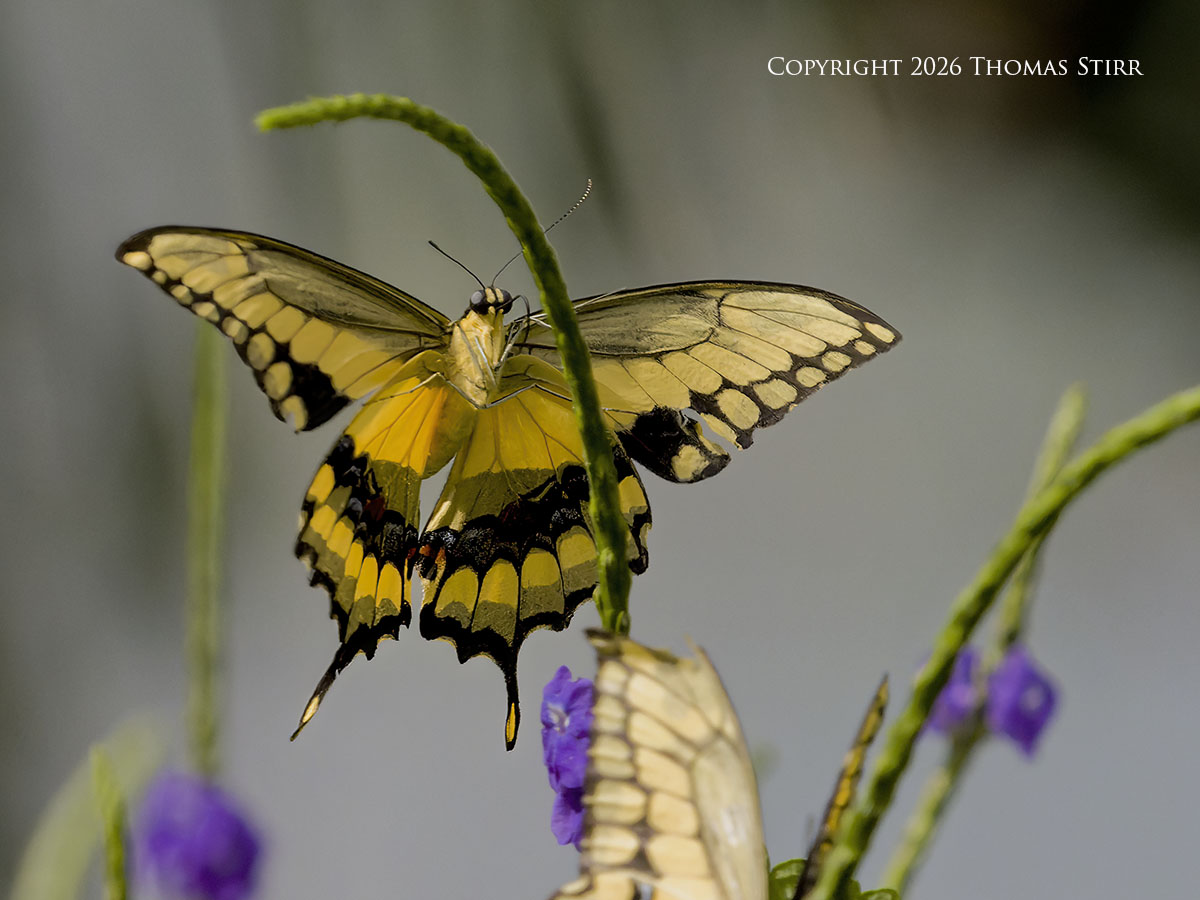
I used Pro Capture H for all of the captive butterflies in flight images. Since this technology locks exposure and auto-focus based on the first frame of an image run, I stopped my lens down to f/8 for most of my images, to give me more depth-of-field.
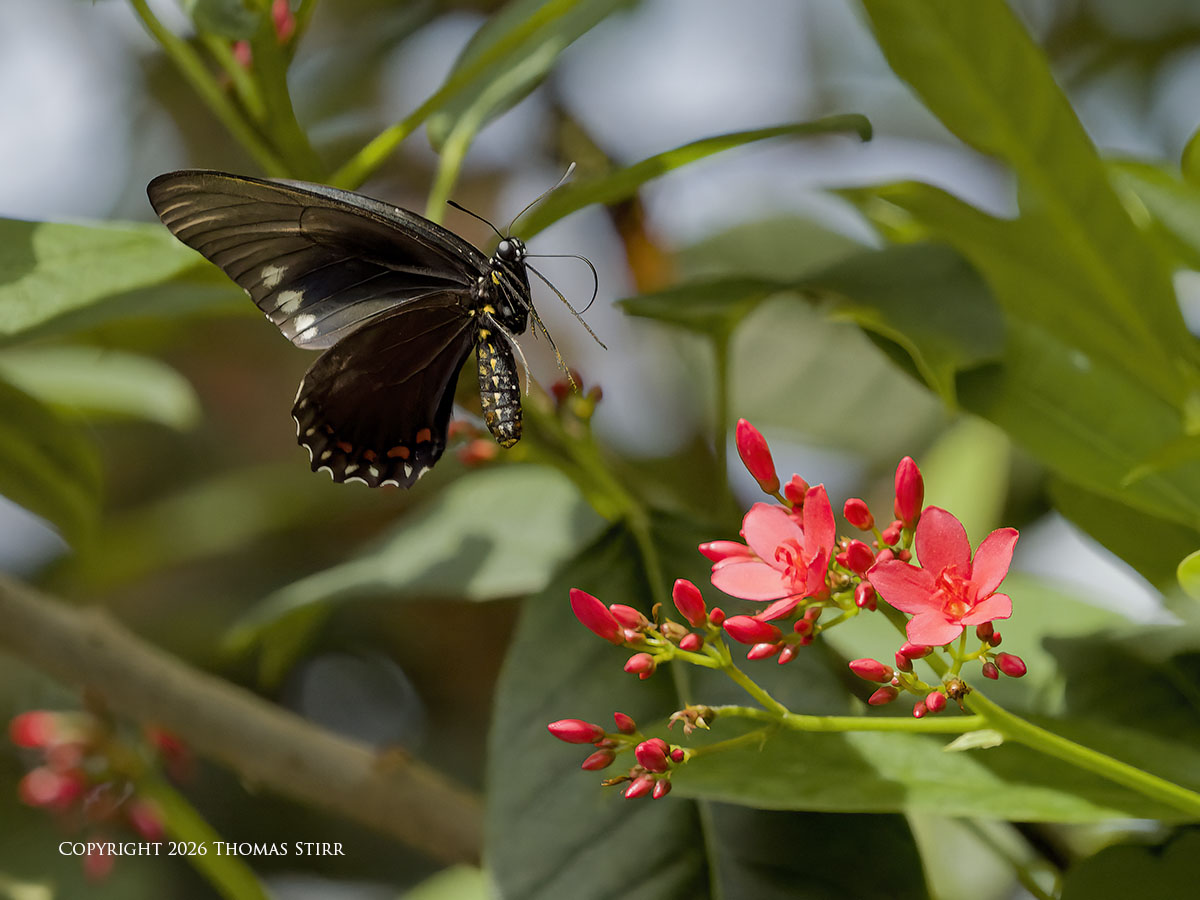
As is my standard practice when using Pro Capture H, I had my Pre-Shutter Frames and Frame Limiter both set to 15. I used a frame rate of 60 frames-per-second. These settings gave me 1/4 second of shutter response time.
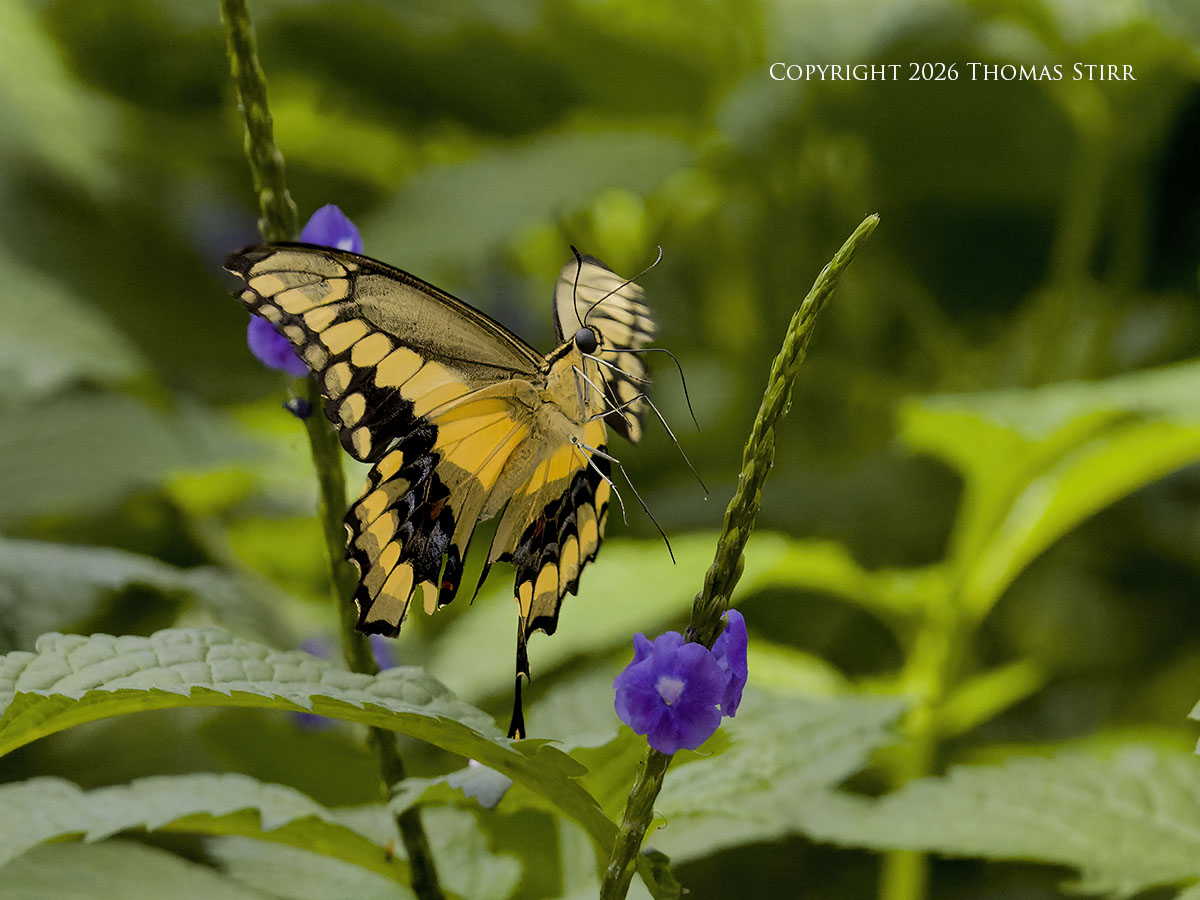
I used a shutter speed of 1/2500 for the majority of my photographs of butterflies in flight. Most of my images were captured with my lens fully extended to 400 mm (efov 800 mm).
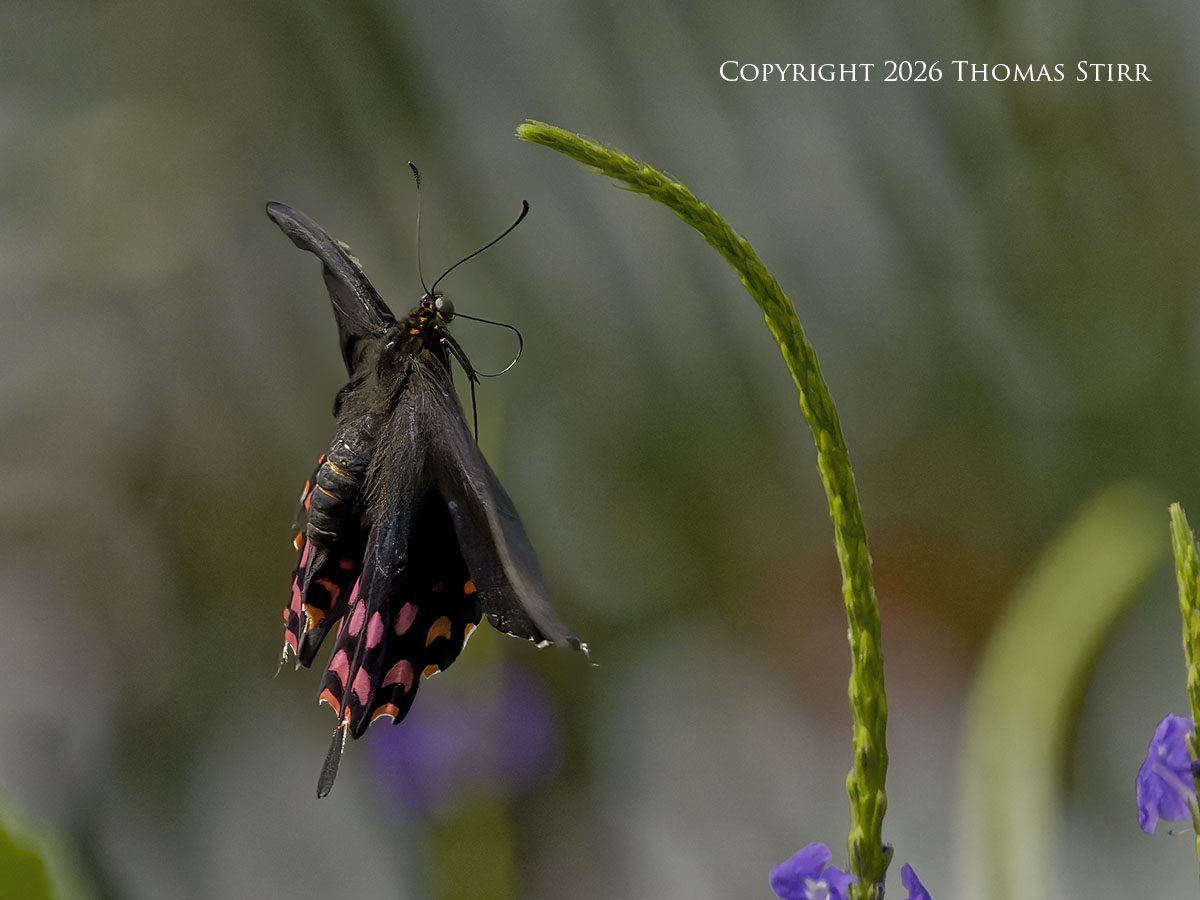
I had to be selective in terms of which butterflies in flight I chose for my images as it was a bit challenging to get them in positions that were well separated from the background in my compositions.
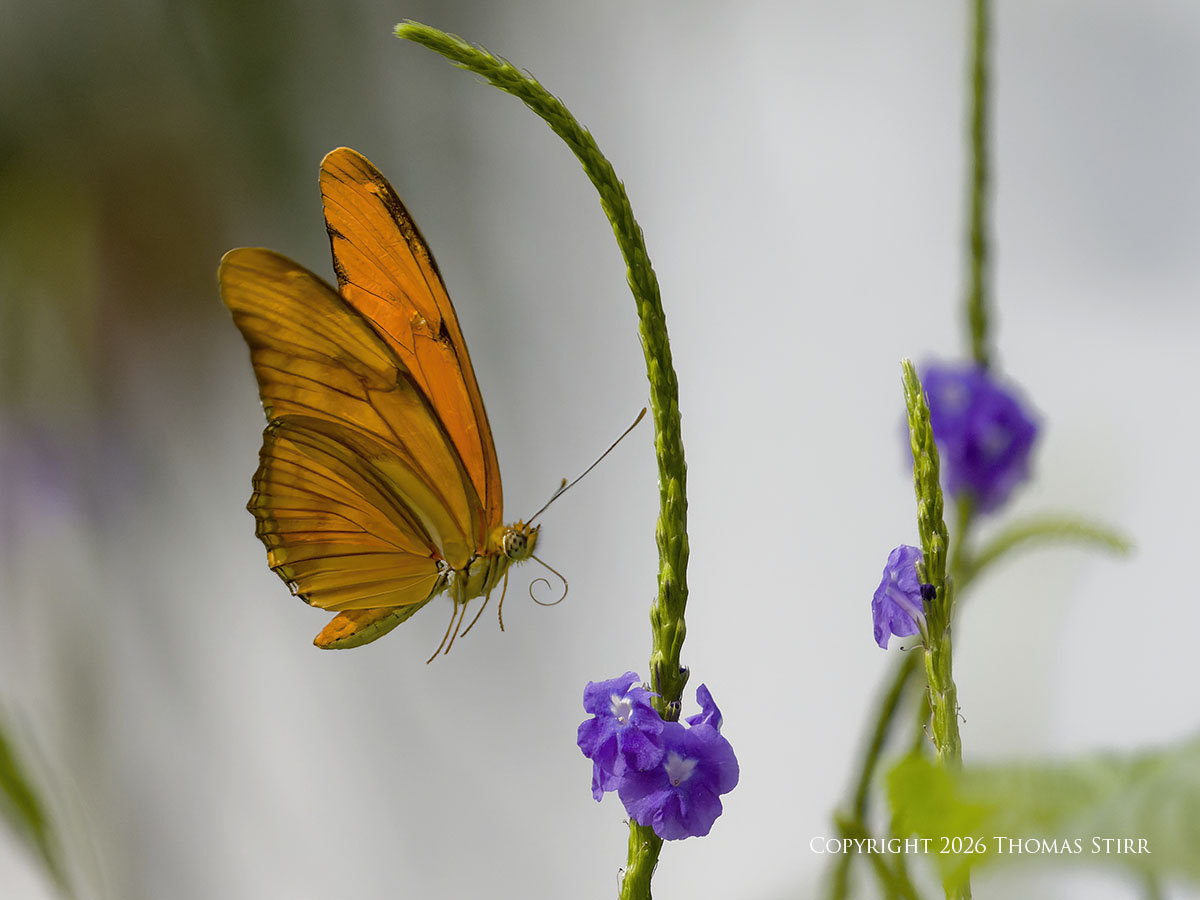
Flight angle was also an important image consideration as the butterflies that were flying parallel to my focal plane tended to yield the best action captures.
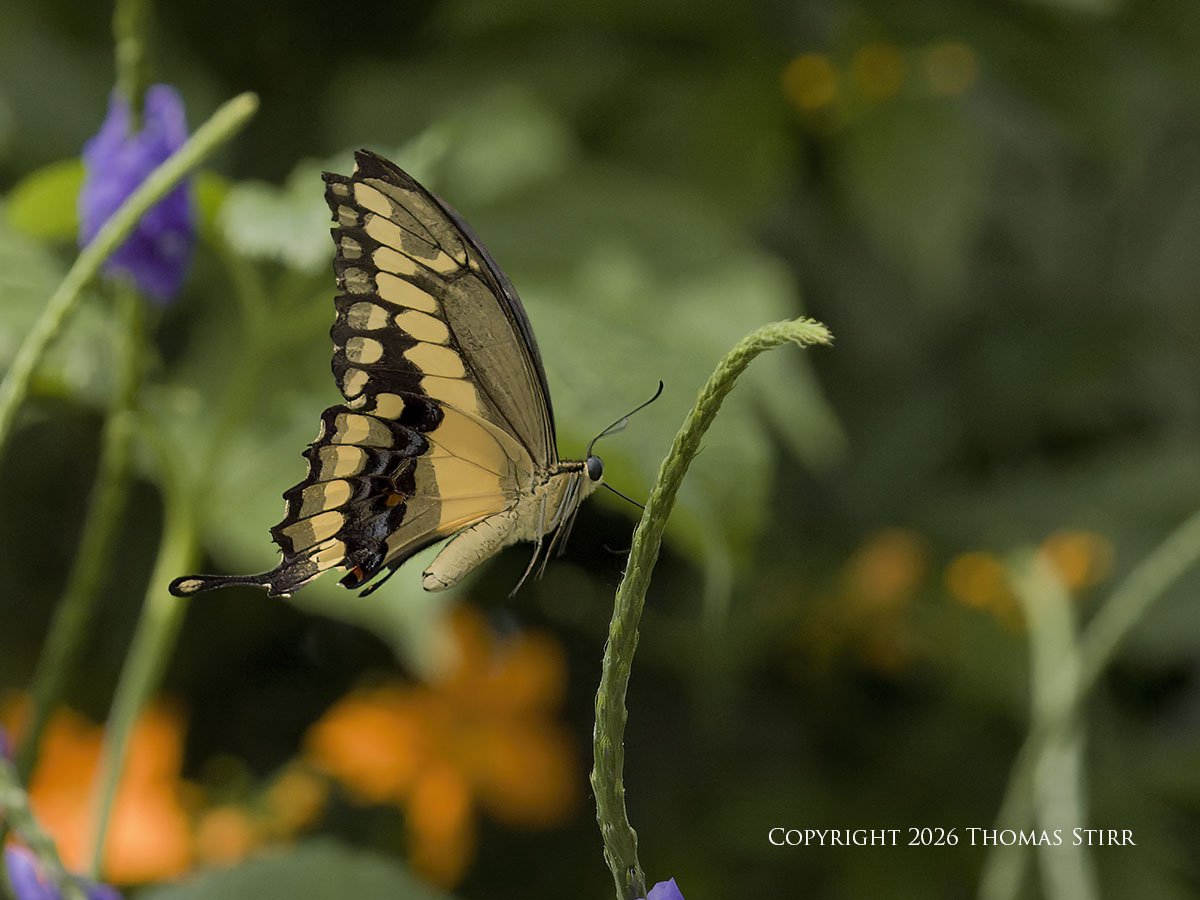
From a pragmatic standpoint it also made sense to concentrate some of my efforts on the larger sized butterflies.
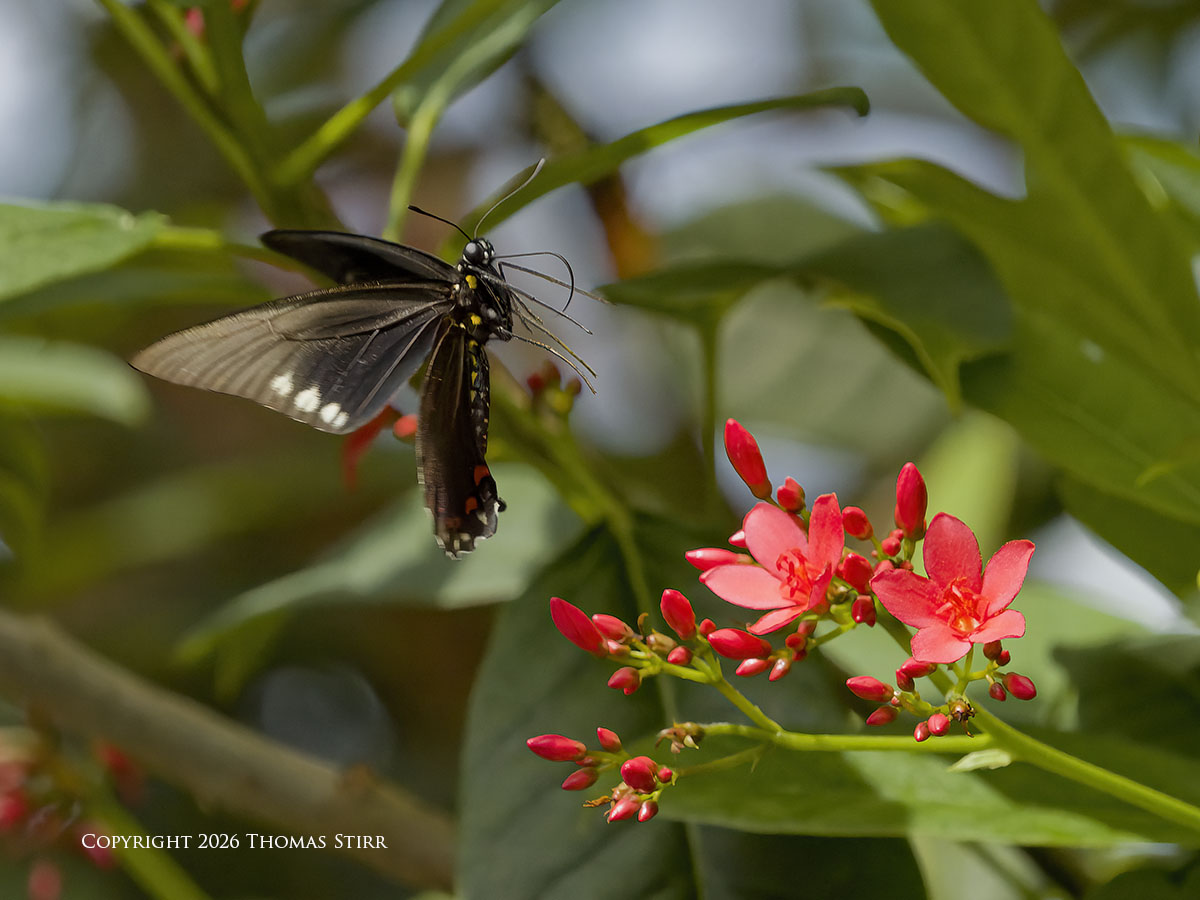
It was a bit of a challenge to get a lot of variety in my images in terms of shooting angles and blossoms… but I viewed this as a practice session so I wasn’t overly concerned.
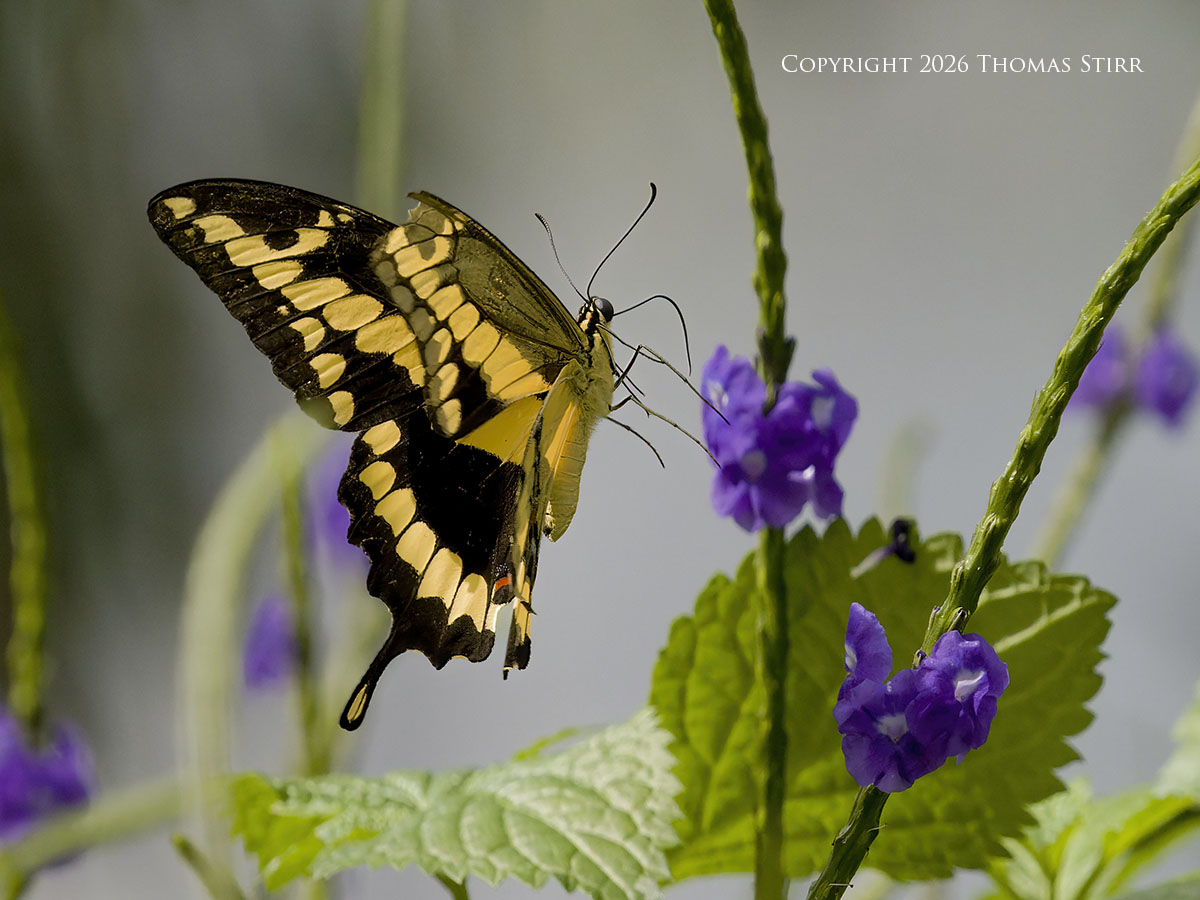
The M.Zuiko 100-400 mm f/5-6.3 IS was a good lens for this type of subject matter as it size and weight suited the situation quite well.
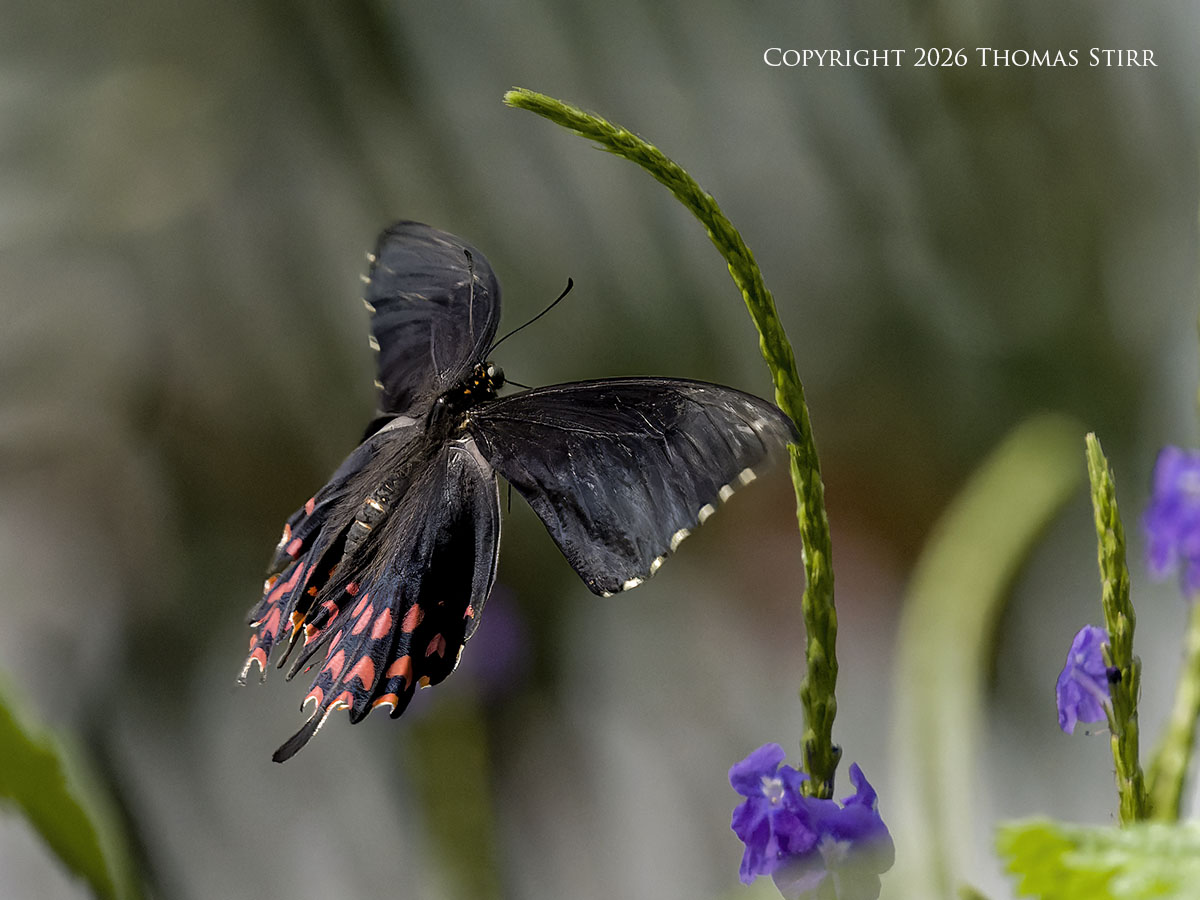
The next time I visit the Niagara Butterfly Conservatory with the goal of photographing captive butterflies in flight, I plan on using my M.Zuiko 150-600 mm f/5-6.3 IS… so I can assess the relative merits of these two telephoto zoom lenses when photographing this specific subject matter.
Technical Note
Photographs were captured handheld using camera gear as noted in the EXIF data. All images were created from RAW files using my standard process in post. This is the 1520 article published on this website since its original inception in 2015.
How you can keep this website advertising free
My intent is to keep this photography blog advertising free. If you enjoyed this article and/or my website and would like to support my work, you can purchase an eBook, or make a donation through PayPal (see Donate box below). Both are most appreciated.

You may be interested in macro and close-up photography with some emphasis on blossoms, bugs and butterflies. If that’s the case our 210 page eBook Blossoms, Bugs & Butterflies may be of interest. It is available for download for an investment of $14.99 CDN. The best view experience will be at 100% using Adobe Acrobat Reader.

You may enjoy bird photography, and if so our 188 page eBook Handheld Bird Photography may be of interest. It is available for download for an investment of $14.99 CDN. The best viewing experience of this eBook will be at 100% using Adobe Acrobat Reader.
Sometimes all we need as photographers is a bit of inspiration. We hope you can find some of that inside Finding Visual Expression II.

Finding Visual Expression II is available for download for an investment of $11.99 CDN. The best viewing experience of this eBook will be at 100% using Adobe Acrobat Reader.
You may be interested in all of the 30 concepts covered in both of these related eBooks. If so, you may want to also consider Finding Visual Expression.

Finding Visual Expression is available for download for an investment of $11.99 Cdn. The best viewing experience of this eBook will be at 100% using Adobe Acrobat Reader.
Our other eBooks include Images of Ireland, New Zealand Tip-to-Tip, Nikon 1: The Little Camera That Could, Desert & Mountain Memories, Images of Greece, Nova Scotia Photography Tour, and a business leadership parable… Balancing Eggs.
If you click on the Donate button below you will find that there are three donation options: $7.50, $10.00 and $20.00. All are in Canadian funds. Plus, you can choose a different amount if you want. You can also increase your donation amount to help offset our costs associated with accepting your donation through PayPal. An ongoing, monthly contribution to support our work can also be done through the PayPal Donate button below.
You can make your donation through your PayPal account, or by using a number of credit card options.
Word of mouth is the best form of endorsement. If you like our website please let your friends and associates know about our work. Linking to this site or to specific articles is allowed with proper acknowledgement. Reproducing articles, or any of the images contained in them, on another website or in any social media posting is a Copyright infringement.
Article and images are Copyright 2026 Thomas Stirr. All rights reserved. No use, duplication or adaptation of any kind is allowed without written consent. If you see this article reproduced anywhere else it is an unauthorized and illegal use. Posting comments on offending websites and calling out individuals who steal intellectual property is always appreciated!
Superb results Tom they look beautiful on this blog.
I tried this recently at Whipsnade zoo here in the UK, sadly the instant I got my camera out the lens steamed up and whatever I did I couldn’t get it clean? Did you suffer any of this problem?
Hi Mark,
It is very common for a lens to “steam up” when taking a camera that has been in a relatively colder environment into one that is warmer and more humid. It will take some time for the camera and lens to warm up to the point when the condensation disappears. All one can do in the meantime is to keep wiping the end of the lens with a cleaning cloth to remove the condensation… and wait for the camera/lens combination to warm up to the temperature of the new environment.
One of things to absolutely avoid is to change the lens on a comparatively cold camera body when first arriving in a warmer and more humid environment. This can cause condensation (i.e. ‘steaming’) to occur on the inside of a camera body, or on the first glass element on the inside of a lens (i.e. the lens element closest to the camera mount on the lens). Once that condensation forms on the inside of a camera body or lens it can take quite a long time for it to dissipate.
Tom