
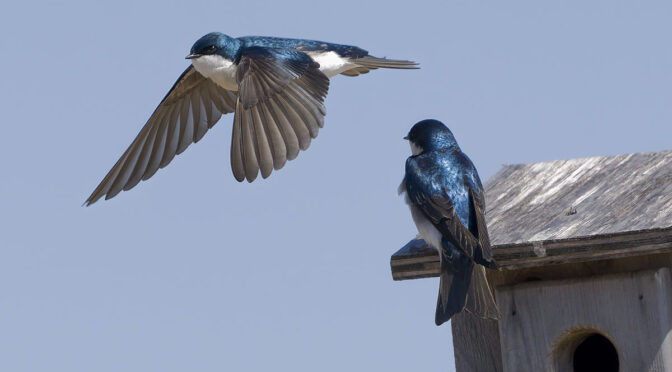
This short article features images of swallows at Irving Eco-Centre (La Dune de Bouctouche) located in Saint-Edouard-de-Kent, New Brunswick. These photographs were captured in early May during a trip my wife and I made out to the East Coast of Canada to visit family and friends.
NOTE: Click on images to enlarge. To view this article in a range of other languages click on the Canadian flag in the upper right corner.
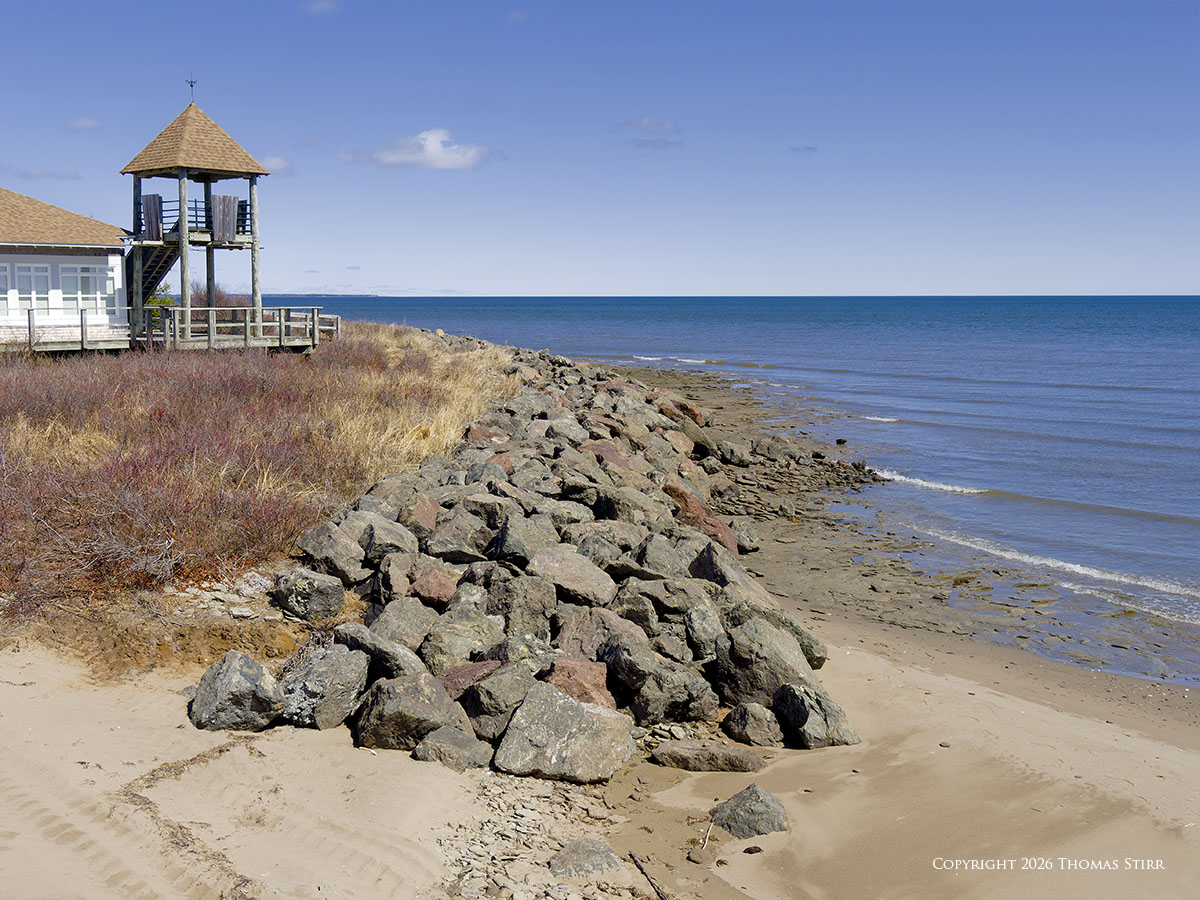
The Irving Eco-Centre was developed by J.D. Irving. It protects one the last remaining great sand dunes on the northeastern coastline of North America. The dunes stretch about 12 kilometres across Bouctouche Bay.
We faced quite a bit of heavy rain during our trip. Our visit to the Irving Eco-Centre was a fairly quick sightseeing stop during one of the few sunny days we had during our visit.
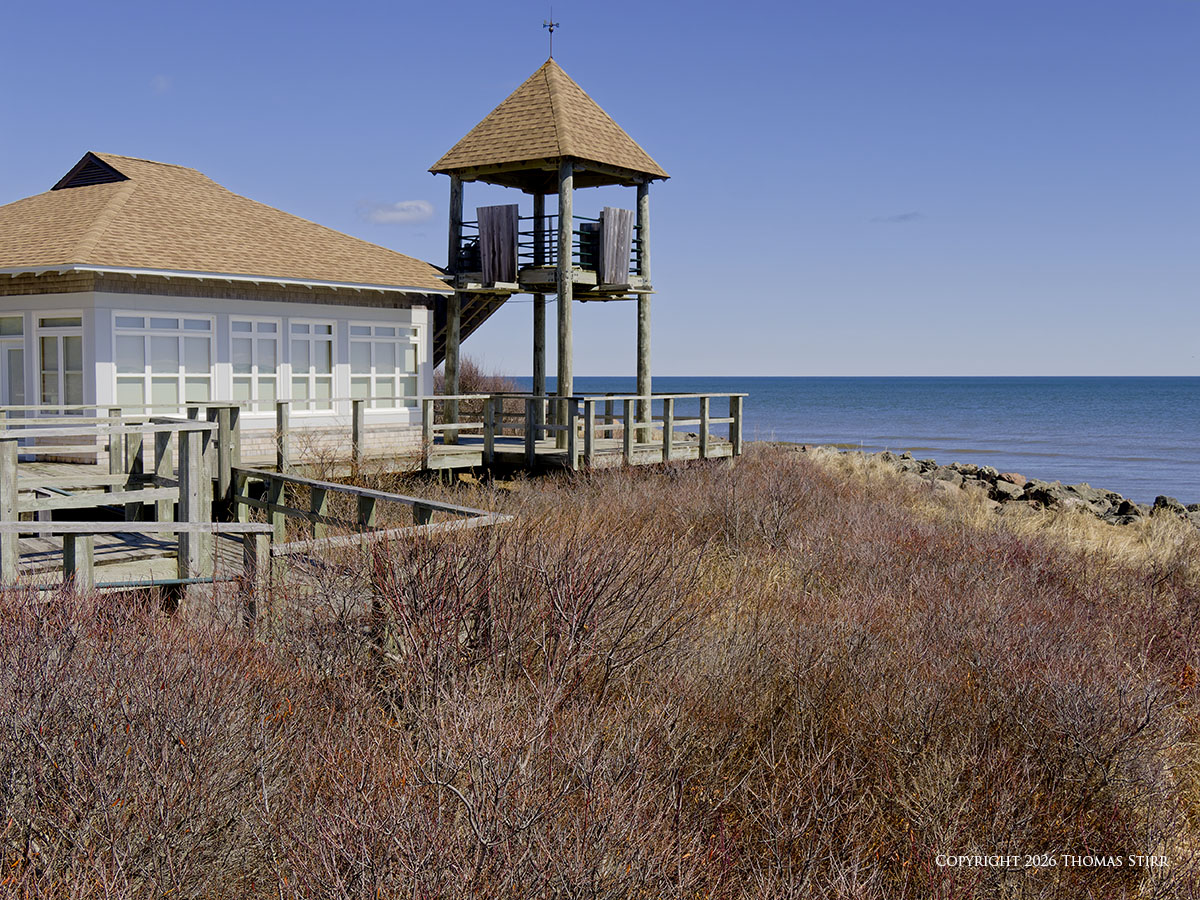
I wasn’t expecting to do a lot of photography during our trip so I brought a couple of flexible zoom lenses… the M.Zuiko 12-100 mm f/4 PRO IS, and the M.Zuiko 100-400 mm f/5-6.3 IS.
The Irving Eco-Centre hadn’t open for the season yet, so there weren’t very many other tourists at the location. As you can see from the images, we visited in the late morning under very bright, harsh sunlight. These can be challenging conditions for smaller sensor cameras in terms of dynamic range and colour depth.
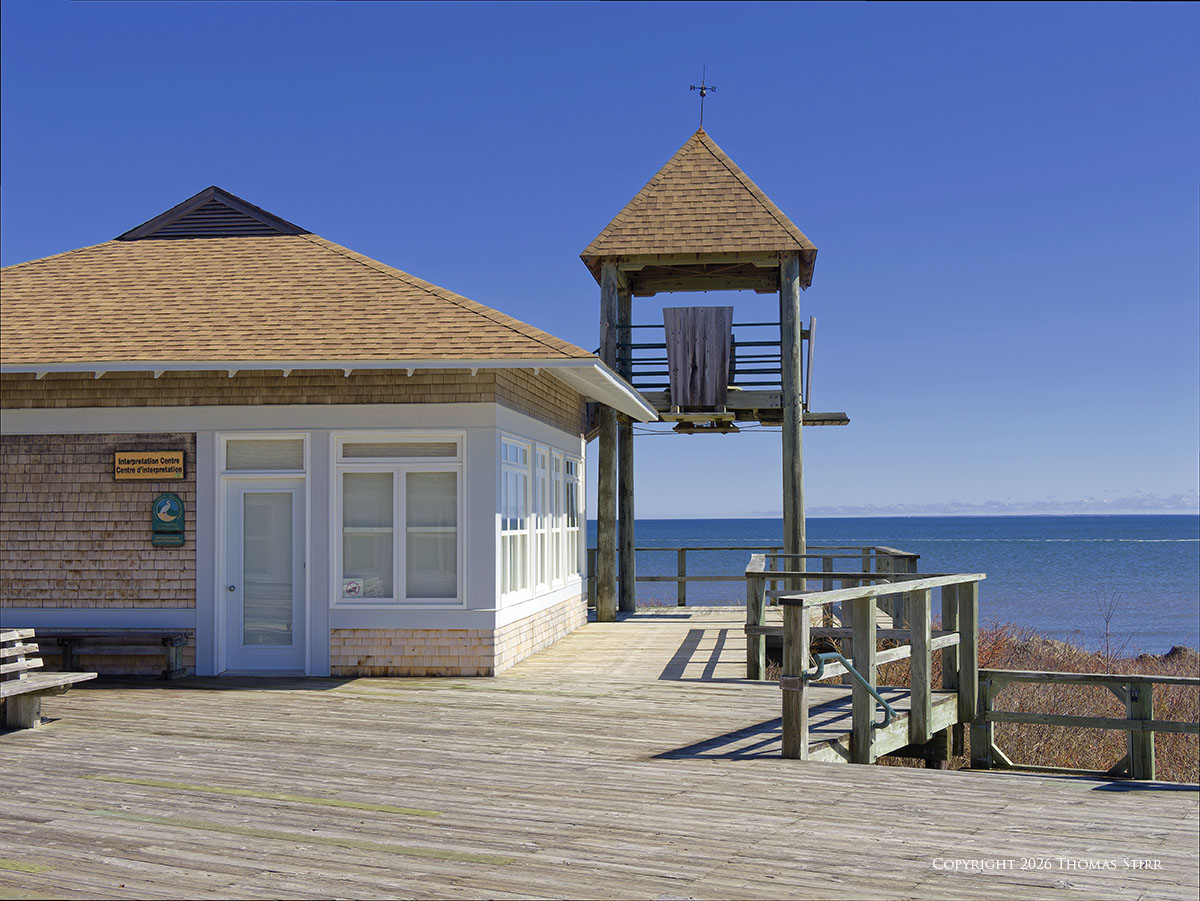
I kept my ISO at a low value to try to retain as much dynamic range as possible. I used DxO Smart Lighting (spot adjustment) in post to retain as many highlights as possible on the white window frames that were in very bright sunlight. I also used the Polarization and Pro Contrast functions in the Nik Collection to enhance the colour balance and intensity in the above images.
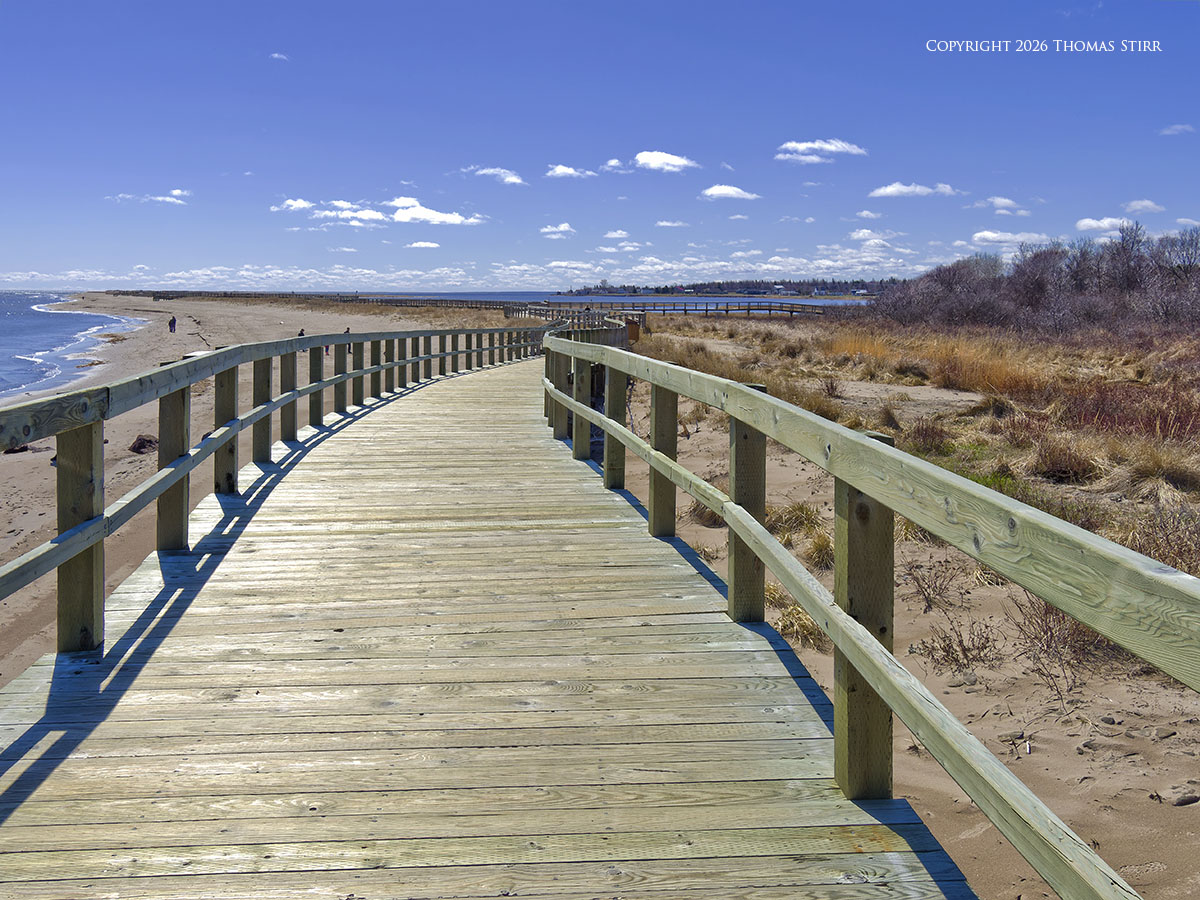
We walked to the end of the boardwalk, but did not have time to explore the sand dunes. I did capture a few images along the boardwalk to document our visit.
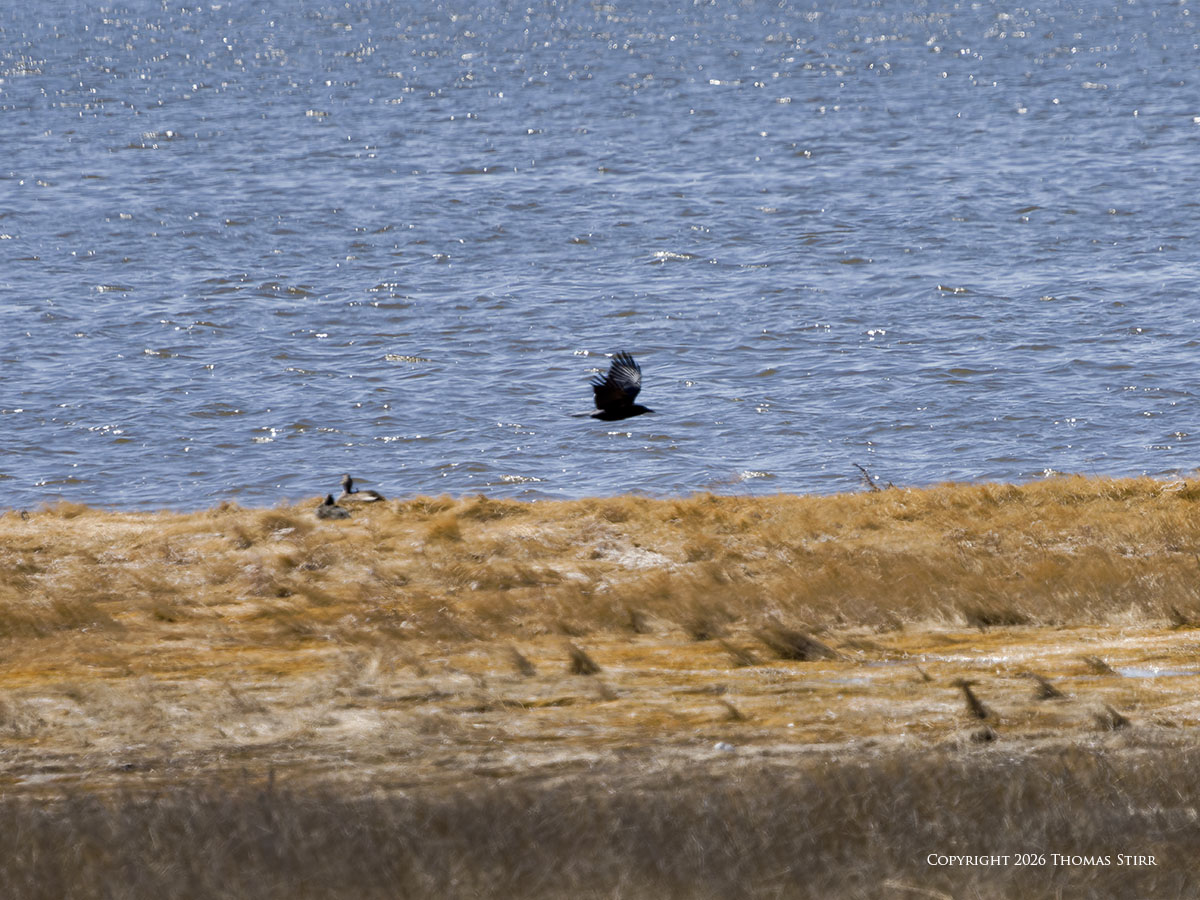
Given that it was early in the season I wasn’t expecting many birds… and other than a few ravens (I think) there were precious few birds in the area. And, most of the ones that were in the area were quite distant as the full frame capture above illustrates.
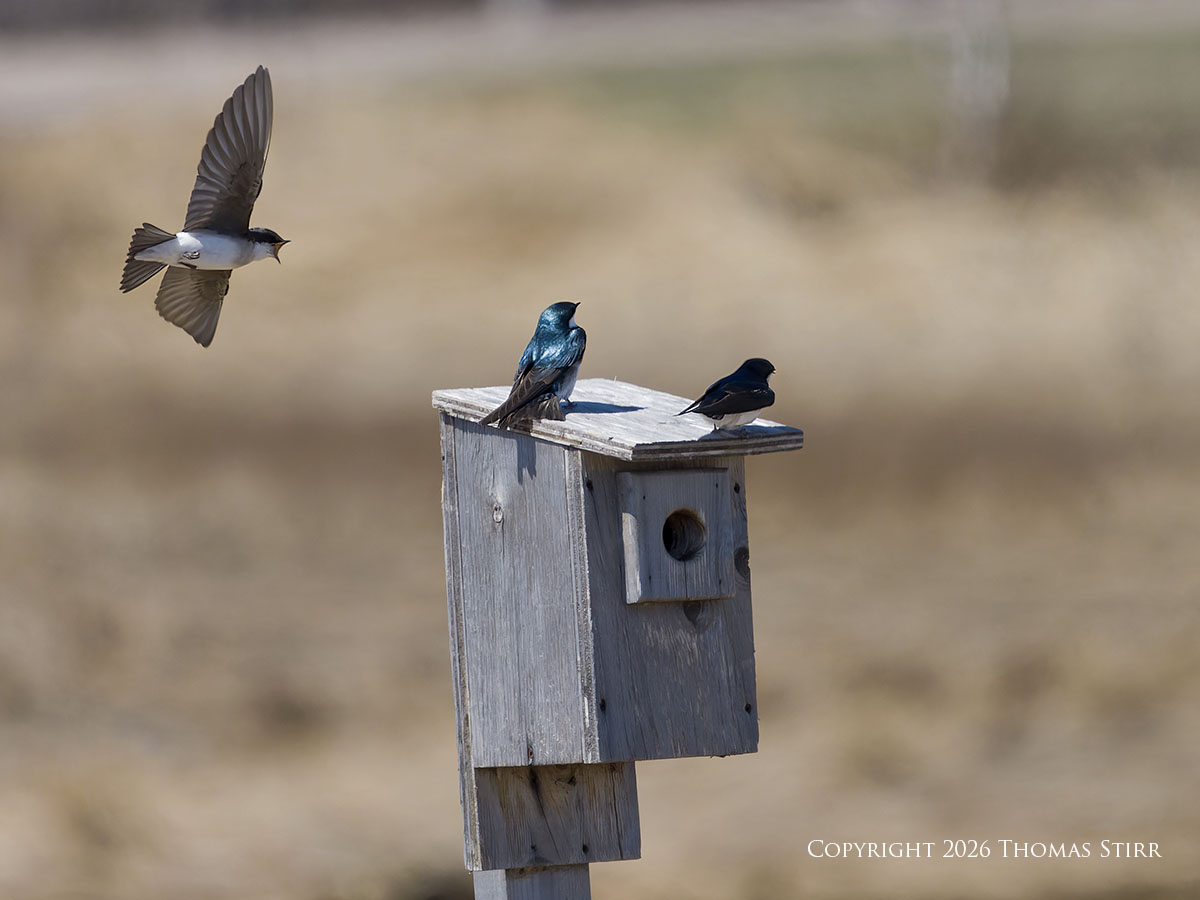
There were a few swallow boxes adjacent to the boardwalk so I decided to capture some images of swallows in flight. I certainly missed not having my M.Zuiko 150-600 mm f/5-6.3 IS zoom lens with me… but did the best I could with my 100-400 mm.
I began shooting with my zoom lens wide open at f/6.3. Given the subject distance of about 36 metres this gave me about 1.44 metres (~4.7 feet) of depth-of-field. Since I had plenty of light I stopped my lens down slight to f/8 to increase my depth-of-field to about 1.8 metres (~5.9 feet).
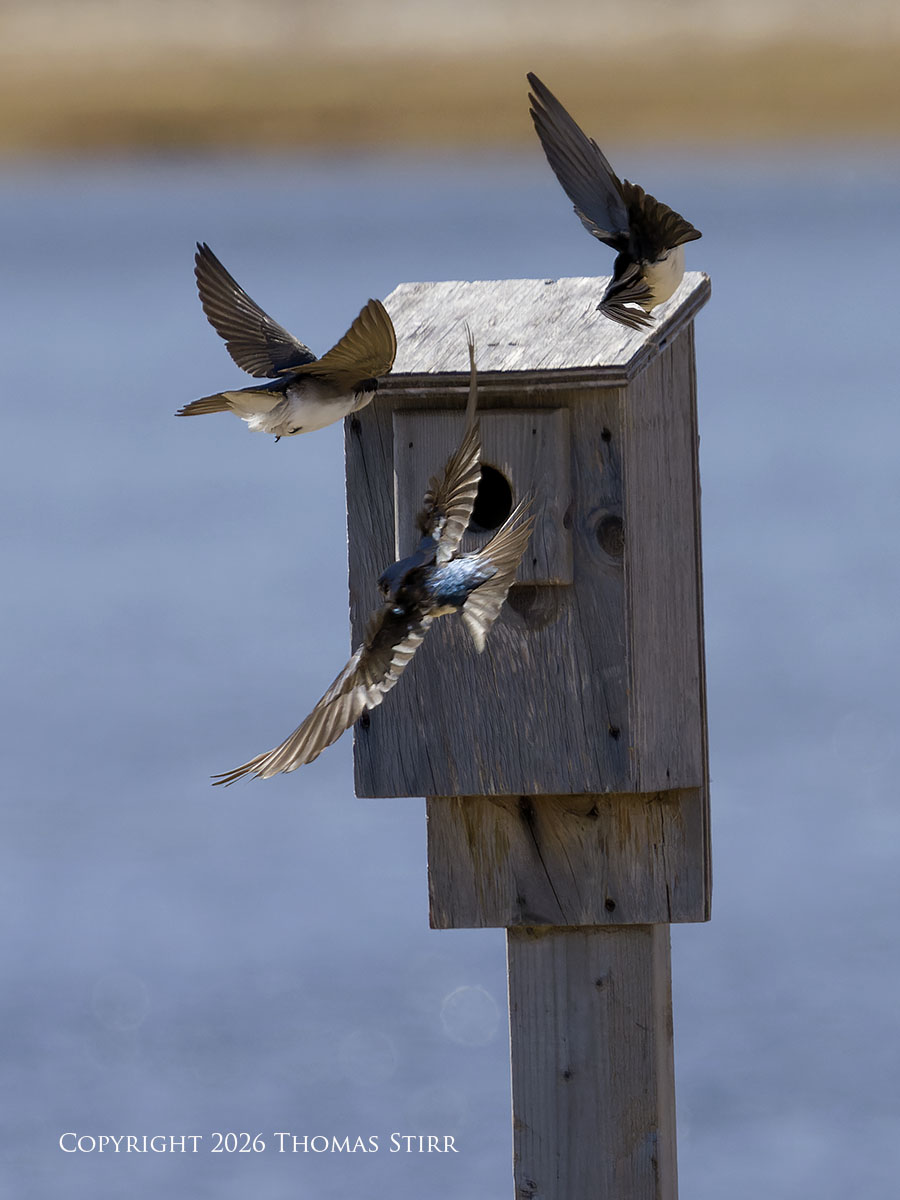
If you check the EXIF data you’ll discover that even with my lens fully extended to 400 mm (efov 800 mm) I still had to aggressively crop the swallows in-flight images in this article.
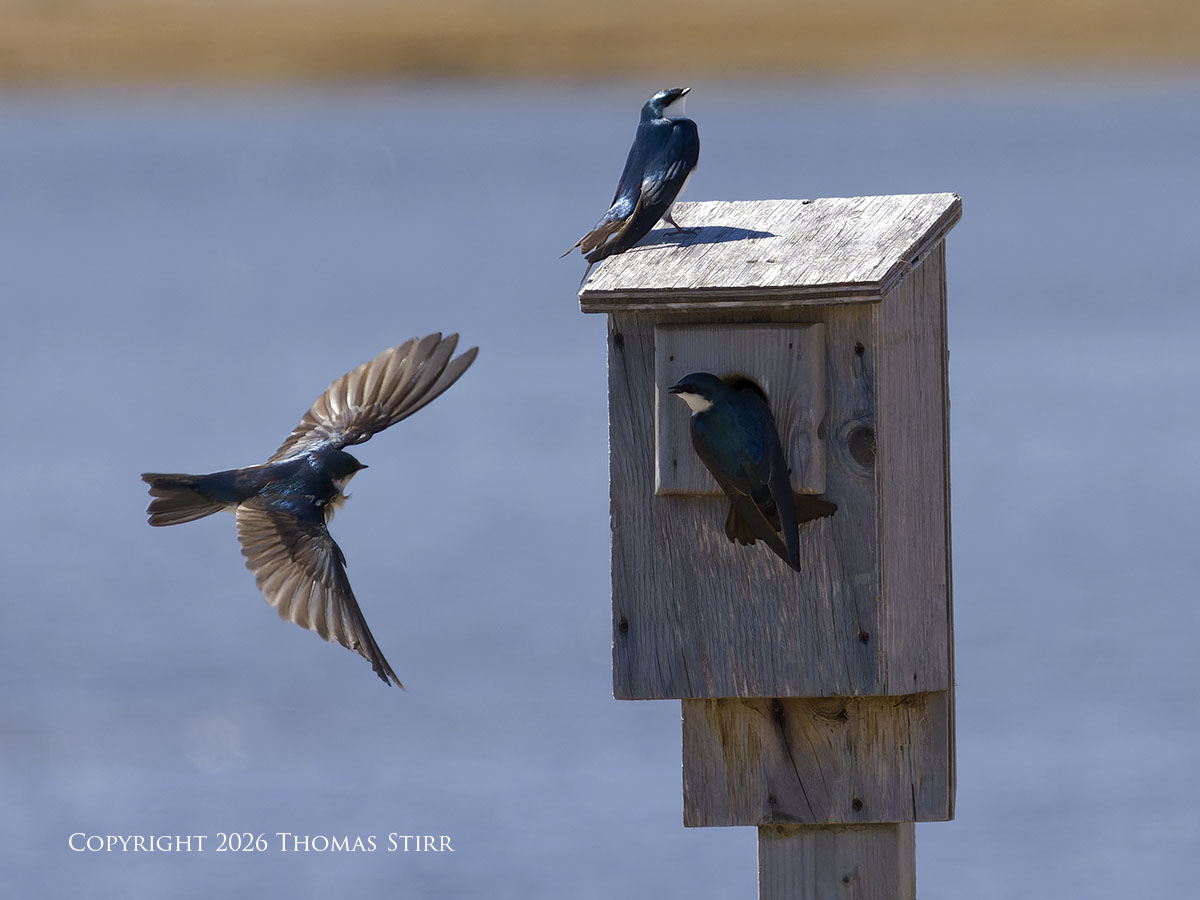
The other thing that you will notice in the EXIF data is that I used Pro Capture H for all of my swallows in-flight images. I used a single auto-focus point and positioned it on the swallow nesting boxes. This allowed me to have a stable focusing point with sufficient depth-of-field so I didn’t have to worry about my camera potentially missing images using C-AF (continuous auto-focus).
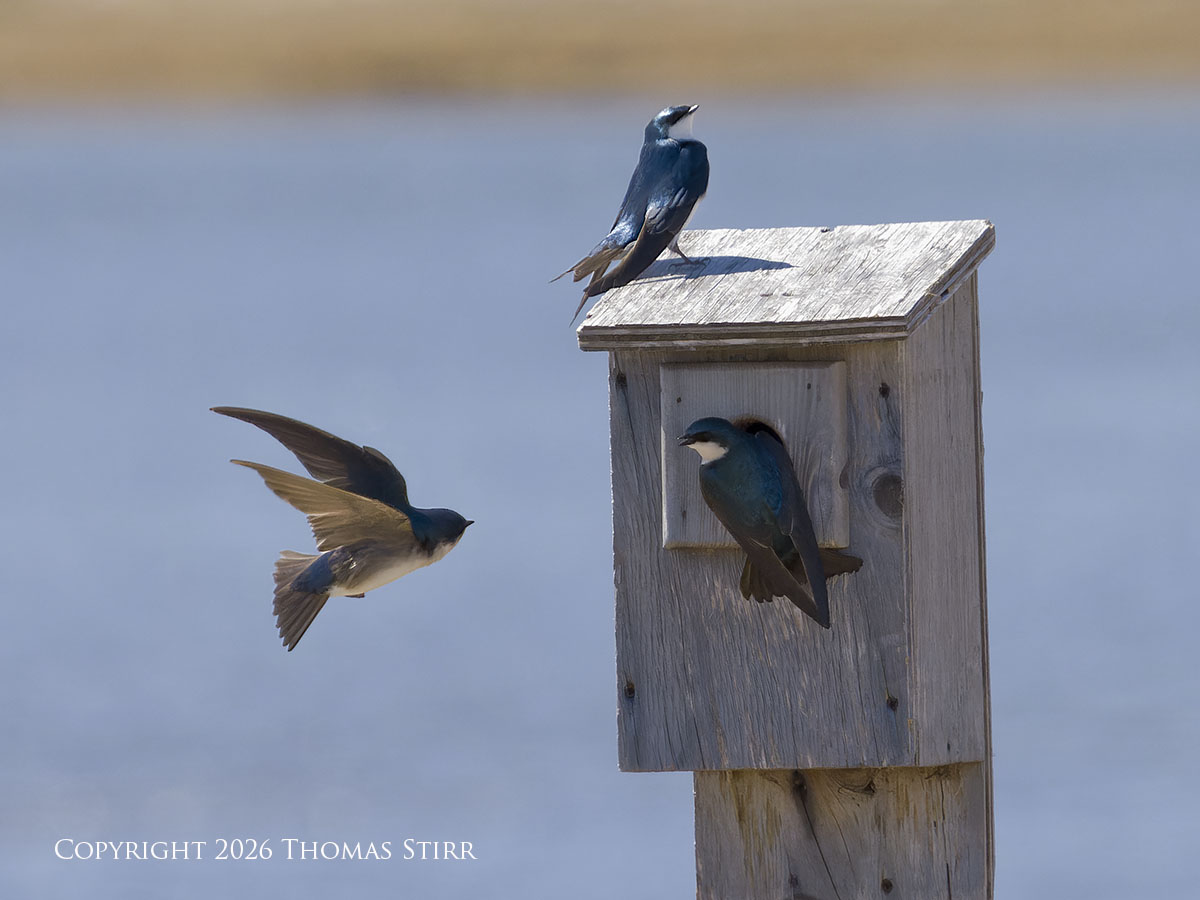
Using Pro Capture H with my E-M1X also allowed me to use a frame rate of 60 frames-per-second rather than only 18 fps if I would have used Pro Capture L. This allowed me to capture more incremental wing and body positions.
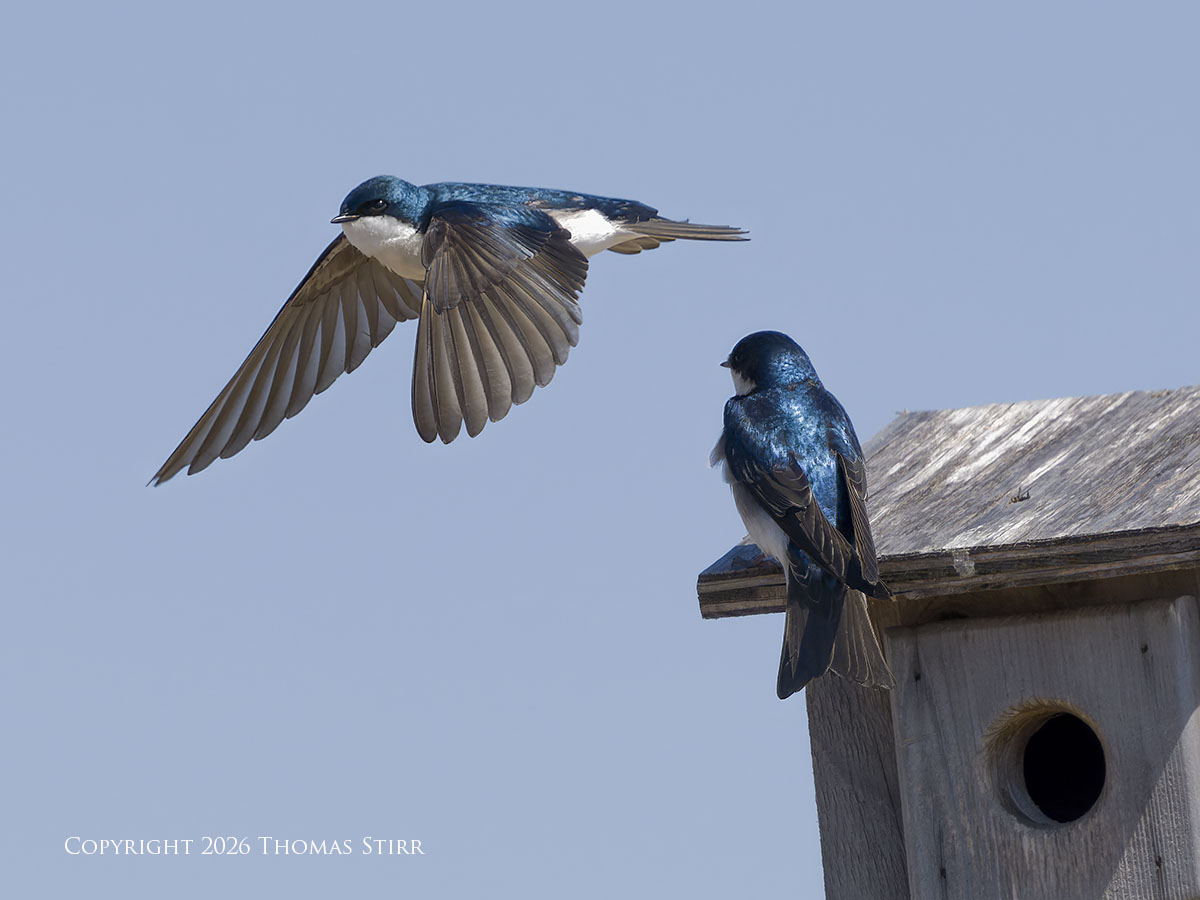
There was one swallow nesting box that was quite a bit closer to the boardwalk… i.e. 15.8 metres away. This necessitated me changing my shutter release timing, and my focusing point, as my depth-of-field at this subject distance was reduced to about 0.37 metres (~1.21 feet).
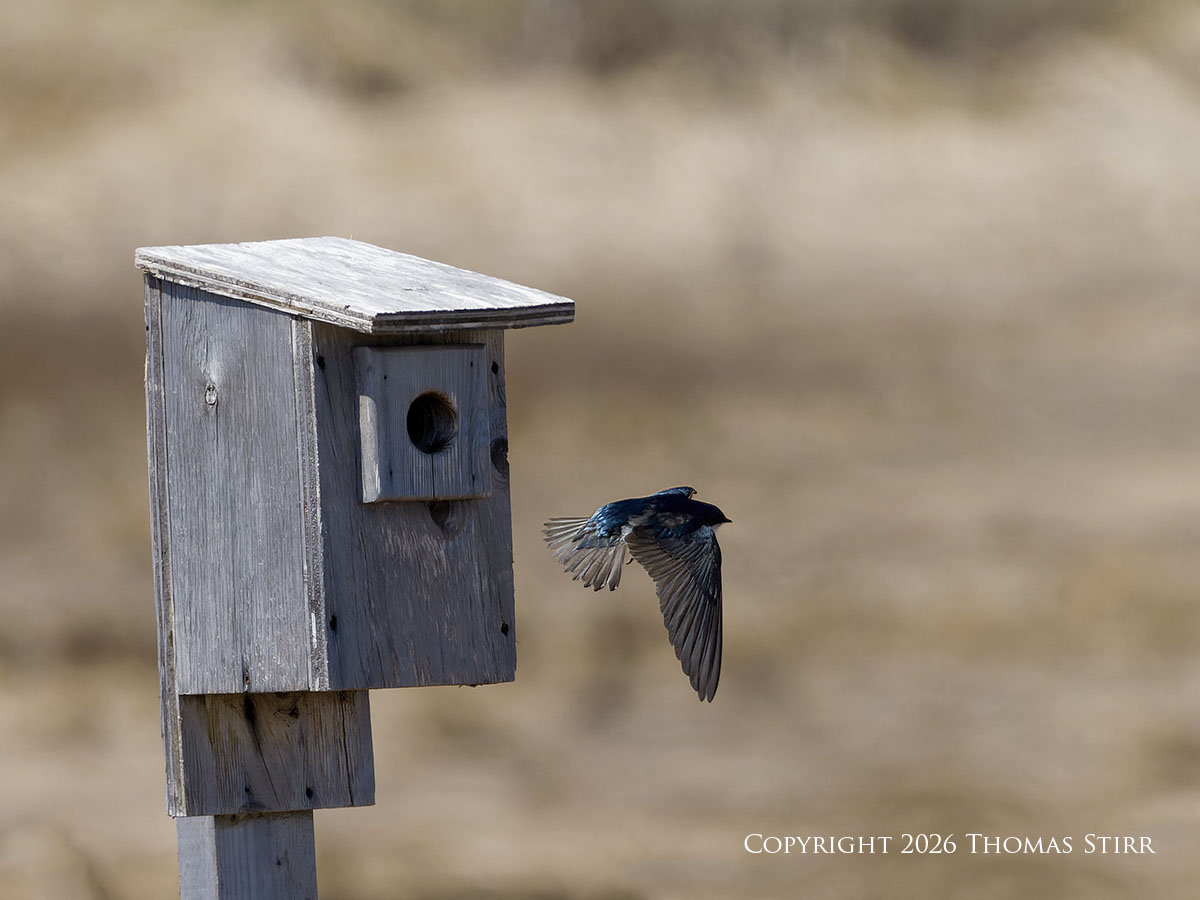
So… I focused on the swallow on the front edge of the swallow nesting box… then waited for it’s mate which was perched slightly further away to take flight. Given the direction of the wind I anticipated that it would launch into flight at about a 45-degree angle towards my shooting position.
In order to help ensure that the swallow taking flight would not fly out-of-focus I had to almost immediately fully depress my shutter release as it launched into flight. This meant that the perched swallow and the box were still clearly visible in the frame… as you can see in the image above.
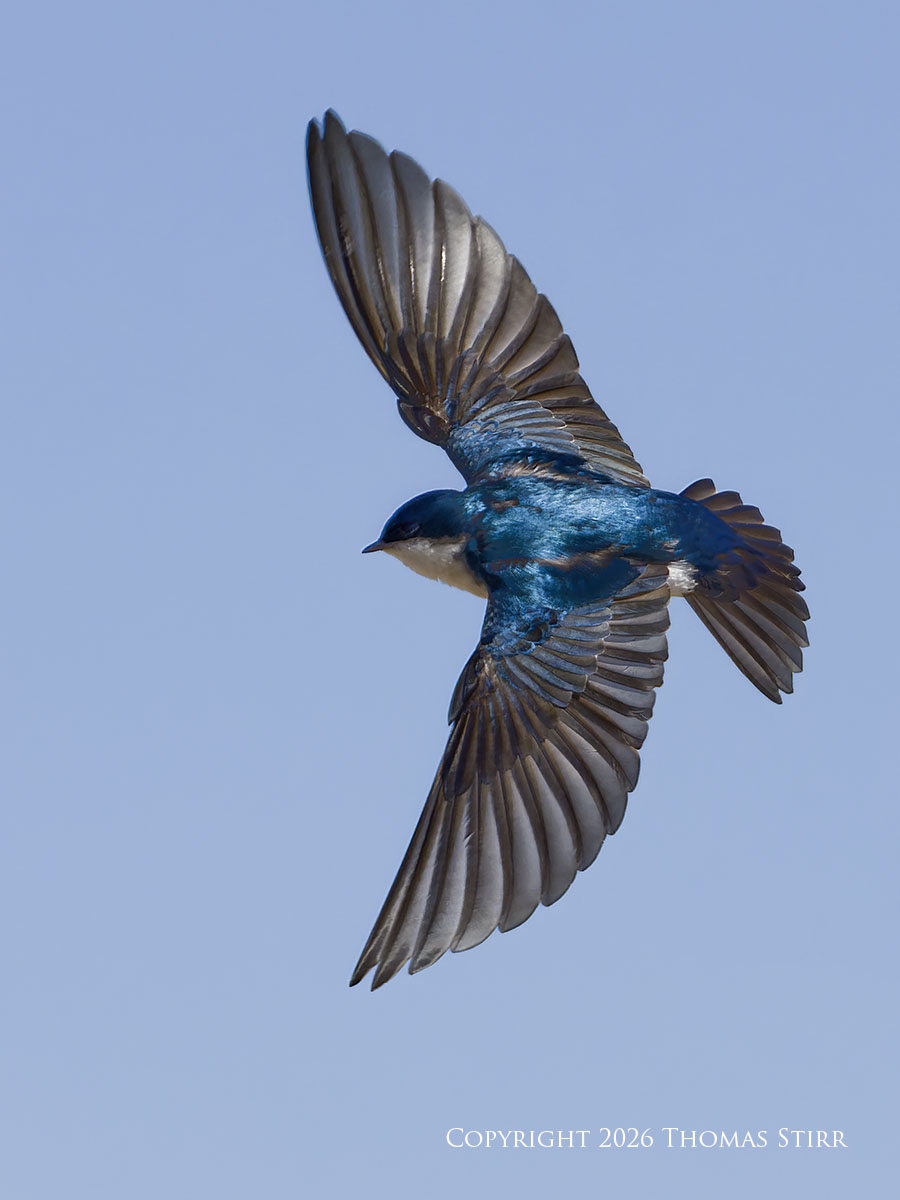
Fortunately the swallow returned to its mate a number of times and I was able to capture it in-flight with a pleasing wing spread. Some judicious use of the Lasso tool in PhotoShop allowed me to remove its mate and the swallow box from the image above.
Although our visit to the Irving Eco-Centre did not yield an abundance of images, it was still a very enjoyable experience.
Technical Note
Photographs were captured handheld using camera gear as noted in the EXIF data. All images were created from RAW using my standard process in post. Pro Capture H was used for all of the swallow images in this article. Both Pre-Shutter Frames and Frame Limiter were set to 15. A single AF point with a frame rate of 60 fps were used for the swallow images in this article. This is the 1531 article published on this website since its original inception in 2015.
How you can keep this website advertising free
My intent is to keep this photography blog advertising free. If you enjoyed this article and/or my website and would like to support my work, you can purchase an eBook, or make a donation through PayPal (see Donate box below). Both are most appreciated.

You may be interested in macro and close-up photography with some emphasis on blossoms, bugs and butterflies. If that’s the case our 210 page eBook Blossoms, Bugs & Butterflies may be of interest. It is available for download for an investment of $14.99 CDN. The best view experience will be at 100% using Adobe Acrobat Reader.
You may enjoy bird photography, and if so our 188 page eBook Handheld Bird Photography may be of interest. It is available for download for an investment of $14.99 CDN. The best viewing experience of this eBook will be at 100% using Adobe Acrobat Reader.
Sometimes all we need as photographers is a bit of inspiration. We hope you can find some of that inside Finding Visual Expression II.

Finding Visual Expression II is available for download for an investment of $11.99 CDN. The best viewing experience of this eBook will be at 100% using Adobe Acrobat Reader.
You may be interested in all of the 30 concepts covered in both of these related eBooks. If so, you may want to also consider Finding Visual Expression.

Finding Visual Expression is available for download for an investment of $11.99 Cdn. The best viewing experience of this eBook will be at 100% using Adobe Acrobat Reader.
Our other eBooks include Images of Ireland, New Zealand Tip-to-Tip, Nikon 1: The Little Camera That Could, Desert & Mountain Memories, Images of Greece, Nova Scotia Photography Tour, and a business leadership parable… Balancing Eggs.
If you click on the Donate button below you will find that there are three donation options: $7.50, $10.00 and $20.00. All are in Canadian funds. Plus, you can choose a different amount if you want. You can also increase your donation amount to help offset our costs associated with accepting your donation through PayPal. An ongoing, monthly contribution to support our work can also be done through the PayPal Donate button below.
You can make your donation through your PayPal account, or by using a number of credit card options.
Word of mouth is the best form of endorsement. If you like our website please let your friends and associates know about our work. Linking to this site or to specific articles is allowed with proper acknowledgement. Reproducing articles, or any of the images contained in them, on another website or in any social media posting is a Copyright infringement.
Article and images are Copyright 2026 Thomas Stirr. All rights reserved. No use, duplication or adaptation of any kind is allowed without written consent. If you see this article reproduced anywhere else it is an unauthorized and illegal use. Posting comments on offending websites and calling out individuals who steal intellectual property is always appreciated!