
This article discusses opportunity cost as a life skill, and how using this approach can help keep us centred on what is important to us. Assessing opportunity cost in our decisions can help unlock more of our personal potential. Our lives are the products of the decisions we’ve made in the past. Opportunity costs that are not well considered… or ignored… can result in regrets as we enter our later years.
NOTE: Click on images to enlarge. Photographs have been added to serve as visual breaks. To view this article in a range of other articles click on the Canadian flag in the upper right hand corner.

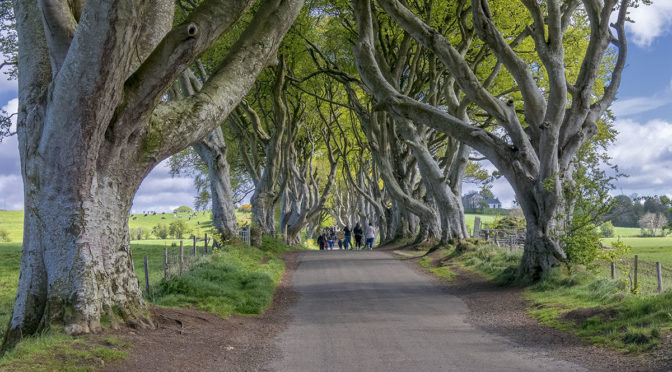
Life decisions are like being a traveller having to choose between a myriad of roads when on a journey. Some roads may get us to a destination quicker… but may not constitute an enjoyable journey. And, the ultimate destination may end up being well short of our potential.

Other roads may result in us becoming hopelessly lost. Some journeys may be full of wonderful experiences and self-fulfillment. The greatest power we have in life, is the power to choose. Choosing well involves considering opportunity costs.

What is opportunity cost?
In very simple terms opportunity cost is the idea that whenever we choose one option, we are giving up the value of another alternative. Using the opportunity cost concept enables us to assess that the ‘true cost’ of something isn’t just the money spent. It can also include other potential benefits that could be unrealized… or put in very blunt terms perhaps squandered… because of the decision we made.
The factors that we can consider as an opportunity cost are certainly financial, but they can also include relationships, career, health, emotions, knowledge, personal development, and time… just to name a few.

Opportunity cost is based on an individual’s decision options.
It is important to consider that opportunity cost is fully dependent on the individual making a specific decision. The decision options that one person would consider may not enter into someone else’s deliberations at all. Using opportunity cost as a life strategy can help us reduce the emotions involved in a decision.

Impact of emotions on logical decision making.
As human beings we make some of the worst decisions in our lives when we are emotionally aroused. Our ability to make sound, logical decisions is inversely proportional to our degree of emotional arousal… either good or bad.
How can we tell when we’ve made poor decisions because we’ve been in emotionally aroused states? One of the easiest signs to recognize is buyer’s remorse that sets in shortly after a purchase was made. As photographers we can harken back to some gear purchases that didn’t go well.
Emotional decision making can lead to more serious consequences. We can find ourselves over our heads in debt from purchasing a home or car because our emotions blinded us to our economic realities. Marriages can be short-lived. And, poor career choices can be made that restrict our potential. Living on the emotional edge can sometimes cast us over a cliff.

Understanding a range of opportunity costs helps broaden our decision options.
Let’s put opportunity cost into an common decision in which many photographers may find themselves. Let’s say a photographer who has been using an APS-C camera system is deciding between two full frame systems.
For argument’s sake let’s assume that this purchase would involve a well spec’d camera body and 4-5 high quality lenses. The total cost of this camera system change could easily be in the $15,000 to $20,000 range.

One way of looking at this particular decision would be to create a camera buying decision matrix. Then, evaluate the equipment being considered on that matrix to help arrive at a logical purchase decision. The problem with this approach is that in all likelihood there would be very little, if any, opportunity cost differences between any two full frame camera systems being considered.
We already know that unless a new camera system has specific technologies that truly expand photographic potential… having more dynamic range, colour depth, and better low light performance will not automatically make a photographer more skillful. A poorly conceived and composed image remains poorly conceived and composed… regardless of the camera gear used to create it.

The real question may not have been asked.
That’s because the photographer has not truly assessed the opportunity cost of their potential $15,000 to $20,000 expenditure. The fundamental question is how else can that $15,000 to $20,000 amount of money be used?
What financial opportunity cost would be lost? Paying off some credit card debt and saving interest? Investing the money in a retirement fund? Topping up the educational fund for children? Fixing a roof? Updating a bathroom or kitchen? Are there relationship opportunity costs… like going with a spouse on a holiday to celebrate a milestone wedding anniversary?

From a photographic standpoint would the photographer value a month long self-drive photography tour of Ireland or of New Zealand more than buying a new camera system? Perhaps a trip to Costa Rica to photograph birds? Or, an African wildlife safari?
Would the emotional experience and memories from a ‘trip of a lifetime’ be an opportunity cost that shouldn’t be missed? Only the photographer considering buying a new camera system would know.

Time, the most important photographic opportunity cost.
Time is a critical photographic opportunity cost. When we spend time online arguing with strangers about opinions that will never change, we waste time… our most precious resource. Some folks find value reading gear reviews or watching a selection of educational YouTube videos. That may be time well spent.

When the time spent on these online activities becomes excessive, we rob ourselves of valuable experiences in the field with our camera gear. Honing our craft, and experimenting with our equipment. The most important things we can do to grow as a photographer is to be out in the field observing subjects, composing images and pressing our shutter releases.

Considering opportunity cost for career management.
Some people go through their work careers with monetary compensation and job position as their only decision criteria. And, there’s nothing wrong with that… this is a personal decision that may work out very well for them.
Other folks consider other career opportunity costs outside of compensation and position on an org chart. Factors like enhancing their education. Broadening and/or deepening their skill sets. Or, gaining experience in a range of functional disciplines. These are examples of considering future opportunity costs vis a vis one’s current financial and career situation.

Putting more arrows in our quiver.
Considering opportunity costs in the future can be of significant benefit when it comes to career planning and management. The more arrows (i.e. skills, education and experience) we can put in our quiver… the more targets (i.e. career opportunities) we can shoot at in the future.
Focusing on opportunity costs linked to the future helped me live a very eclectic work career. At one point in my career I willingly accepted a 22% pay cut in order to get a specific corporate job in a new-to-me industry. The opportunity cost for knowledge acquisition was simply too great to pass up. That decision was a turning point in my life.

Most of my friends thought I had lost my mind. They couldn’t see that I was ‘finding myself’ by focusing on opportunity costs associated with learning and growing.
My journey of self-discovery led me to a number of industries. The pipe and valves industry. Community newspapers. Agricultural equipment. Heavy duty commercial trucks. My own business-to-business consulting and executive coaching practice. Industrial photographer, safety poster and video creator. And… where I am today… here with you.

Every industry change and job change came with opportunity costs. Work as a warehouseman. Customer service representative. Construction materials expeditor. Purchasing and inventory control management. Commissioned sales. Production supervision. Sales management. Sales and promotion management. Marketing management. Strategy formulation. Human effectiveness training.
Through all of my corporate career changes I kept my eye firmly focused on the opportunity costs linked to my future… so I could continue to learn and grow.

Assessing opportunity costs helps to unlock our human potential.
We owe it to ourselves to become all that we can become. To make a positive difference to those we touch directly. And, hopefully in our own small way… help make the world a better place. Recognizing and leveraging our opportunity costs are the keys to our futures. It is imperative to make the most of them.
Technical Note
Photographs were captured handheld using camera gear as noted in the EXIF data. All images were created from RAW files using my standard process in post. This is the 1535 article published on this website since its original inception in 2015.

How you can keep this website advertising free
My intent is to keep this photography blog advertising free. If you enjoyed this article and/or my website and would like to support my work, you can purchase an eBook, or make a donation through PayPal (see Donate box below). Both are most appreciated.

You may be interested in macro and close-up photography with some emphasis on blossoms, bugs and butterflies. If that’s the case our 210 page eBook Blossoms, Bugs & Butterflies may be of interest. It is available for download for an investment of $14.99 CDN. The best view experience will be at 100% using Adobe Acrobat Reader.

You may enjoy bird photography, and if so our 188 page eBook Handheld Bird Photography may be of interest. It is available for download for an investment of $14.99 CDN. The best viewing experience of this eBook will be at 100% using Adobe Acrobat Reader.
Sometimes all we need as photographers is a bit of inspiration. We hope you can find some of that inside Finding Visual Expression II.

Finding Visual Expression II is available for download for an investment of $11.99 CDN. The best viewing experience of this eBook will be at 100% using Adobe Acrobat Reader.
You may be interested in all of the 30 concepts covered in both of these related eBooks. If so, you may want to also consider Finding Visual Expression.

Finding Visual Expression is available for download for an investment of $11.99 Cdn. The best viewing experience of this eBook will be at 100% using Adobe Acrobat Reader.
Our other eBooks include Images of Ireland, New Zealand Tip-to-Tip, Nikon 1: The Little Camera That Could, Desert & Mountain Memories, Images of Greece, Nova Scotia Photography Tour, and a business leadership parable… Balancing Eggs.
If you click on the Donate button below you will find that there are three donation options: $7.50, $10.00 and $20.00. All are in Canadian funds. Plus, you can choose a different amount if you want. You can also increase your donation amount to help offset our costs associated with accepting your donation through PayPal. An ongoing, monthly contribution to support our work can also be done through the PayPal Donate button below.
You can make your donation through your PayPal account, or by using a number of credit card options.
Word of mouth is the best form of endorsement. If you like our website please let your friends and associates know about our work. Linking to this site or to specific articles is allowed with proper acknowledgement. Reproducing articles, or any of the images contained in them, on another website or in any social media posting is a Copyright infringement.
Article is Copyright 2026 Thomas Stirr. Images are Copyright 2013-2019 Thomas Stirr. No use, duplication or adaptation of any kind is allowed without written consent. If you see this article reproduced anywhere else it is an unauthorized and illegal use. Posting comments on offending websites and calling out individuals who steal intellectual property is always appreciated!