This article discusses why I prefer practicing with gulls, and shares an extensive selection of new images recently captured at 40 Mile Creek in Grimsby.
Some photographers seem to view gulls as nothing more than a nuisance… and they don’t bother trying to photograph them at all. From my perspective, of all of the bird species I could choose to photograph in-flight, it is difficult for me to identify better practice birds than gulls.
This article features a selection of HHFS flowers captured with the M.Zuiko 100-400 mm f/5-6.3 IS zoom lens. Often when we think about handheld in-camera focus stacking (HHFS) when photographing flowers, using a macro lens come to mind… rather than a long telephoto zoom lens.
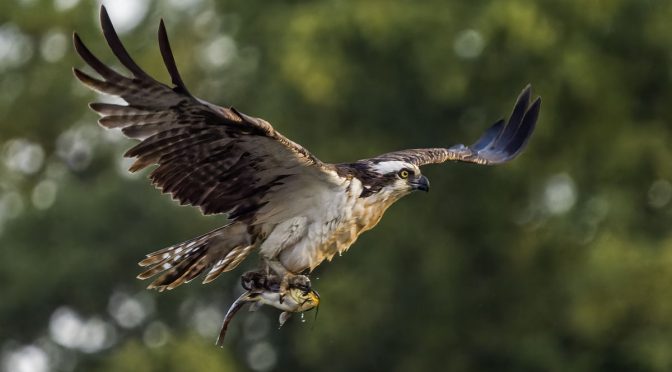
Ospreys are found in various locations around the globe and have fascinated photographers and bird watchers alike for many years. This species is one of my favourite birds to photograph due to its ability to dive into water to catch live fish.Continue reading Ospreys→
This article features some handheld image runs of kingfishers taking flight near 40 Mile Creek in Grimsby Ontario. Over the years I’ve had precious few opportunities to photograph this kind of action with kingfishers. On this particular October afternoon I had four opportunities and was able to successfully photograph these kingfishers taking flight with all four of them.
For the past couple of weeks I’ve been searching my bird archives diligently trying to choose some older images that can be incorporated in an upcoming bird photography eBook. This has been one of those projects that has been difficult to keep moving with the need to juggle priorities.
This article about playing guitar again may appear rather odd for a photography website, but I wanted to share this personal experience, and discuss how it may relate to some people’s pursuit of photography.
This article features some September birding images captured handheld during a recent visit to Hendrie Valley. While there wasn’t an abundance of birds in the area during my visit… I was able to capture a reasonable number of images.
This article discusses the metering and composition choices at Bird Kingdom that were utilized to create the images featured in this posting. As photographers we sometimes get caught up in new technologies and the ‘latest and greatest’ gear that is being promoted… and as a result we can overlook some fundamental decisions when creating images.
This article shares 14 consecutive test images of a heron landing at 1680mm EFOV. These were captured a couple of days ago at Hendrie Valley. The past few months have been a challenge for me in terms of getting out with my camera gear. So much so that I was sadly in need of some practice.
This website celebrates the joy of photography and features a wide range of photographic subject matter. The content is designed to appeal to a wide range of people interested in photography. The website also demonstrates the image creating capability of small sensor cameras including micro four thirds, 1", and 1/2.3" cameras.
You cannot copy content of this page
We use cookies to ensure that we give you the best experience on our website. This is an advertising free website and we do not use any kind of advertising tracking cookies. Your email address or any other information you provide as your subscription to the website is never sold to any other party. If you subscribe to this website your email address is used to send out notifications on new articles. If you continue to use this site we will assume that you are happy with our approach to cookie use.