

The reality of cost seems to rarely enter into various reviews of camera equipment, and especially those that deal with lenses.
NOTE: Click on images to enlarge. To view this article in a range of different languages click on the Canadian flag in the upper right corner.

Recently I stumbled on an online discussion about the image quality differences, and other attributes, between the M.Zuiko PRO 150-400 f/4.5 and M.Zuiko 150-600 f/5-6.3.

Various review articles were quoted as the debate participants were trying to prove their points.

From my perspective these types of comparisons and discussions about the relative merits of each lens are somewhat amusing to witness.

Folks exchange their viewpoints and the interactions can sometimes become somewhat animated.

Often missing in these discussions is the reality of cost. The M.Zuiko 150-600 mm f/5-6.3 IS lists for about $3,600 in Canada, making the M.Zuiko PRO 150-400 mm f/4.5 zoom at $10,000… 278% more expensive.

Is the image quality of the ‘big white’ lens 278% better? Is the weather sealing 278% better? Is the construction and handling 278% better?

Reviewers do assess the image quality from that lens to be better than the M.Zuiko 150-600. But… how would we actually quantify the image quality and other difference… and establish a verifiable price/value comparison?

At a cost of $3,600 the M.Zuiko 150-600 mm zoom is at an unaffordable level for many photographers. My wife and I had to think long and hard about making that level of investment.

From a pragmatic standpoint if a photographer is not in a financial position to actually be able to buy one of these lenses, then those products don’t exist in their every day reality. Debates about their comparative strengths are basically moot for many folks.

By most accounts the M.Zuiko PRO 150-400 f/4.5 zoom is an outstanding lens. Would I ever consider buying one? Nope.

As noted earlier, in Canada that lens retails at $10,000 before any minor discounts that may be in effect. From a practical standpoint it is well out of my realm of affordability.

Regardless of how well that lens may perform I’ve never given it a second thought. The reality of cost… is the reality of cost. I have no interest in reading a review, or watching a video about a lens that is not within my practical reality. All that would do is potentially sow the seeds of discontent.

Unfortunately gear snobbery is alive and well in the photographic community. Many photographers pre-judge others based on the camera gear that they are using.

I don’t know if it still the case today… but a very common belief back about 10-15 years ago was that ‘real photographers use full frame gear’.

The truth is that an unskilled photographer will be just as unskilled whether they use a full frame kit, or a system that utilizes a smaller sensor… or even a larger sensor for that matter.

There is a reality of cost… and it manifests itself in two ways. The first, is the price that we pay for the camera gear that we use. Most of us do not have unlimited budgets… so pragmatic cost limits do exist. The second cost is far more critical.

The second reality of cost is the price we pay when we fail to develop our photography skills.

These include knowing our camera equipment intimately… and being able to use it to its full potential. Developing our field craft. Being aware of the photographic opportunities around us. And, nurturing our creativity when we have a camera in hand. What we own isn’t nearly as important as what we can create with what we own.
Technical Note
Photographs were captured handheld using camera gear as noted in the EXIF data. All images were created from RAW files using my standard process in post. This is the 1,515 article published on this website since its original inception in 2015.
How you can keep this website advertising free
My intent is to keep this photography blog advertising free. If you enjoyed this article and/or my website and would like to support my work, you can purchase an eBook, or make a donation through PayPal (see Donate box below). Both are most appreciated.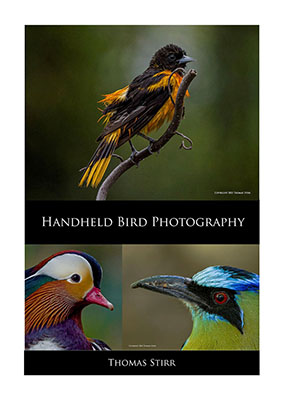
You may enjoy bird photography, and if so our 188 page eBook Handheld Bird Photography may be of interest. It is available for download for an investment of $14.99 CDN. The best viewing experience of this eBook will be at 100% using Adobe Acrobat Reader.
Sometimes all we need as photographers is a bit of inspiration. We hope you can find some of that inside Finding Visual Expression II.

Finding Visual Expression II is available for download for an investment of $11.99 CDN. The best viewing experience of this eBook will be at 100% using Adobe Acrobat Reader.
You may be interested in all of the 30 concepts covered in both of these related eBooks. If so, you may want to also consider Finding Visual Expression.

Finding Visual Expression is available for download for an investment of $11.99 Cdn. The best viewing experience of this eBook will be at 100% using Adobe Acrobat Reader.
Our other eBooks include Images of Ireland, New Zealand Tip-to-Tip, Nikon 1: The Little Camera That Could, Desert & Mountain Memories, Images of Greece, Nova Scotia Photography Tour, and a business leadership parable… Balancing Eggs.
If you click on the Donate button below you will find that there are three donation options: $7.50, $10.00 and $20.00. All are in Canadian funds. Plus, you can choose a different amount if you want. You can also increase your donation amount to help offset our costs associated with accepting your donation through PayPal. An ongoing, monthly contribution to support our work can also be done through the PayPal Donate button below.
You can make your donation through your PayPal account, or by using a number of credit card options.
Word of mouth is the best form of endorsement. If you like our website please let your friends and associates know about our work. Linking to this site or to specific articles is allowed with proper acknowledgement. Reproducing articles, or any of the images contained in them, on another website or in any social media posting is a Copyright infringement.
Article is Copyright 2026 Thomas Stirr. Images are Copyright 2020-2024 Thomas Stirr. All rights reserved. No use, duplication or adaptation of any kind is allowed without written consent. If you see this article reproduced anywhere else it is an unauthorized and illegal use. Posting comments on offending websites and calling out individuals who steal intellectual property is always appreciated!
Hi Thomas, thanks for the article. I purchased a 75-300mm in December 25 to give into my growing interest in birds and it is eapidly moving into a rabbit hole of tracking all wildlife I can. I am curious to know how do you get those clear and sharp images with the lens at its top reach, as what I normally get wouldn’t look that nitid. I would appreciate all recommendations! Thanks in advance!
Hi Silvia,
The M.Zuiko 75-300 mm f/4.8-6.7 II can be a tricky lens at times given its equivalent field-of-view and lightweight. (P.S. I assume you are using the II version of this lens.) My understanding is the the original version of this lens can be soft when fully extended. I’ve never used the original version so I can’t comment from the perspective of firsthand experience.
There are a few issues that can contribute to somewhat softer images when the lens is fully extended. Using too slow of a shutter speed is often a contributing factor. Another issue can be the shutter release motion that a photographer uses. A slow, smooth shutter release is desired, rather than an abrupt downward jabbing motion. Good handholding technique along with controlled breathing are also needed for consistently sharp images.
Every lens has its limitations in terms of optical performance. So, a cost effective lens like the 75-300 will not perform as well as a PRO 40-150 mm with teleconverters. There can be sample variations between lenses which can also play a part. I’ve not experienced a substandard M.Zuiko lens… so I only bring this up as a possibility.
When doing work in post using the auto lens corrections in software like DxO PhotoLab can improve image quality. So too can programs like Topaz Sharpening AI or Topaz DeNoise AI.
Hope this has helped.
Tom
I have also realized all your pictures have a lot of light. Where I live at the moment, the weather doesn’t bring the sun out too often and I need to increase ISO to use high speeds. I will have a look at the editing software too!
Thanks again!
Hi Silvia,
I absolutely agree that light is very important… this is especially true with the 75-300 mm II zoom lens. During a visit to the zoo last summer we found that the lens struggled in low light situations. When using the 75-300 II under cloudy conditions you may want to try using Exposure Compensation to purposely overexpose your images slightly. This can help reduce noise.
Tom
This is why the ZD 70-300 4thirds lens still has a place with me. It cost me about $120 several years back, plus $30 for an off-brand adapter. Images are great with it. I just squeezed out funds to get a 40-150/4 and for many more use cases it’s the better range for my shooting. Photography is a hobby and needs to be relaxing, not a stress-inducing financial liability; life brings us plenty of those, thanks ..
Hi Jim,
Your comment reinforces the importance of every photographer determining their equipment needs and finding ways to cost effectively acquire the gear they need.
Tom
Thanks so much for the article. Sometimes I “lust” after the 150-400 but I have the 100-400ii but 8k is not just hanging around my wallet wanting to get out! I started out with the 75-300 when I switch over from Nikon to OM and looking at the pictures I took with that lens, many of are really good and just as good as I ones I take now with the 100-400 but with the 100-400, I get more keepers. Am I glad, I got the 100-400? Yes, and I traded the 150-300 for the 60mm macro. I feel like I am still learning after 2 years with OM and I know almost all of the time, if I don’t get a good picture, the problem is me! Like you I get a lot of entertainment reading how folks can get into “discussions” talking about quality of lenses. Right now, I am seriously thinking about the 150-600 as I life on the coast and would like more reach but I ask myself just how many times do I really need it. Thanks for the article and it is nice to get advice from a professional like you that has a realistic idea of cost unlike most of the OM ambassadors. I really enjoy your articles and I am still re-reading you e-book on Hand-held Bird Photography.
Hi John,
Thanks for your comment and sharing some of your journey with OM equipment. Any new camera system takes time to learn. For me, a couple of years is needed before I really feel like I have a new camera body totally integrated into my style of photography. In May it will be 7 years that I made the switch to Olympus/OM and I haven’t regretted that decision for even a second! My E-M1X bodies still feel like my “new” cameras.
As far as the M.Zuiko 150-600 mm zoom lens goes… I suppose there’s a few ways of looking at the lens. One is from an incremental reach perspective and anticipating using it for more distant subjects. For me, this wasn’t the primary motivation to purchase the lens. My style of bird photography is often to get in close to subjects… and I create a lot of head and shoulder compositions. The additional reach of the 150-600 gives me a lot more in-field compositional flexibility with birds that are within 15 metres or less to me. I don’t take that many photos of really distant birds as atmospheric particulates and heat haze can come into play.
Two other factors entered into my purchase decision. An important one was Sync-IS which works wonderfully. I have an older copy of the 100-400 which does not have Sync-IS… your copy does so that wouldn’t be a factor for you.
The final factor was the minimum focusing distance of the 150-600. The 100-400 has a minimum focusing distance of 1.3 metres (~ 4.3 feet) throughout the zoom range. This is fairly short and as you know comes in very handy. The minimum focusing distance of the 150-600 is variable based on the focal length used. At the wide angle 150 mm end it is 0.56 metres (~18 inches) and 2.8 metres (~9.2 feet) on the telephoto end. While I lose minimum focusing distance on the telephoto end the much shorter minimum focusing distance on the short end is far more important to me as it significantly expands what I can do with the lens when photographing flowers, insects, butterflies etc. It doesn’t change the 150-600 into a true macro lens, but it does come in very handy for close up photography. I’ve been able to capture images of close up subjects with the 150-600 that would have been impossible with the 100-400.
Whether the 150-600 is the right lens for other photographers is something that only they can decide. For my style of photography, the 150-600 was worth every penny that I invested in it.
Tom
Hi Tom it’s a funny business with you tubing what lens and camera to have /use/buy etc etc, often reviews on there are very limited ‘oh I have used the lens for a week’ blah blah
I follow real photographers like you – who are actually using it.
Ther is so much nonsense about the large lens you have…..oh it’s a rebranded sigma (no it’s not) also it’s heavy!!(Try and find a ‘full frame’ version of1200 whatever that is)
I prefer your view and your results you squeeze out of with our same camera, lots of your shots with it are outstanding.
Hi Mark,
At the end of the day every photographer should buy and use whatever camera gear best meets their needs.
I’ve used different formats over the years (full frame, APS-C, 1″ sensor, M4/3) and thus far the Olympus/OM system is the best solution for my specific needs. Having said that, it may not be the best choice for other photographers. Everything photographic comes with trade-offs.
The key is to buy/use gear that has the most benefits and the least number of trade-offs for a specific photographer’s needs.
Tom
Just a brief note to highlight Mark’s comment about field craft and thank Tom. I always “knew” it’s the photographer not the lens, but I always thought it was about technical camera use & post-processing skills. Tom’s emphasis on field craft turned this around for me. I am in awe – and a little envious – at what you achieve with the 75-300, a real testimony to your skills.
I’m learning to pay more attention to the birds and the environment than — very enriching, rewarding. Thank you Tom.
Hi Bob,
I’m glad the website has been of benefit to you.
Tom
In general, I agree and appreciate this perspective. However, there are times when I found it makes sense to gulp and eat the cost.
In my own case, I started with the 75-300 for bird photography. It’s wonderful for being light and compact – but to my surprise those very virtues gave me troubles keeping the lens steady (I’m 76 and have a few neurological glitches). Thomas was very helpful with some hints for stabilizing the lens handheld, but it still was hit-and-miss for me.
So I tried a refurbished 100-400 and while it was OK, I just didn’t like it. I saw a used 300 F4 for $1800, which was at the edge of my price range. I bought it, loved the IQ – but found the lack of zoom problematical. I tried the 50-200 2.8 and voila! Great IQ, great IS, at the limit of the weight I can handle (150-600 too heavy for me).. I found with the 1.4 and 2.0 TCs it gave me the reach I wanted.
I hesitated a long, long time before buying it, but when OM offered it (very briefly) for $3000 and threw in the 2.0 TC, I went for it (regretfully selling the 300 F4 to finance it).
I’m very glad I did. It’s the “right” lens for me, enables me to enjoy bird photography in ways I couldn’t before.
For me a good rule is: don’t buy new stuff without getting rid of old stuff. Selling equipment helps defray cost and assuages my guilt at the resources buying something new involves since the equipment will get a good home with someone else.
I still wish the 50-200 were available used…or at a lower price. But sometimes springing for the cost is justified.
Hi Bob,
Thanks for sharing your experiences!
The point of the article wasn’t to say that we shouldn’t buy new gear. Expanding our photographic potential with additional gear can be a very good thing to do. We get the most out of our equipment investments when we push ourselves to expand our skills. The fact that your recent purchase has enabled you to “enjoy bird photography in ways I couldn’t before” speaks volumes.
Tom
Thank you so much for your sane point of view. I weighed long this same decision and decided to rent one on a recent trip to photograph Great Gray Owls in Minnesota (there weren’t any but there were Hawk Owls and other nice things) I had been shooting with the 100-400 mark I for some time. For me the 150-400 was at the edge of my affordability reality. Not enough to eliminate so it nagged. Part of me actually hoped it wouldn’t be worth it. But the rental company offers a “buy your rental” option putting the cost closer to $5K US. Still a serious decision. What tipped me over the top was not image quality (yes it’s better but not that much better) or light gathering (one stop is one stop but it is, well, one stop) but the pleasure that comes from using an exquisitely engineered tool. I use it now almost every day and don’t regret it for a minute. But nor would I criticize anyone for making a different decision!
Hi Josh,
Thank you for sharing your recent decision to purchase the PRO 150-400 zoom lens. It is great to read that the decision has worked out very well for you!
I also struggled when considering the 150-600, and created a decision matrix to bring some logic to the decision. I ended up buying the 150-600 and do not regret it in the least. The lens has dramatically expanded my photographic potential and is a joy to use in the field.
Tom
100% So glad I’m not alone! I got my OM1-2 3 years ago, already had 3 f2.8 lenses, got the 12-100 f4 as a retirement gift from my employer, saved for a 100-400 and 2x extender. Now I’m all set! I’m 67 and it will take me years to learn all the features of this amazing set up. Sure the Nikon Z8 looks amazing, as does the big white, but will my waterfowl, macro, travel, astronomy photos look $10,000 better? Nope! But I read from guys like you, Espen Hellend, Scott Kelby, and John Greengo etc to learn. I suspect I’ll keep learning until my memory is gone. If my camera packs it in, I’ll have to buy another, likely used.
Hi Scott,
It certainly sounds like you have many enjoyable years of photography ahead of you! One of the joys of life in continuous learning, and photography is a pastime that provides continual opportunities.
Tom
Absolutely on the mark!!
A further point may be the greater skill burden on the photographer who has the means to acquire the top-end lenses is that much greater. If I’ve just dropped 10,000 on a lens, then I need to “justify” the purchase with outstanding images. It goes back to your point of being a better photographer first and foremost!
Hi Ravi,
Thanks for sharing your perspectives… much appreciated.
Tom
There’s also the theft factor. A large body lens is considered worth stealing by people who are not familiar with photography and certainly those who are familiar.
Hi Lewsh,
Yup… the ‘theft factor’ does come into play.
Tom
I like it – a really important point and observation. “The second reality of cost is the price we pay when we fail to develop our photography skills” and “The truth is that an unskilled photographer will be just as unskilled whether they use a full frame kit, or a system that utilizes a smaller sensor…or even a larger sensor for that matter”.
Thanks for your supportive comment Allen!
Tom
As always Thomas price does definitely come into the equation all the time.
As you know I shoot with the em1-x and ancient copy of the ‘old’ 100-400. It takes work and field craft to attain excellent results.
As you so right that some photographers will have the cash but still no idea what they are doing.
My camera and all the lenses were second hand and it still produces amazing work for amazing price!
Hi Mark,
Absolutely agree!
Tom