

This article features a selection of handheld photographs of ducks in flight captured at 1200 mm efov (equivalent field-of-view) with the M.Zuiko 150-600 mm f/5-6.3 IS zoom lens.
NOTE: Click on images to enlarge. To view this article in a range of other languages click on the Canadian flag in the upper right corner.
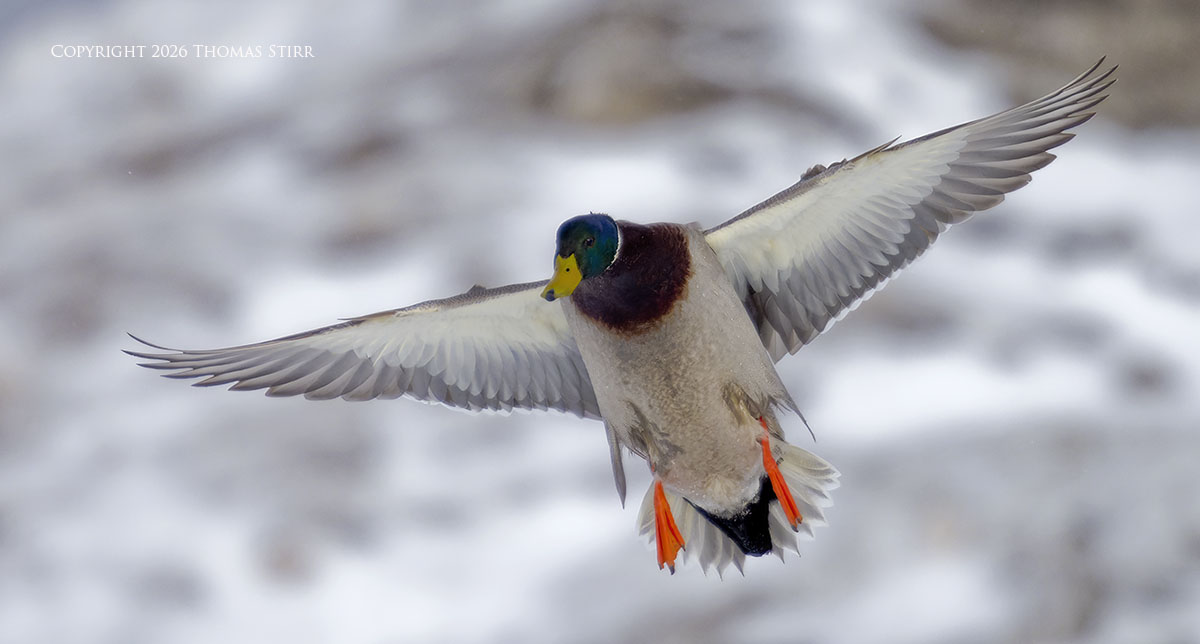
Last Thursday I was out for a couple of hours doing some additional intensive practice, photographing ducks in flight. There were times when the action was plentiful, and very fast breaking. I ended up capturing a total of 5,629 images in a little over two hours.
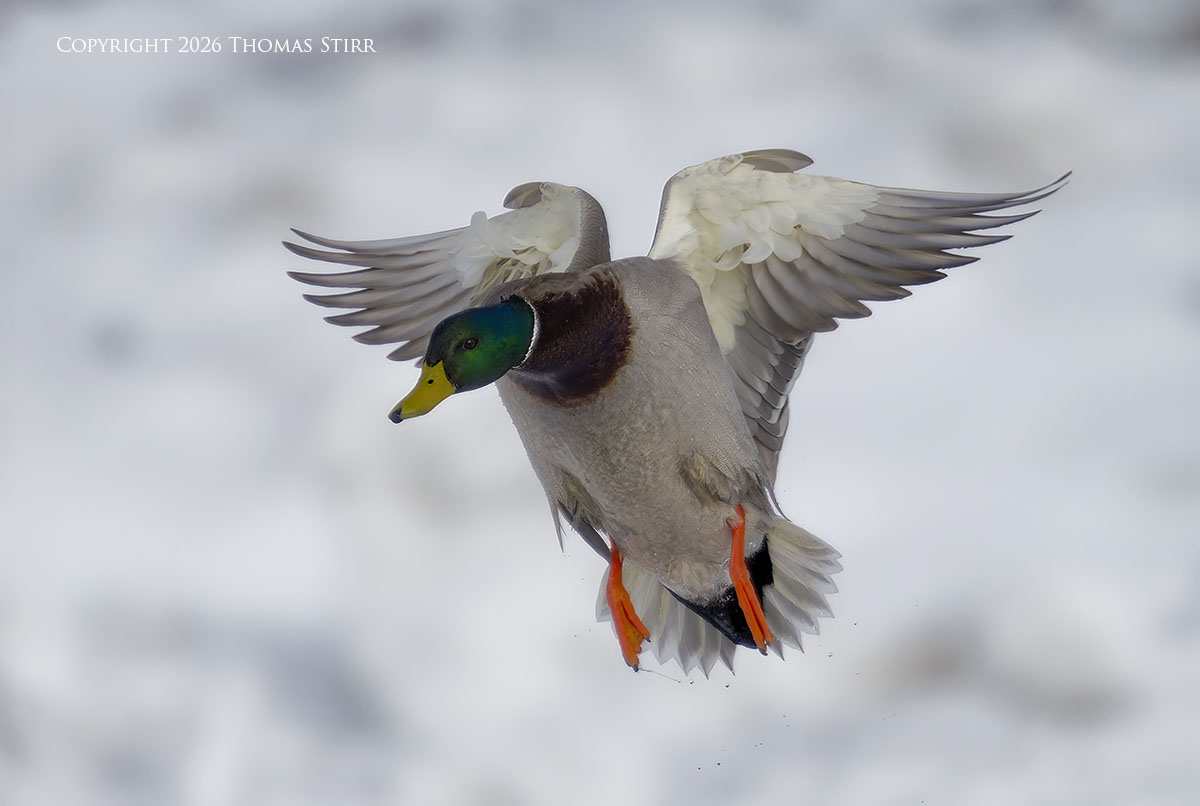
I used a range of focal lengths… and for part of the session I focused on capturing images using my M.Zuiko 150-600 mm f/5-6.3 IS fully extended to 600 mm, or an equivalent field-of-view of 1200 mm.
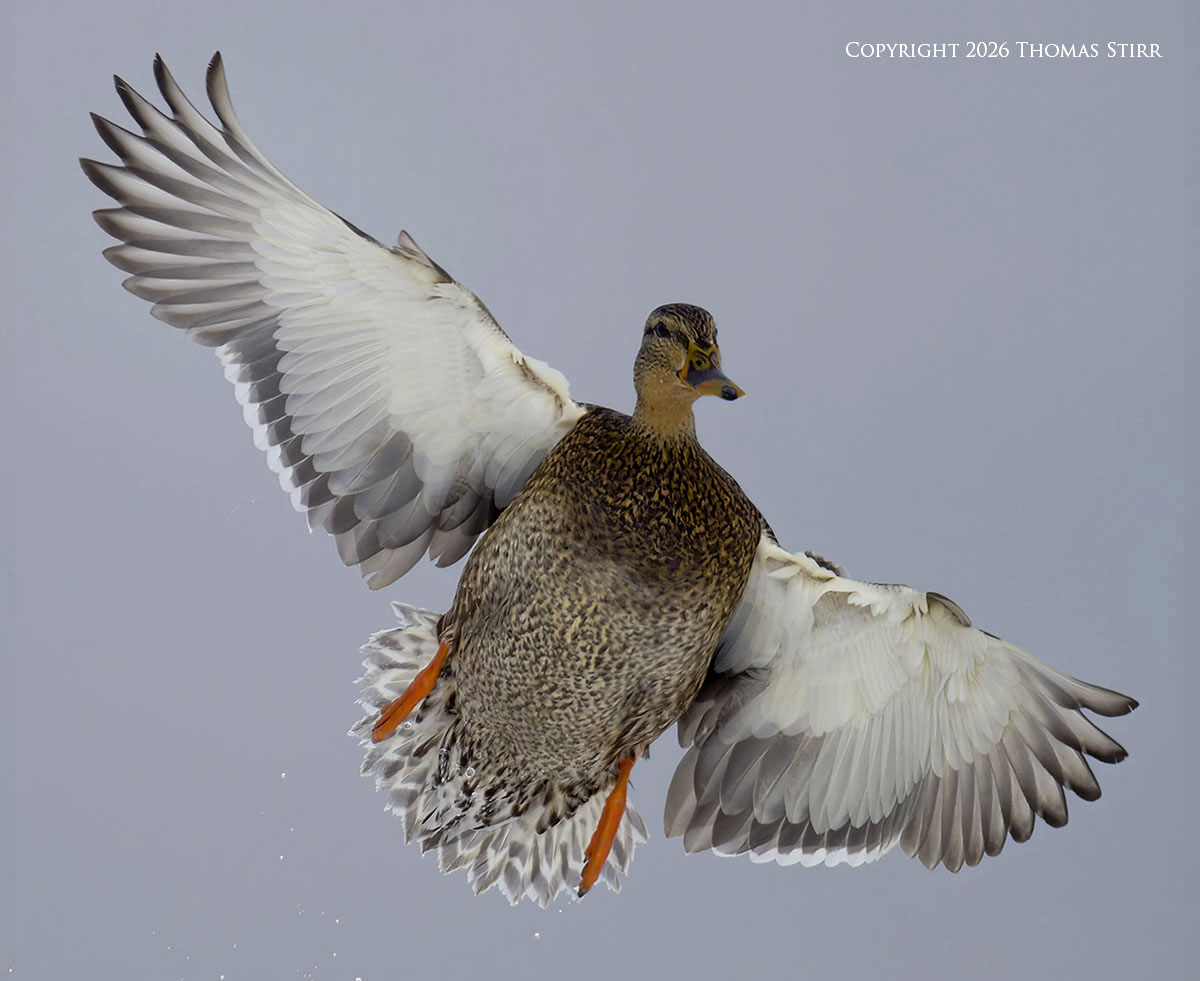
I’ve been out at this location a few times over the past 10 days or so, and could definitely feel that my eye/hand coordination was improving during this time frame.
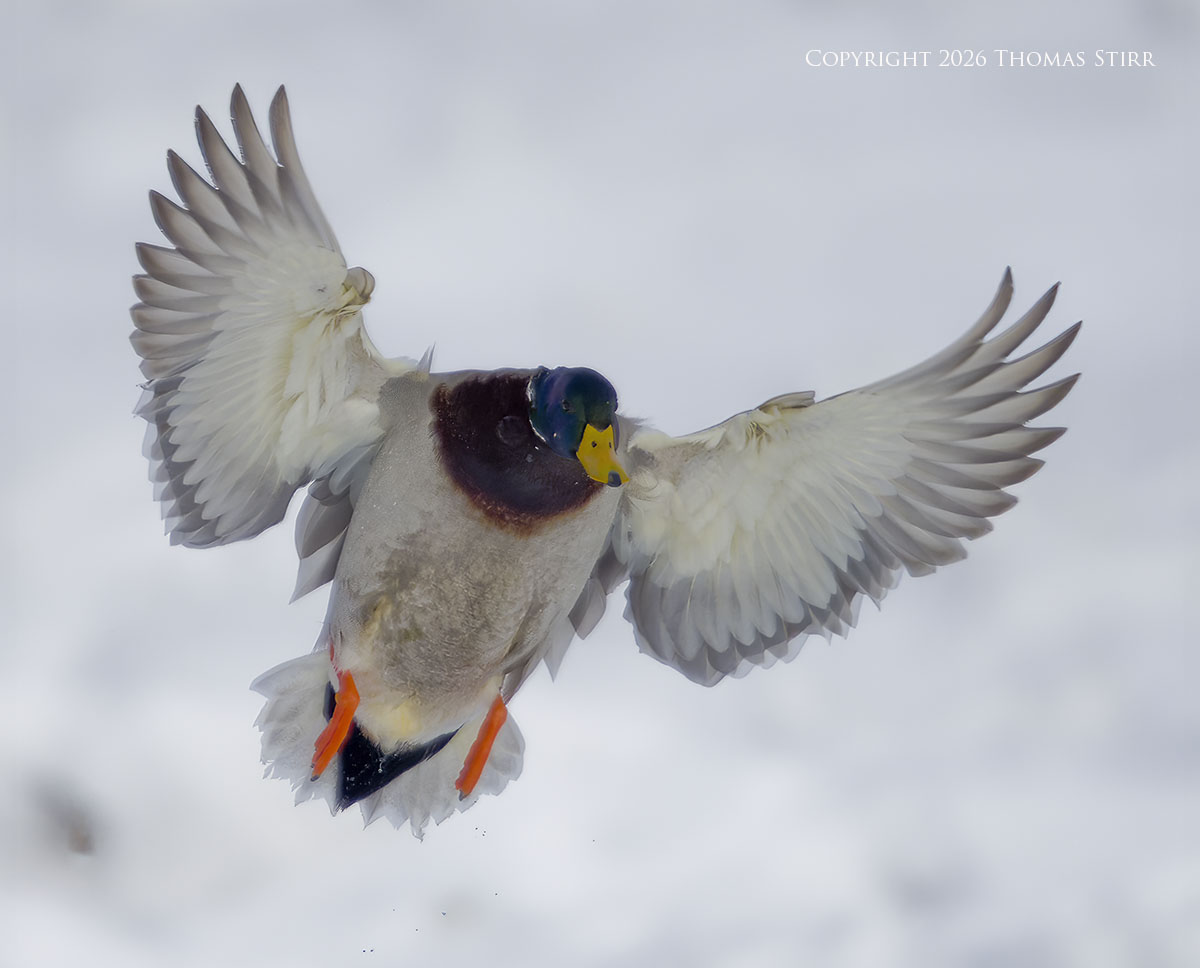
These successive practice sessions resulted in me deciding to try to capture images of ducks in flight at 1200 mm efov. I hadn’t done this for quite a few months so I wasn’t sure how it would work out, as the angle of view at this focal length is only 2.1 degrees.
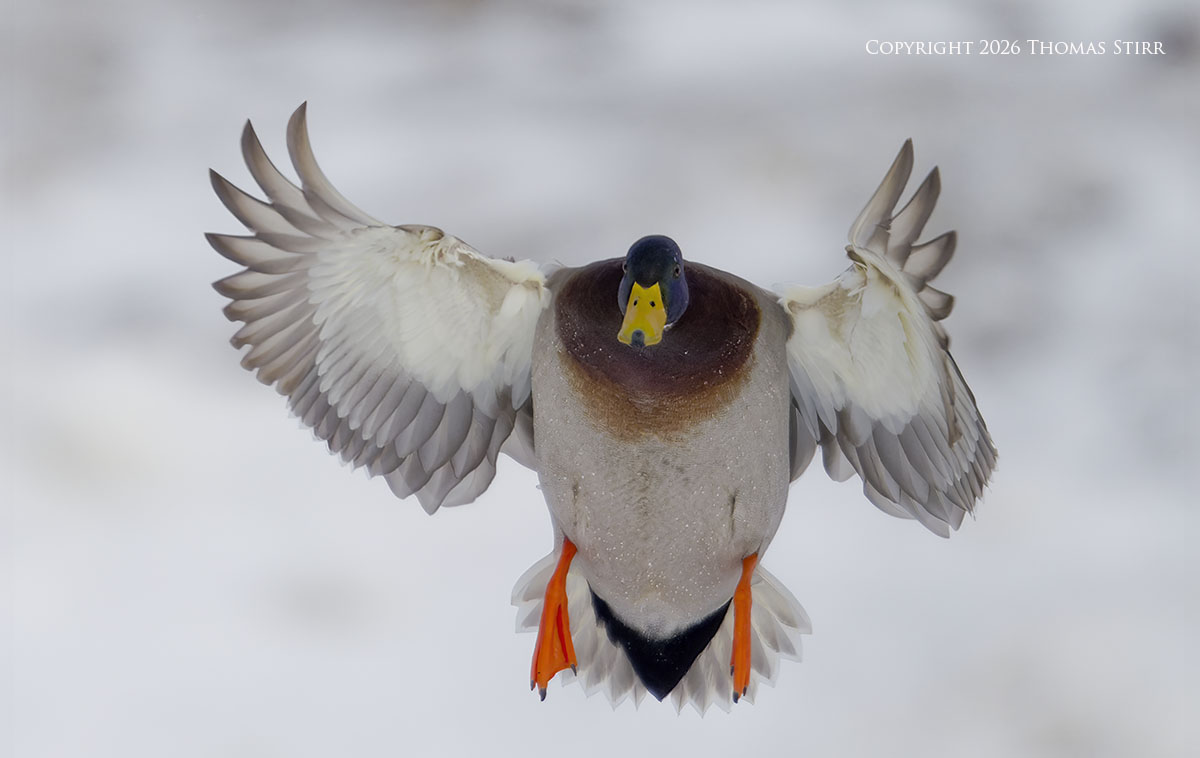
Fortunately the ducks cooperated with many of them flying out over the ice berm towards Lake Ontario. This extra distance gave me more time to get them in my viewfinder when they returned from the lake.
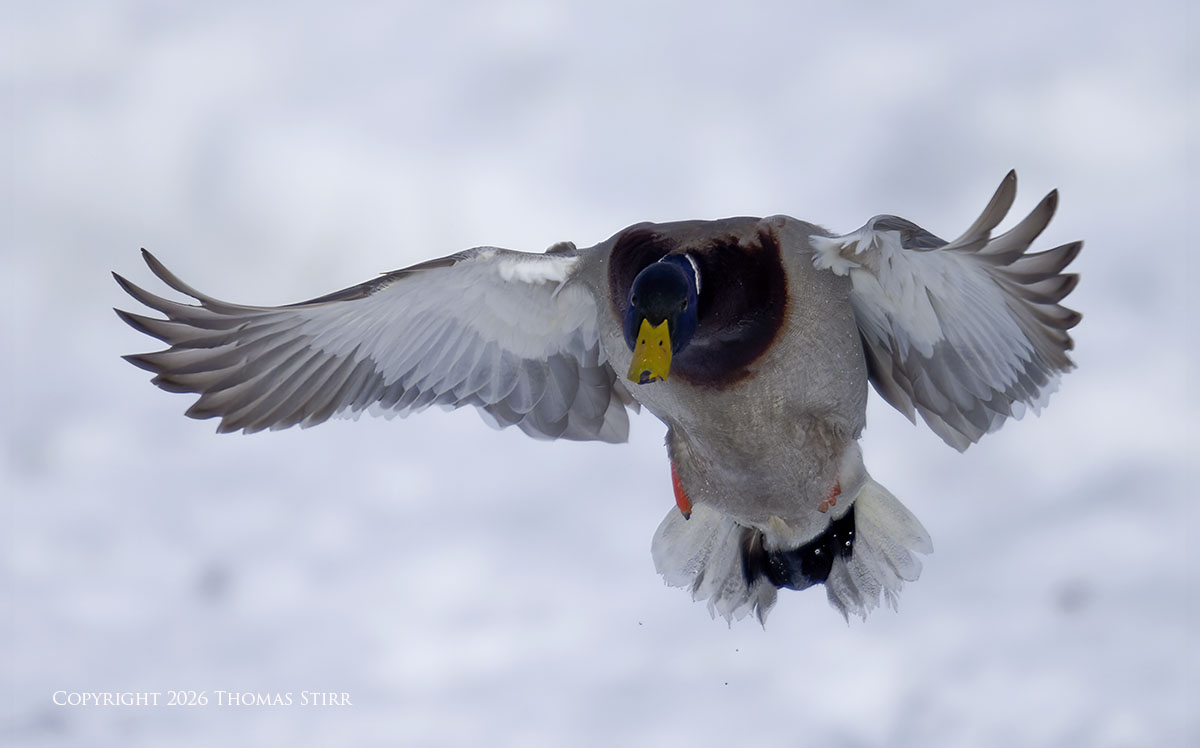
After observing the ducks for a few minutes it became clear to me where along the ice berm that they were most likely to appear as they flew back towards the shoreline.
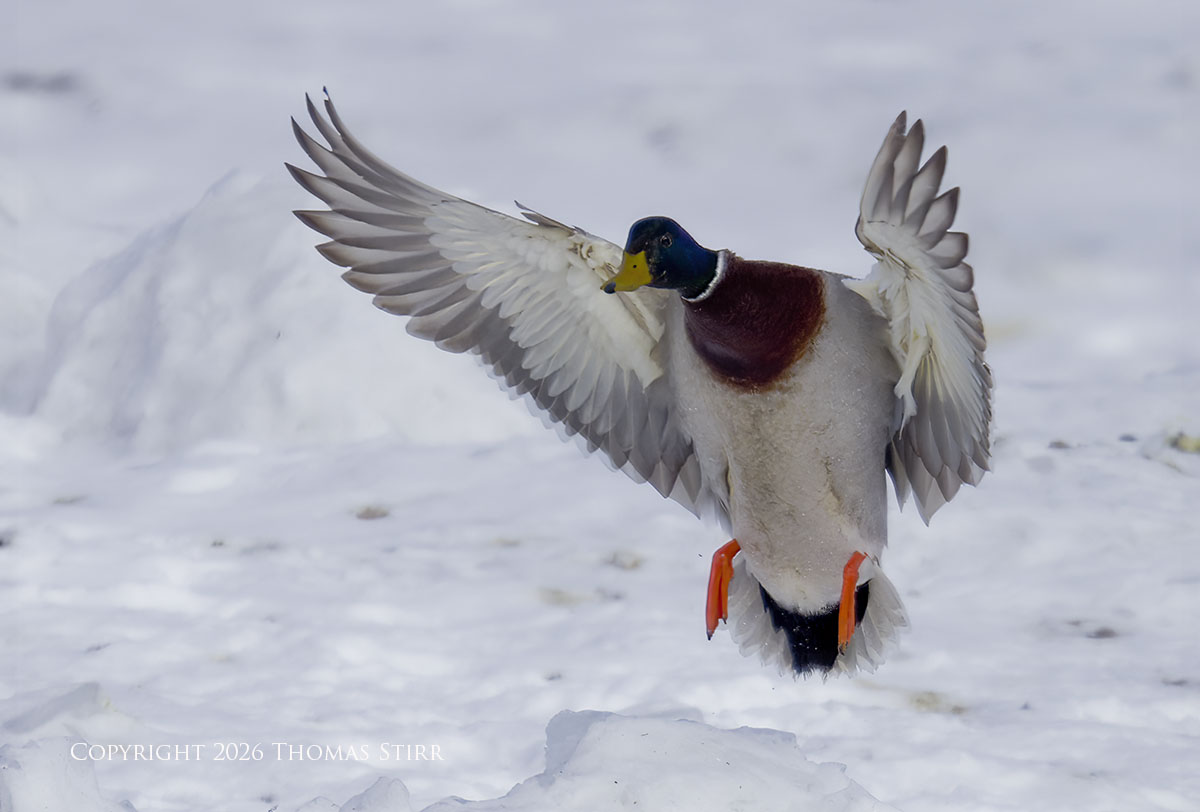
I visually picked up a number of the ducks in my viewfinder from a fair distance, as you’ll be able to see from the details in the EXIF data. For readers who are not familiar with the metric system, multiply the number of metres of subject distance by 3.28 to calculate the number of feet.
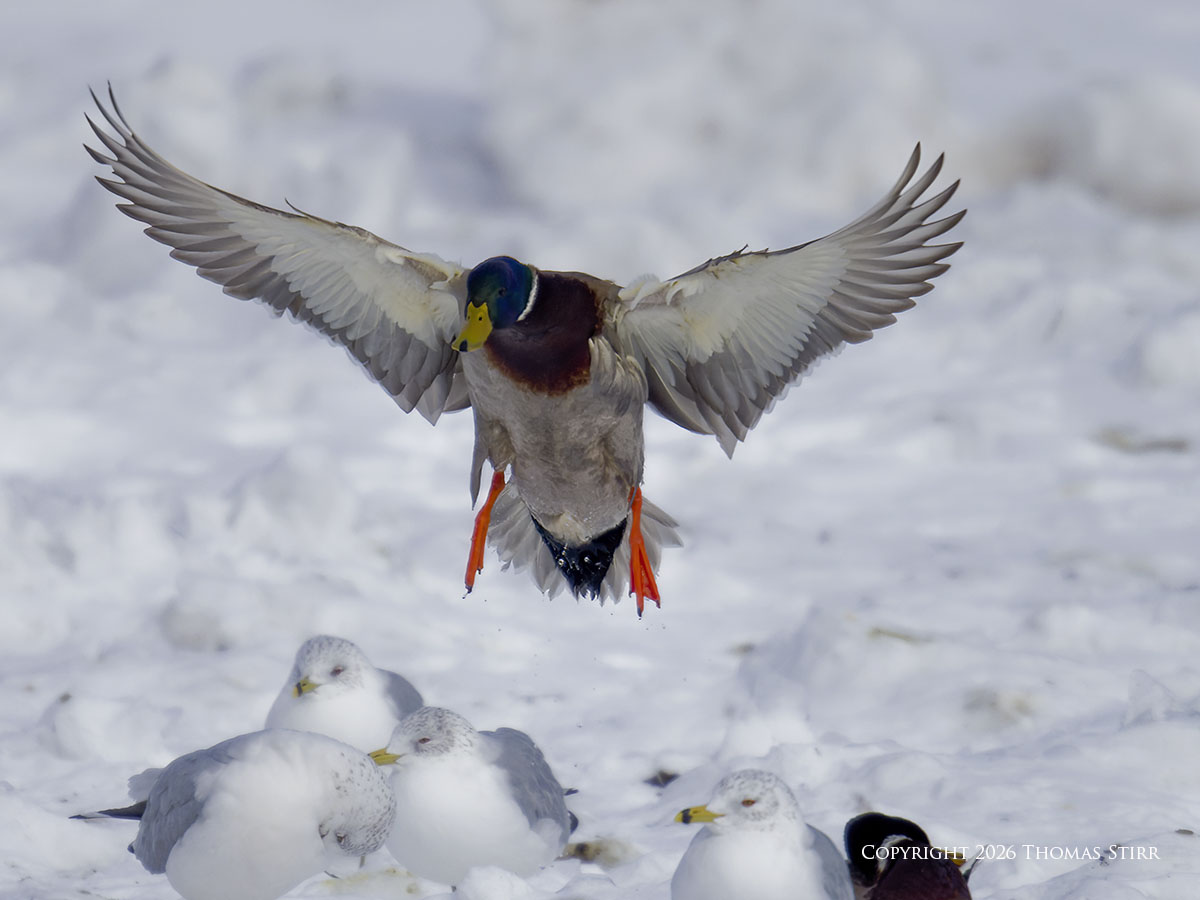
Many of my image opportunities were ducks in flight that were well separated and not near any other birds. However, it is important to include some practice photographing ducks landing close to other birds… as you can see with the image above and the four that follow.
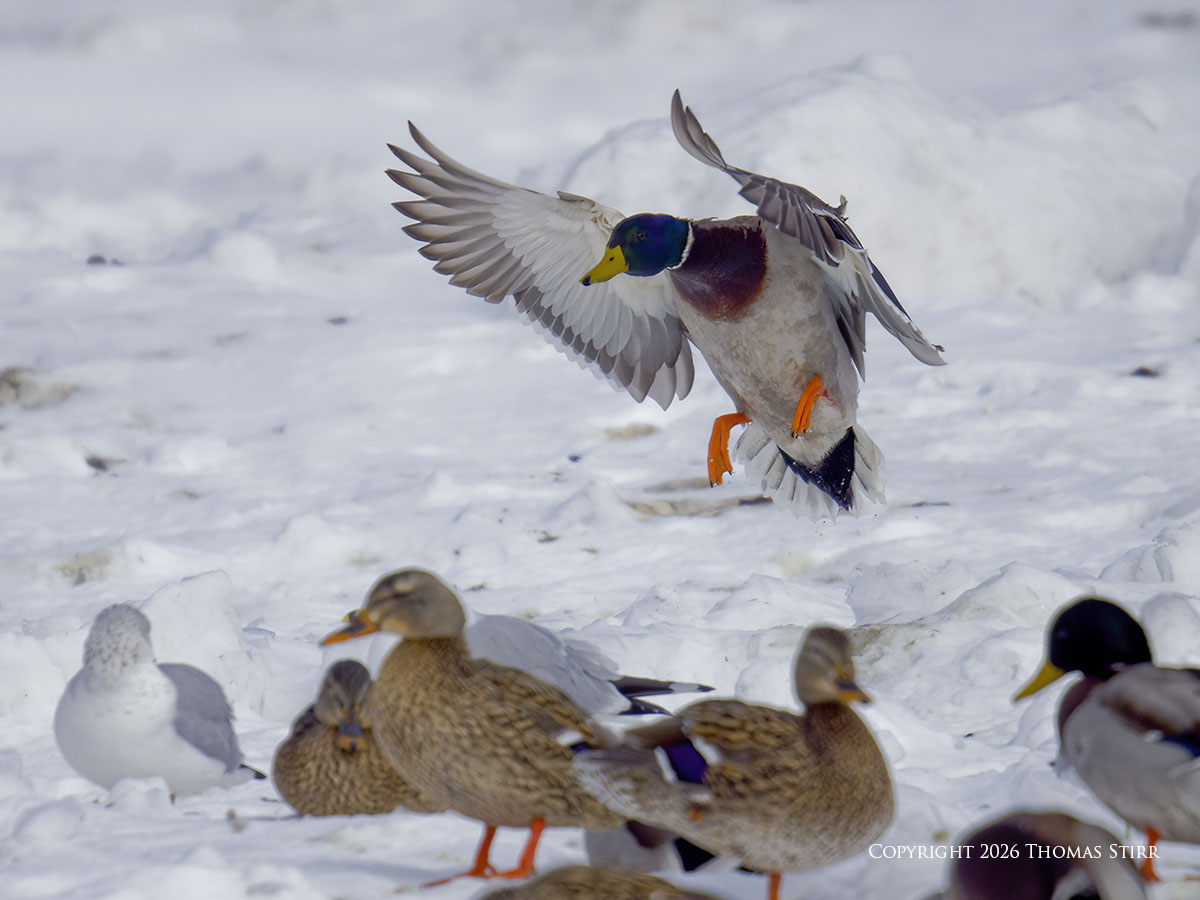
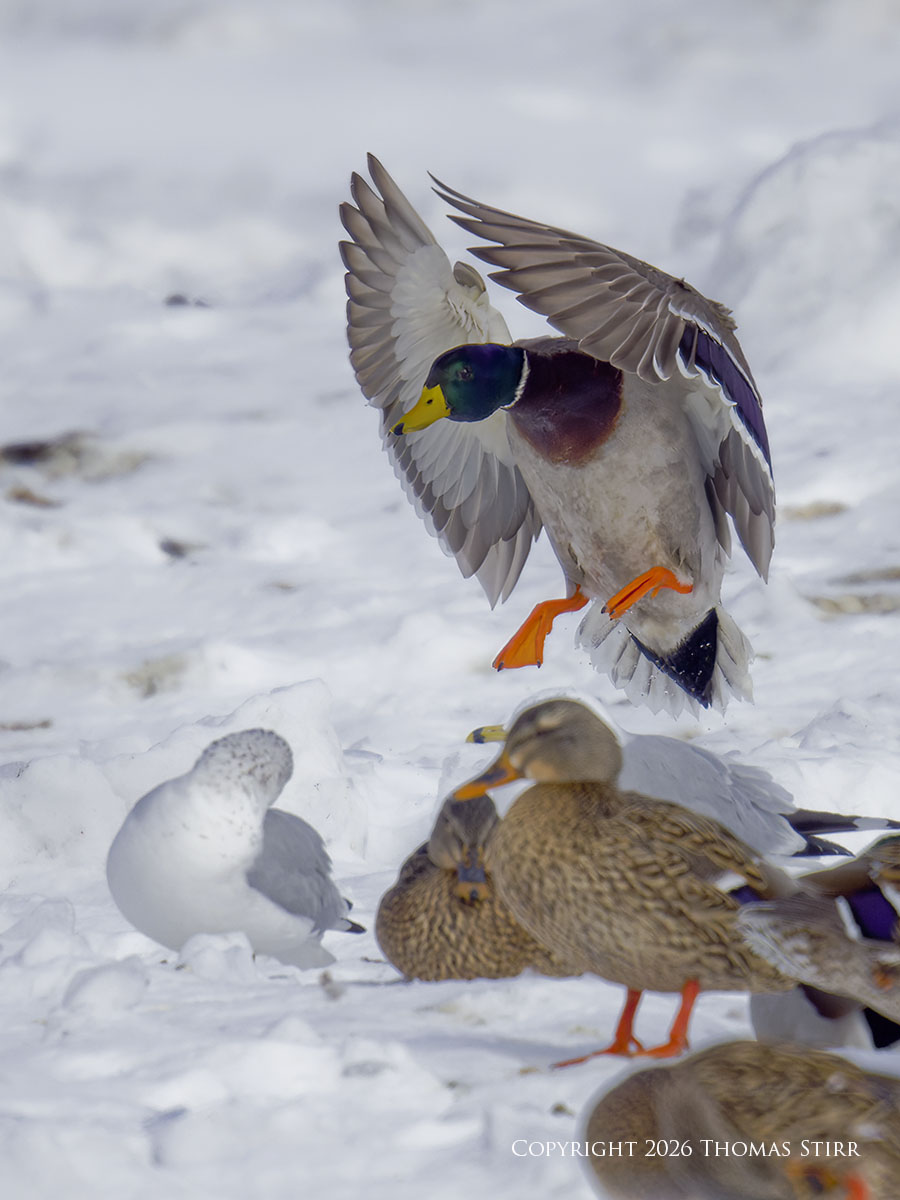
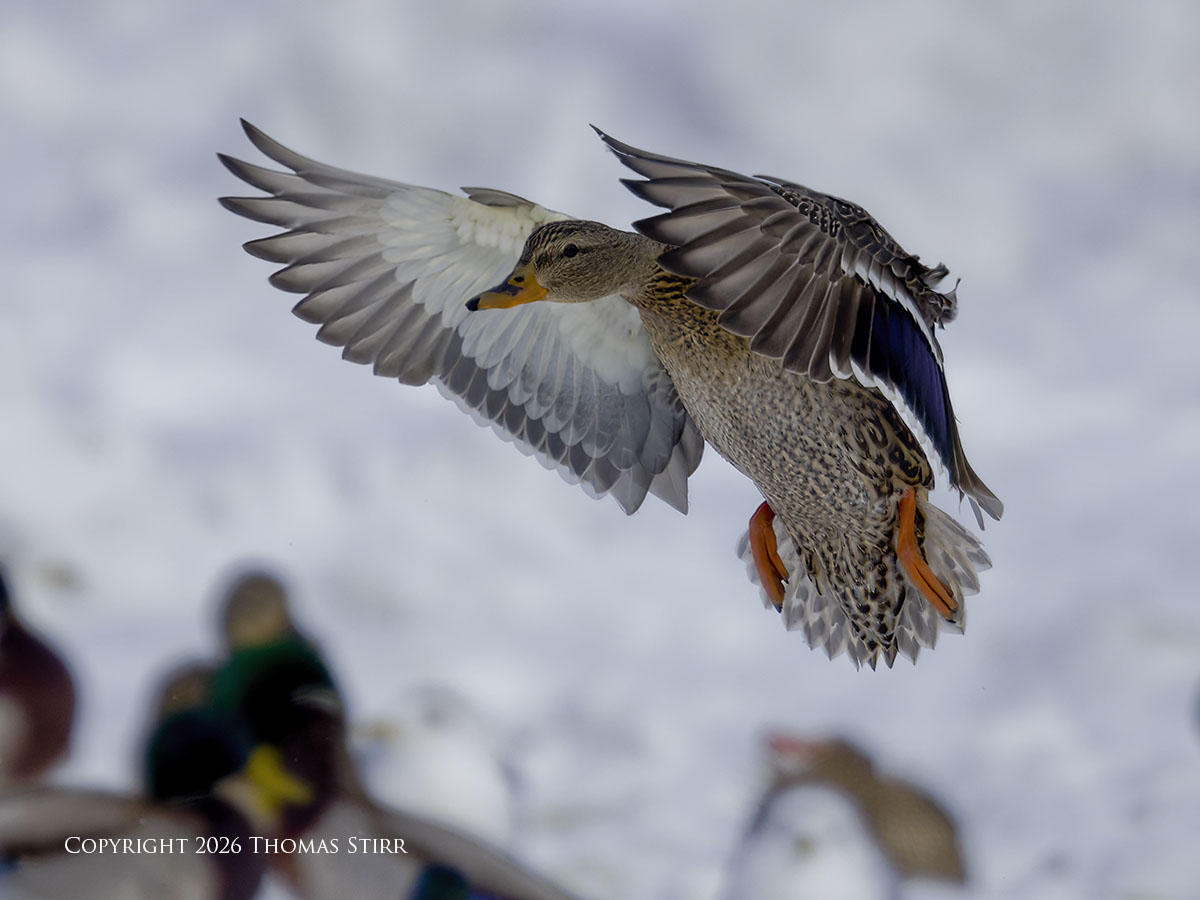
I don’t typically spend too much time photographing groups or pairs of ducks in flight when doing an intensive practice session… but during some relative lulls in the action I did capture a few images.
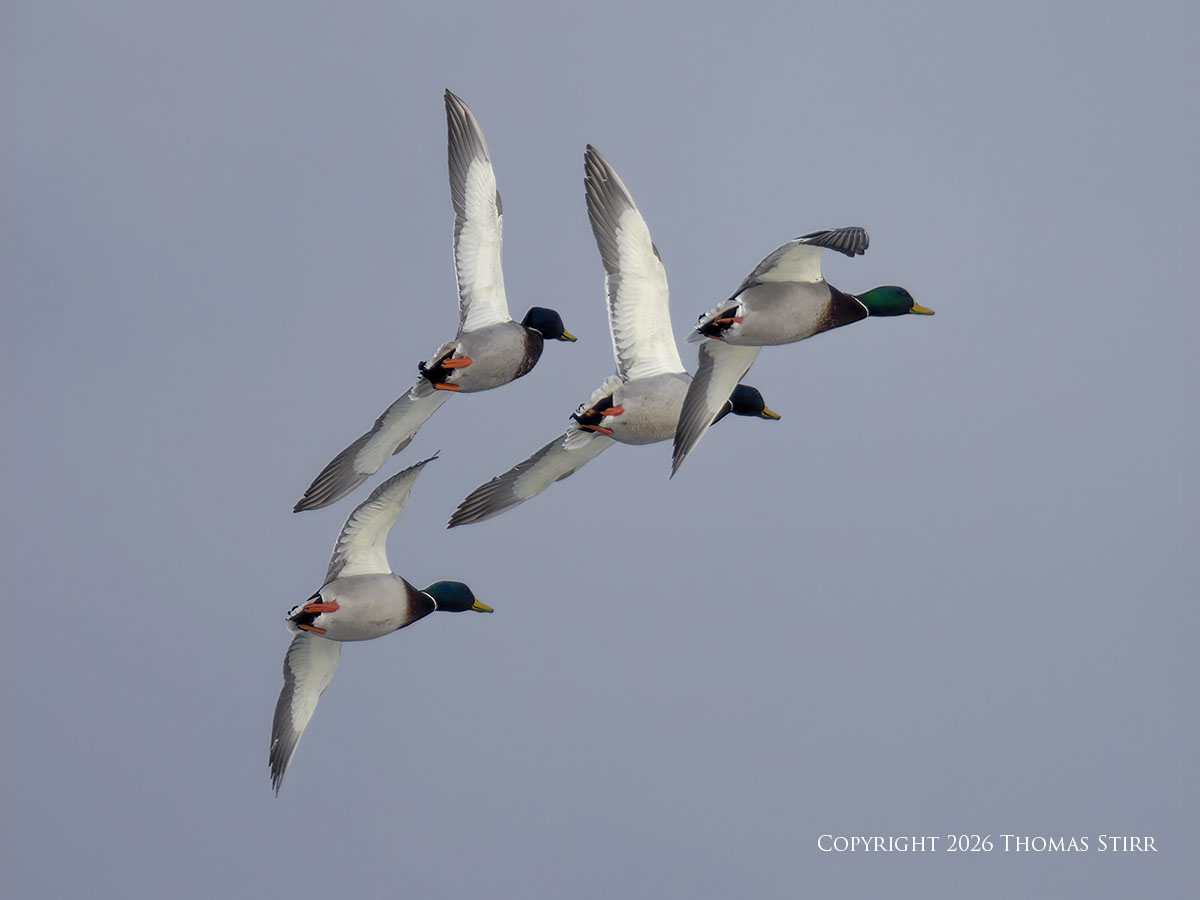
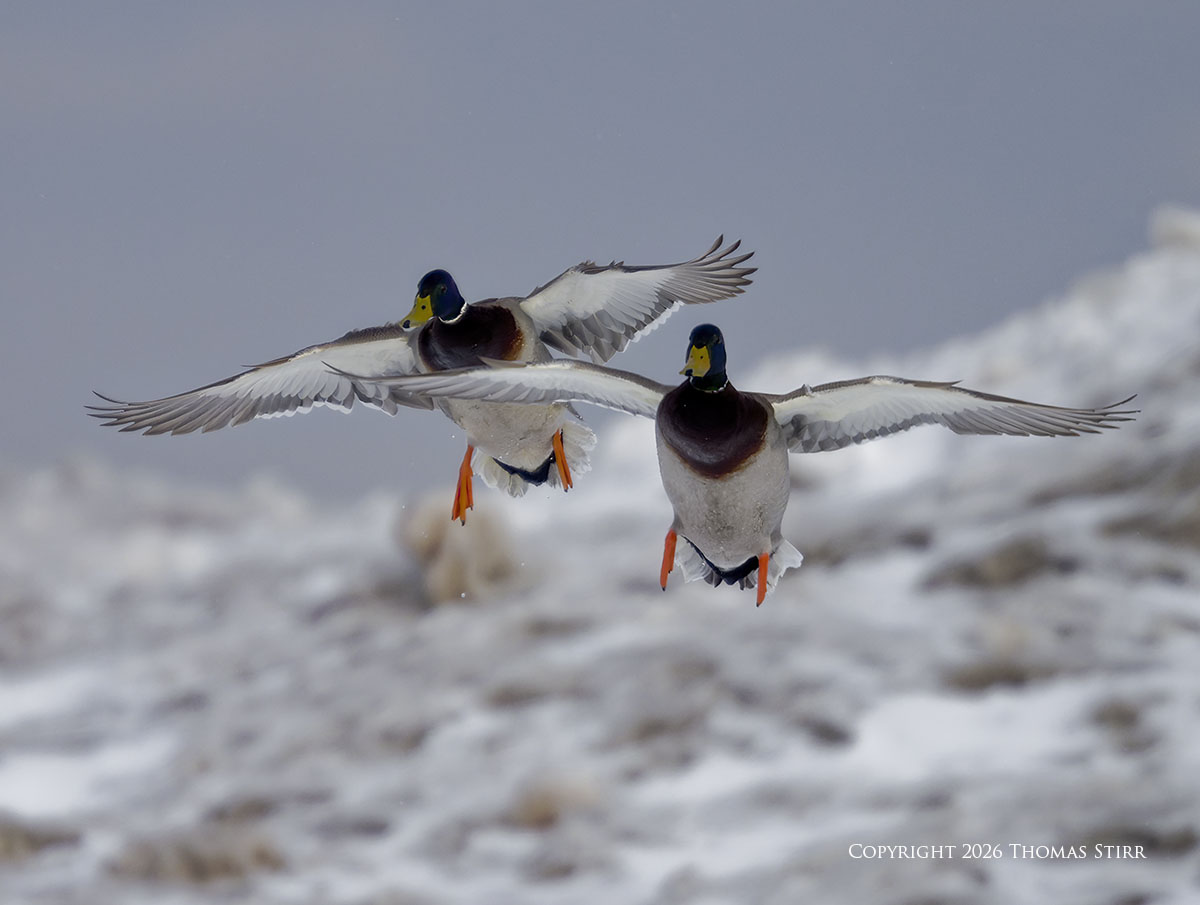
My attention is normally focused on birds that are coming in to land, and not too far from the surface of the snow. These birds tend to have more interesting wing and body positions. I did capture a few images of ducks in free flight.
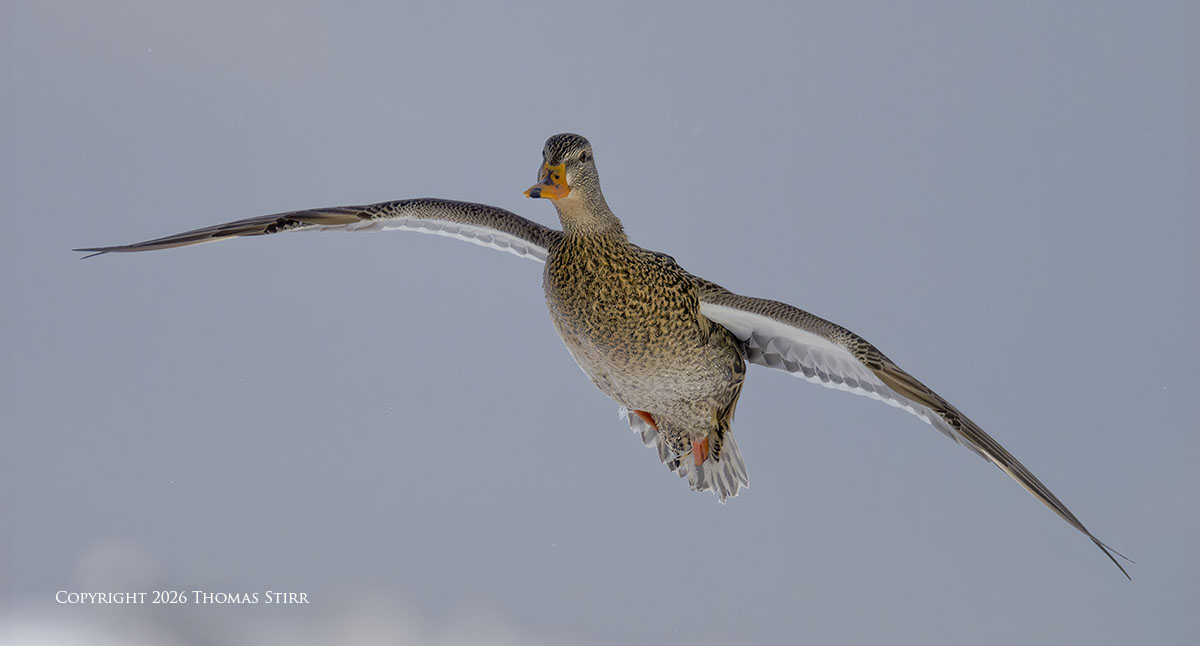
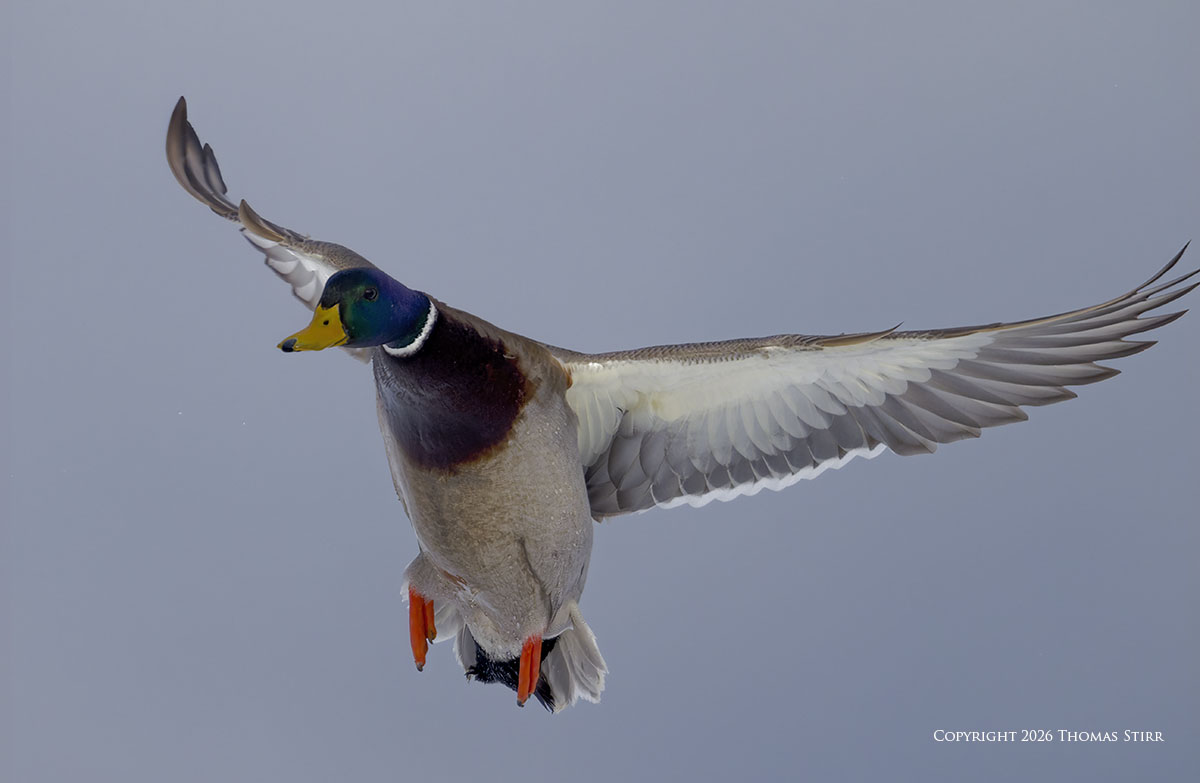
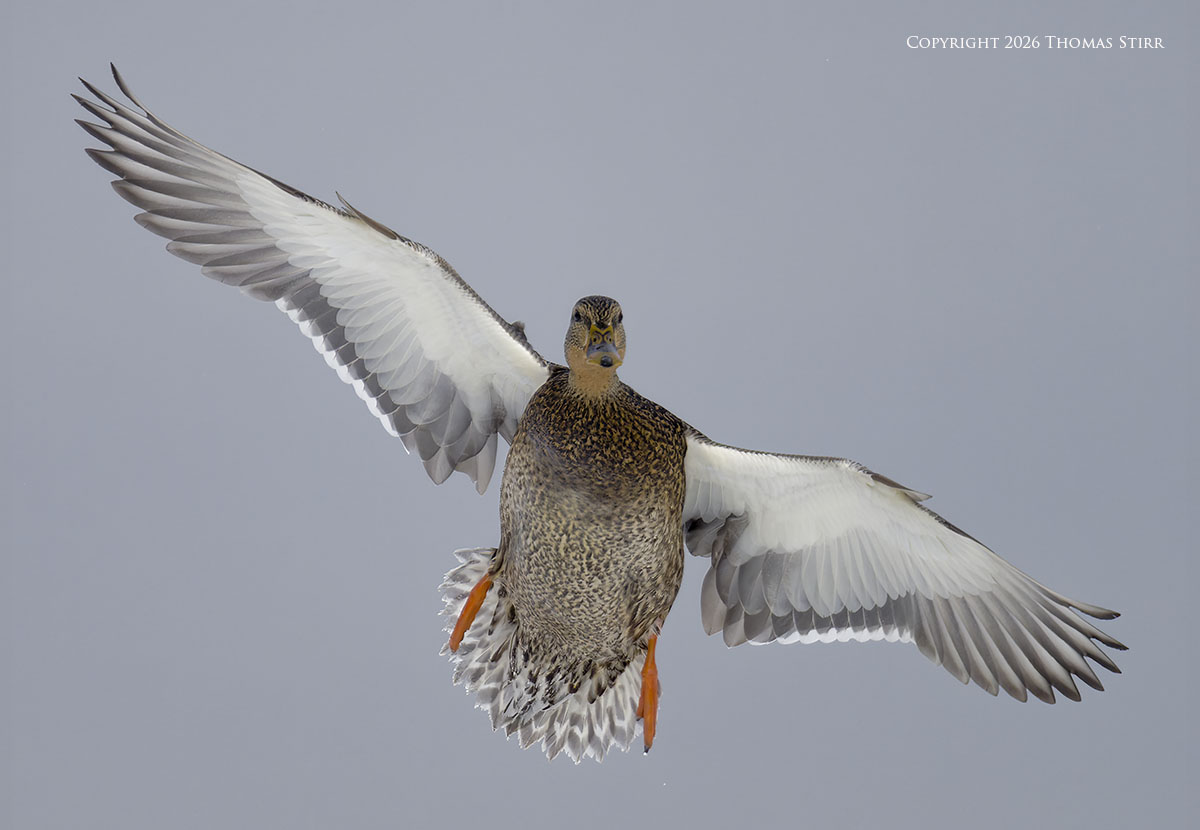
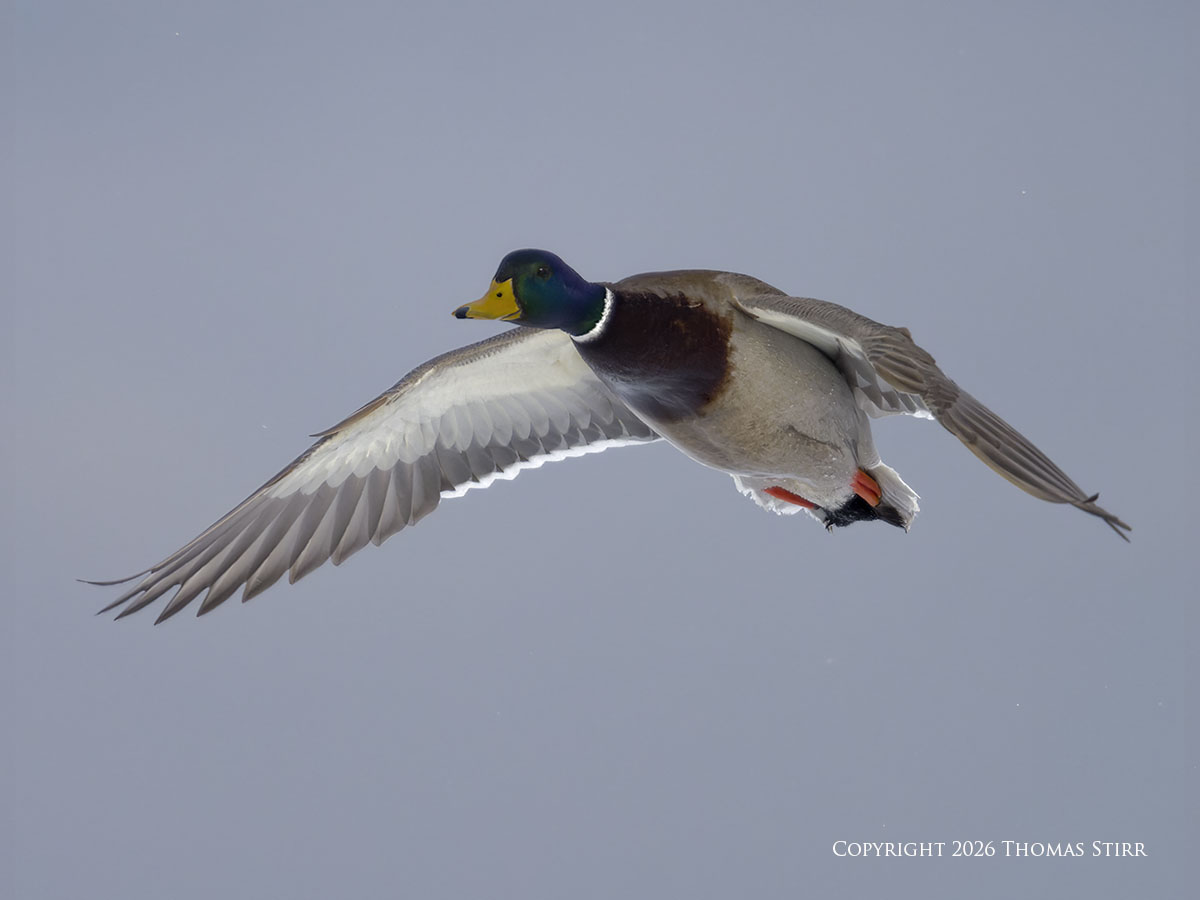
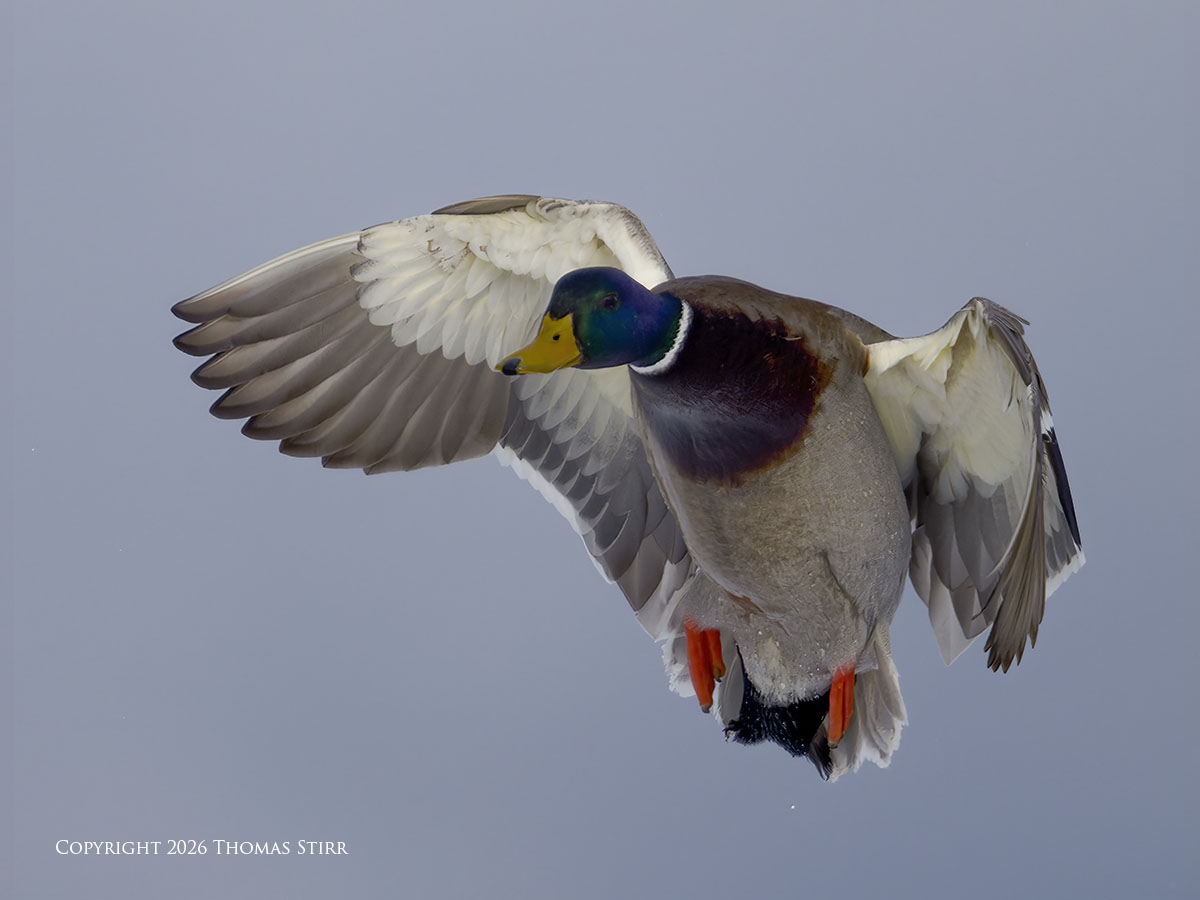
My favourite images are usually of ducks in flight that are starting to slow down their speed as they approach the surface of the snow… or turning /banking during their approach… or back peddling with their wings.
The M.Zuiko 150-600 mm f/5-6.3 IS zoom is a lens that not everyone would find manageable handheld, given its size and weight. For me, this telephoto zoom is undoubtedly my preferred ‘go to’ lens for bird and nature photography.
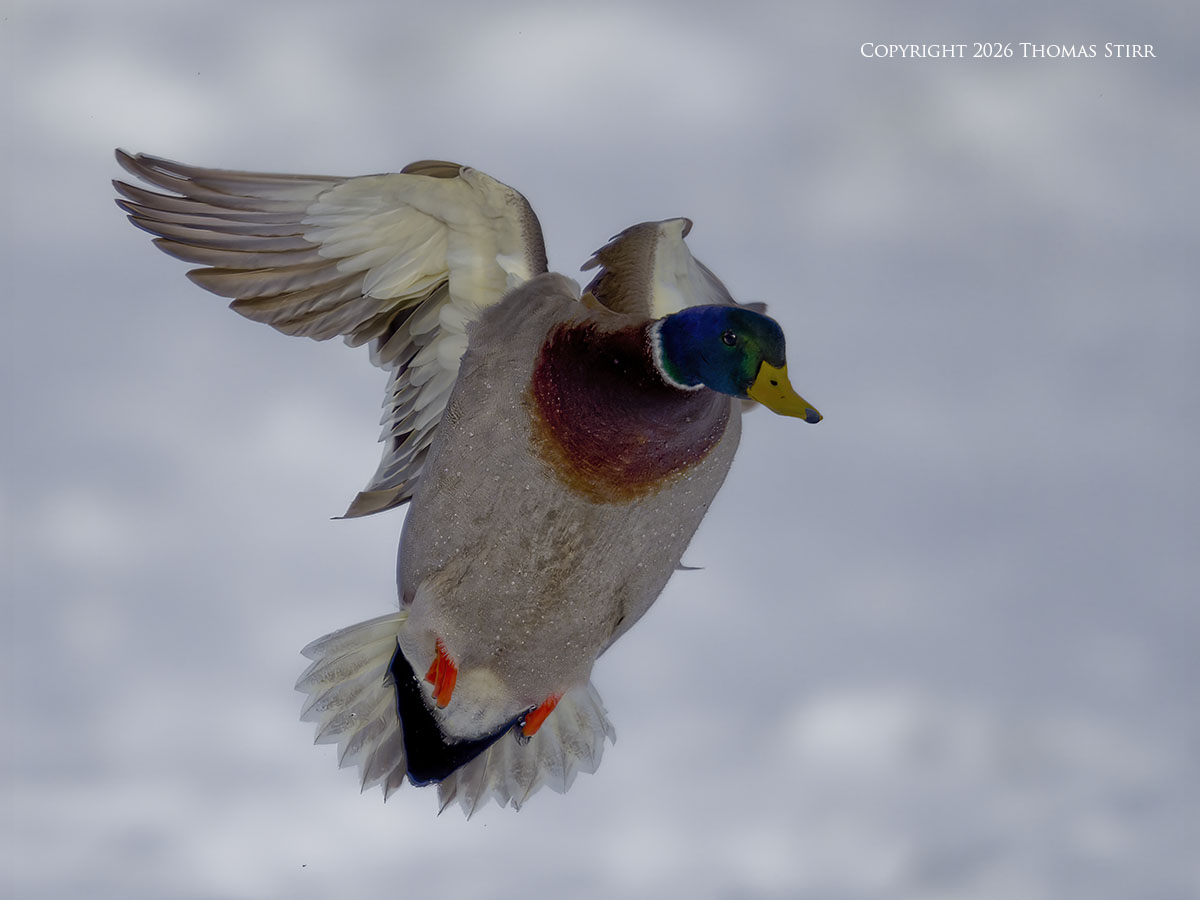
I absolutely love this lens as it extends my imaging potential considerably. I estimate that 25% of my images (or more) were captured with this lens fully extended to 600 mm (efov 1200) during last Thursday’s practice session.
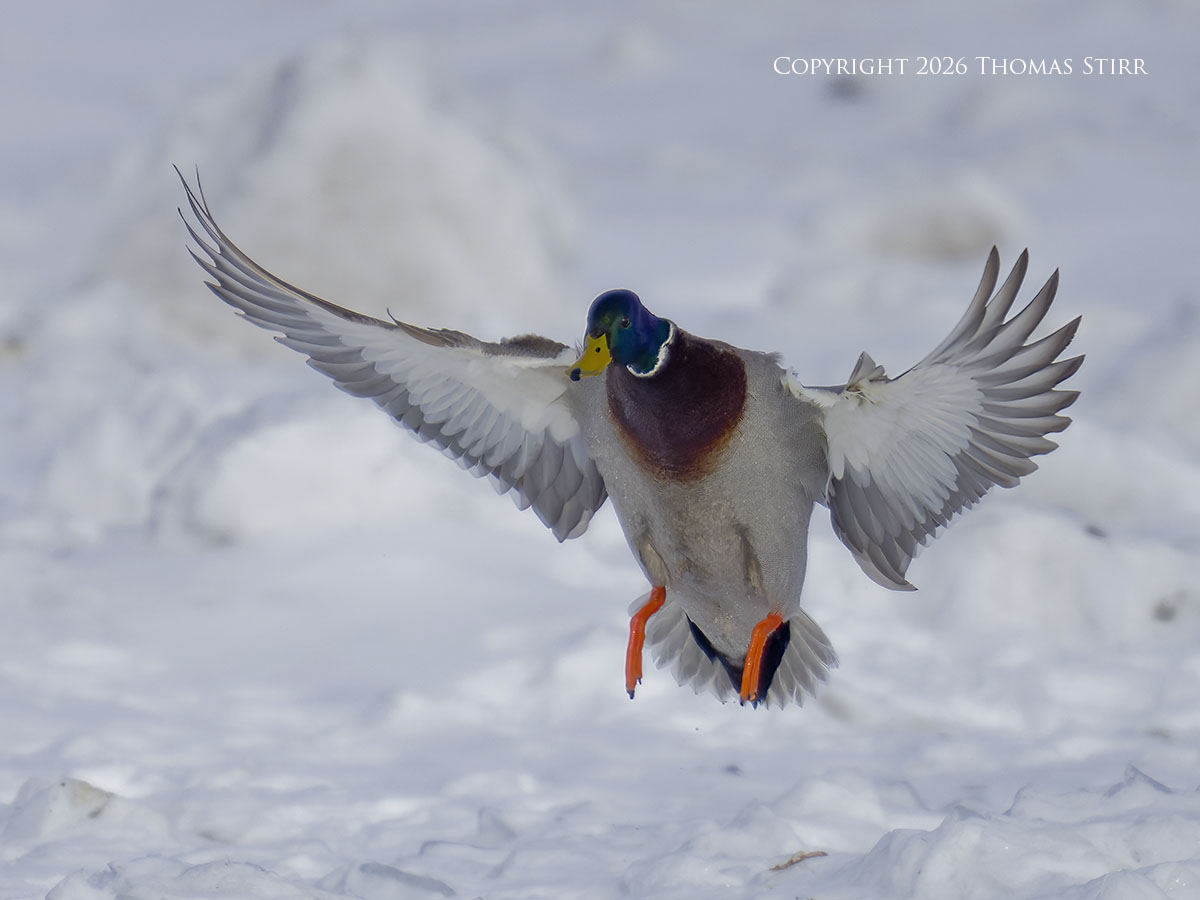
Getting this amount of reach without having to use a teleconverter… and not losing any light… is simply incredible.
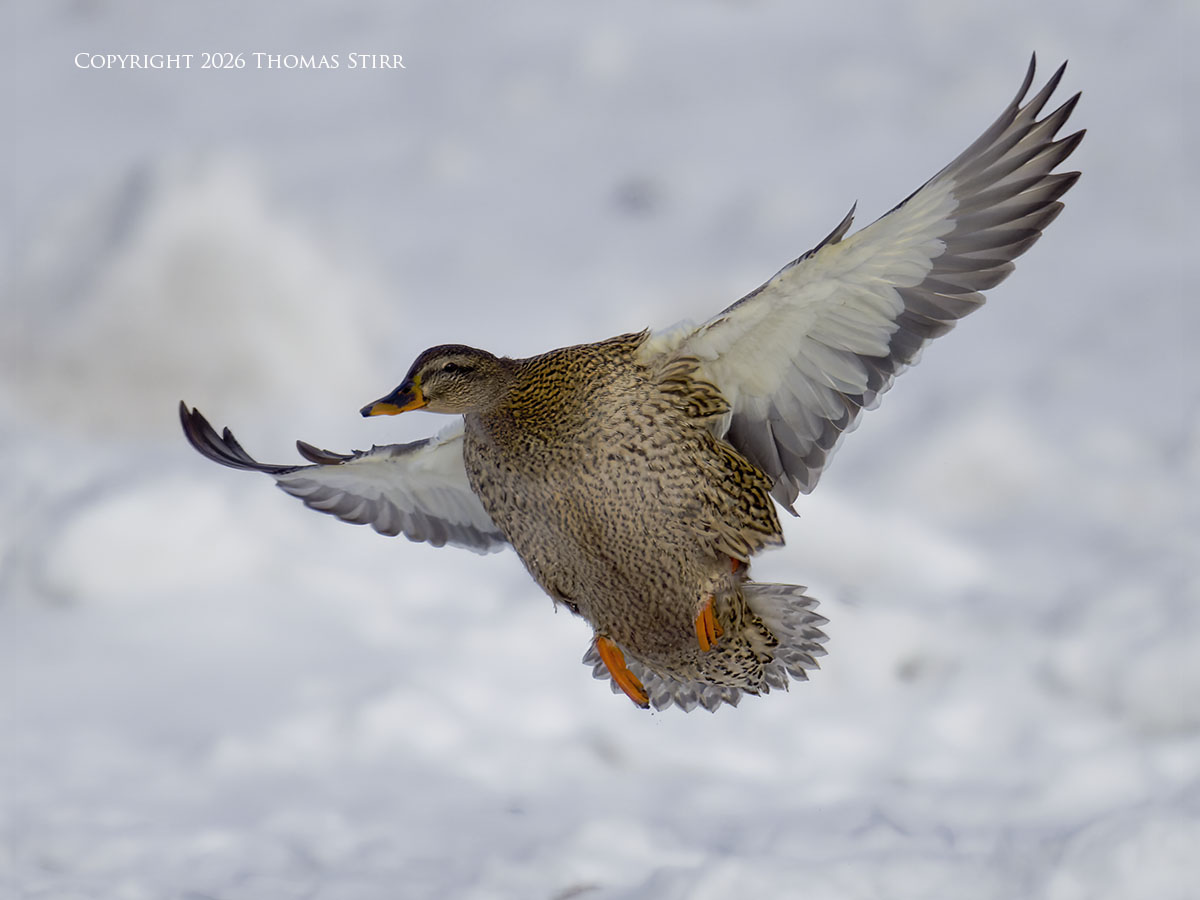
I also love the handling of the M.Zuiko 150-600 mm f/5-6.3 IS zoom lens as it enables me to be very responsive to action around me. I’ve found that the image quality that it delivers is perfect for my needs.
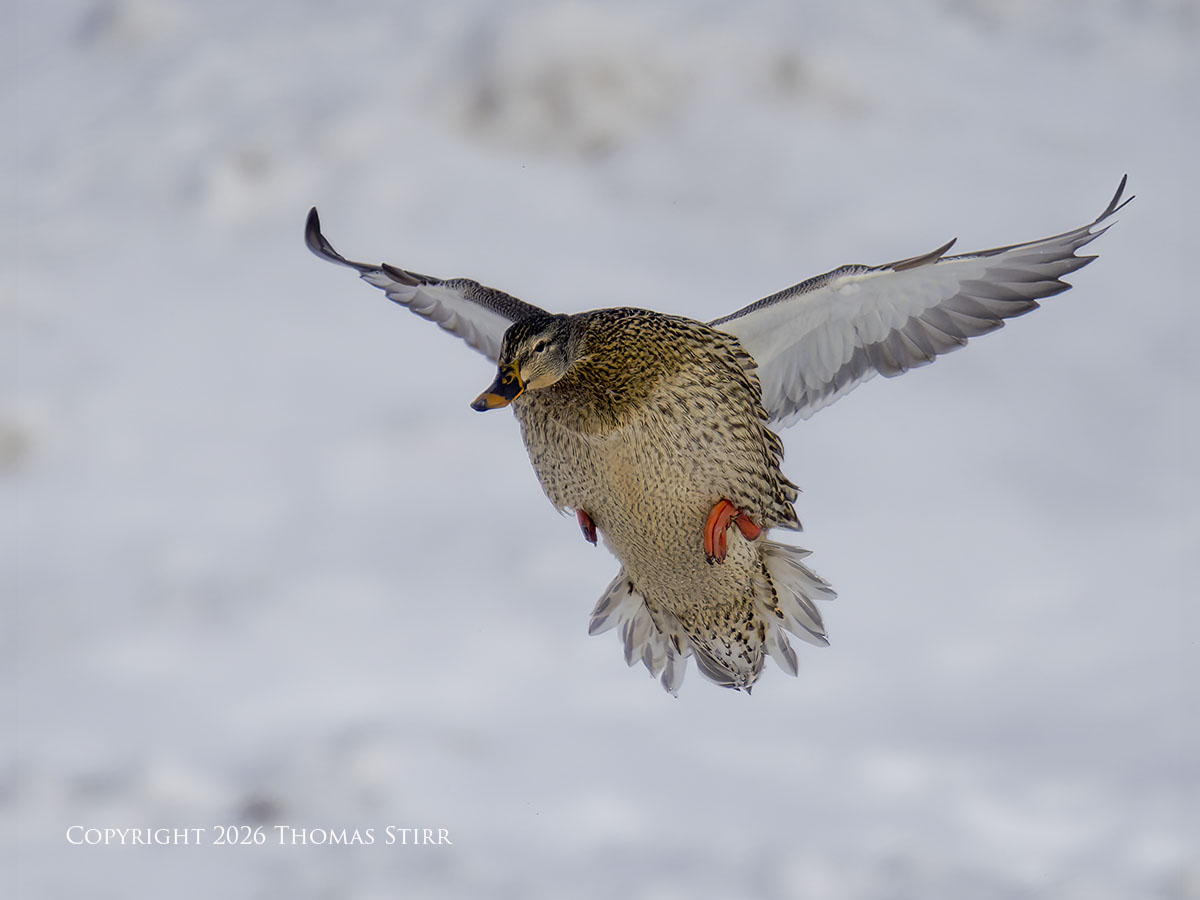
My M.Zuiko 100-400 mm f/5-6.3 IS doesn’t get used as much as it did in the past. It still earns a place in my camera bag on those occasions when I need a good telephoto performer that is smaller and lighter for travel.
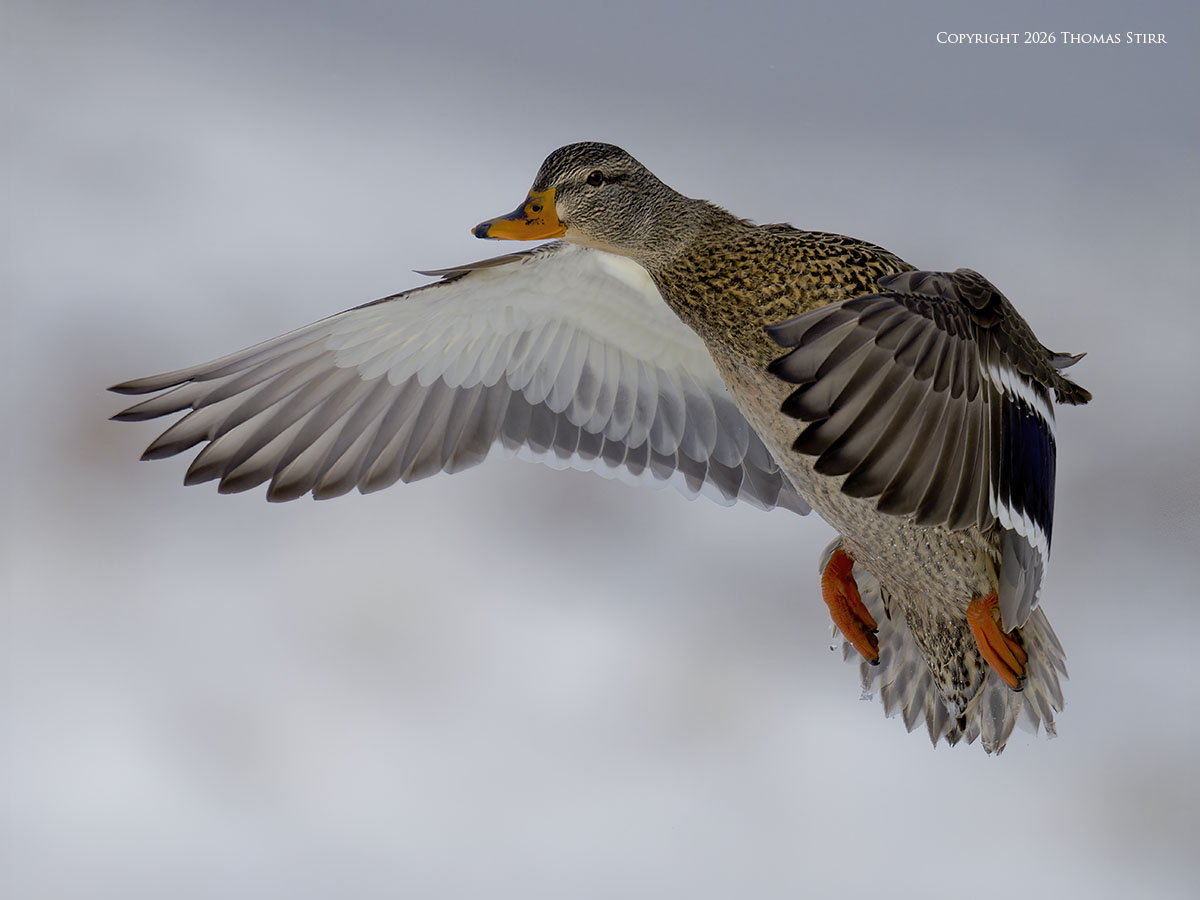
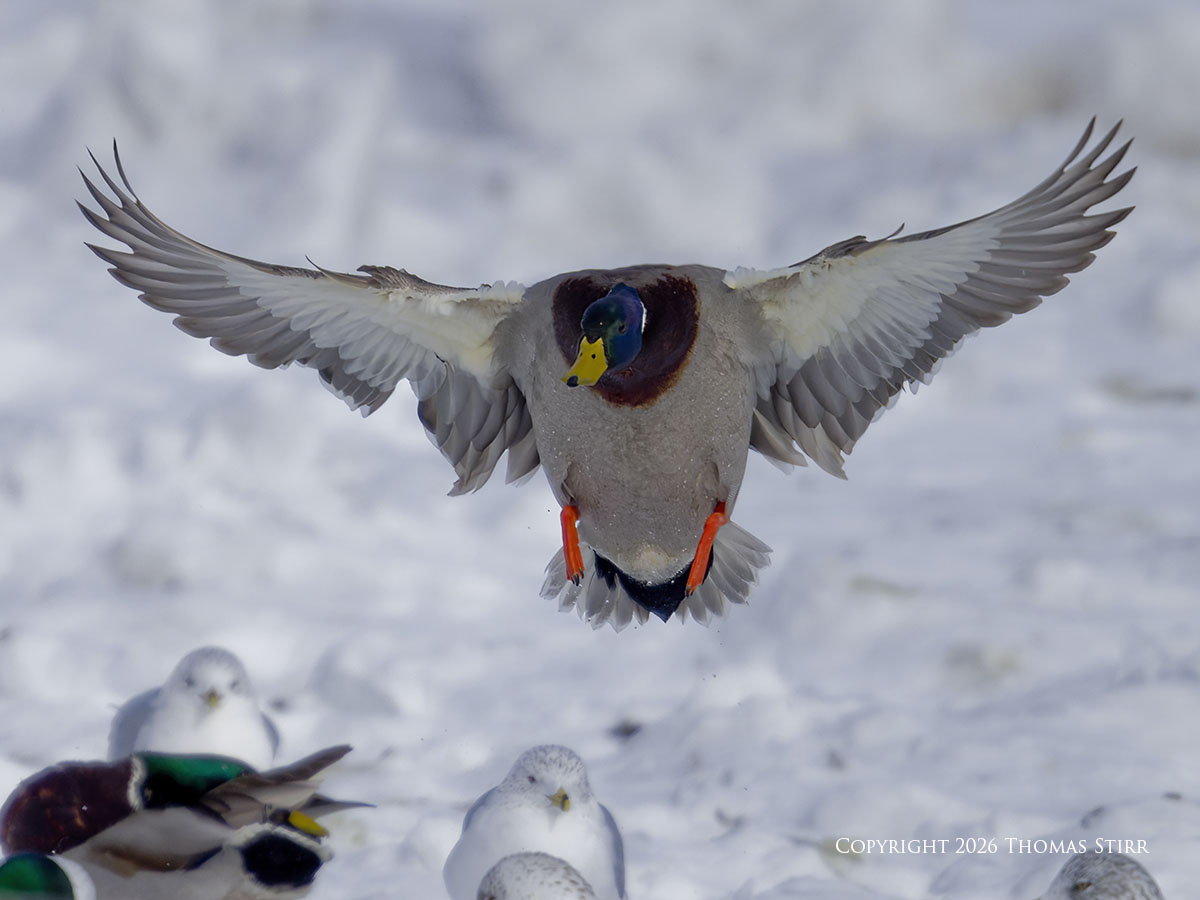
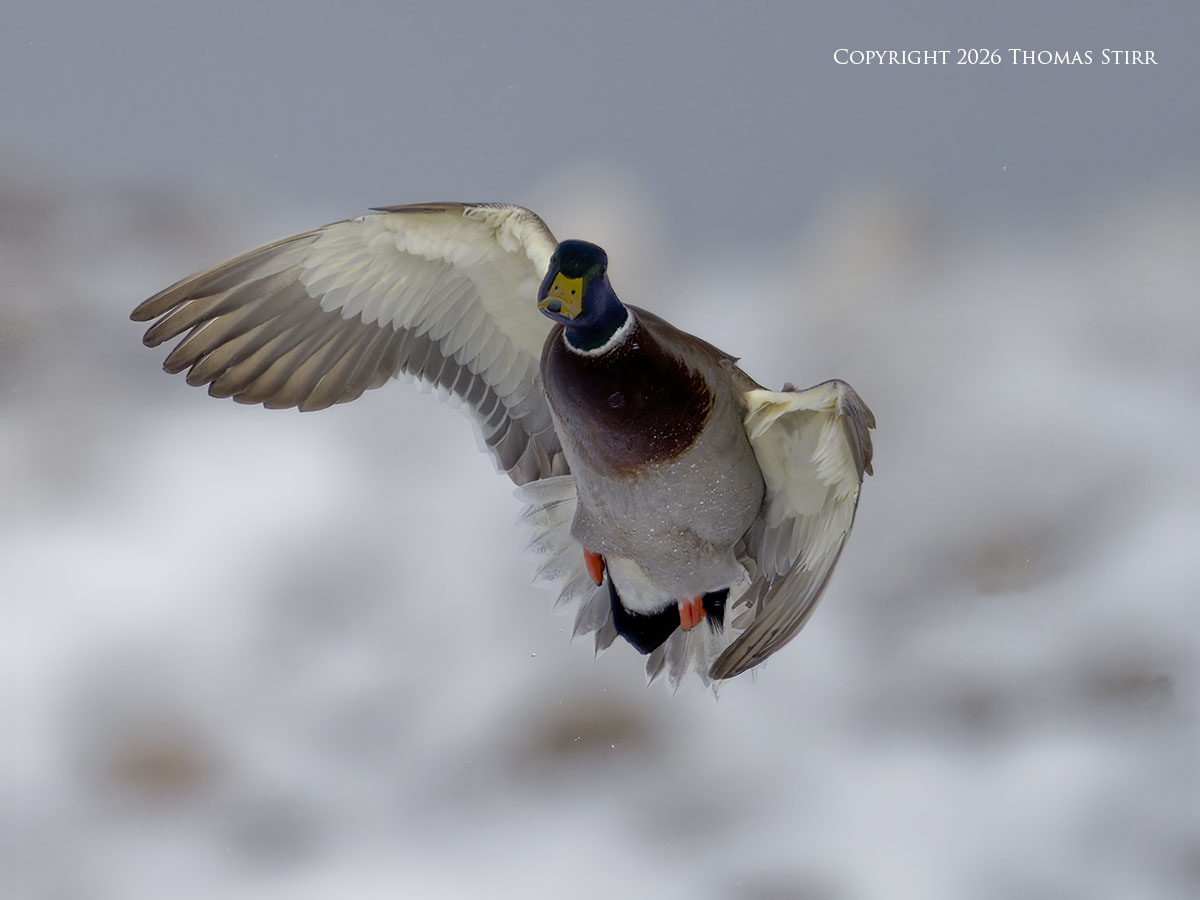
Many of us who enjoy bird photography go out hoping to capture that ‘one shot’ that will make our outing that day worthwhile. The image above is that ‘one shot’ for me from last Thursday.
It is a full frame capture… without any cropping at all… of a duck in flight only 22 metres away from me, with my 150-600 mm zoom lens fully extended to 1200 mm efov.
Technical Note
Photographs were captured handheld using camera gear as noted in the EXIF data. All images were created from RAW files using my standard process in post. Pro Capture L at 18 frames-per-second was used for all of the images in this article. Pre-Shutter frames were set to 15. Frame Limiter was turned off. The M.Zuiko 150-600 mm f/5-6.3 IS zoom lens was used fully extended to 600 mm (efov 1200 mm). This is the 1,508 article published on this website since its original inception in 2015.
How you can keep this website advertising free
My intent is to keep this photography blog advertising free. If you enjoyed this article and/or my website and would like to support my work, you can purchase an eBook, or make a donation through PayPal (see Donate box below). Both are most appreciated.
You may enjoy bird photography, and if so our 188 page eBook Handheld Bird Photography may be of interest. It is available for download for an investment of $14.99 CDN. The best viewing experience of this eBook will be at 100% using Adobe Acrobat Reader.
Sometimes all we need as photographers is a bit of inspiration. We hope you can find some of that inside Finding Visual Expression II.

Finding Visual Expression II is available for download for an investment of $11.99 CDN. The best viewing experience of this eBook will be at 100% using Adobe Acrobat Reader.
You may be interested in all of the 30 concepts covered in both of these related eBooks. If so, you may want to also consider Finding Visual Expression.

Finding Visual Expression is available for download for an investment of $11.99 Cdn. The best viewing experience of this eBook will be at 100% using Adobe Acrobat Reader.
Our other eBooks include Images of Ireland, New Zealand Tip-to-Tip, Nikon 1: The Little Camera That Could, Desert & Mountain Memories, Images of Greece, Nova Scotia Photography Tour, and a business leadership parable… Balancing Eggs.
If you click on the Donate button below you will find that there are three donation options: $7.50, $10.00 and $20.00. All are in Canadian funds. Plus, you can choose a different amount if you want. You can also increase your donation amount to help offset our costs associated with accepting your donation through PayPal. An ongoing, monthly contribution to support our work can also be done through the PayPal Donate button below.
You can make your donation through your PayPal account, or by using a number of credit card options.
Word of mouth is the best form of endorsement. If you like our website please let your friends and associates know about our work. Linking to this site or to specific articles is allowed with proper acknowledgement. Reproducing articles, or any of the images contained in them, on another website or in any social media posting is a Copyright infringement.
Article and images are Copyright 2026 Thomas Stirr. All rights reserved. No use, duplication or adaptation of any kind is allowed without written consent. If you see this article reproduced anywhere else it is an unauthorized and illegal use. Posting comments on offending websites and calling out individuals who steal intellectual property is always appreciated!
Ducks fascinate me. They are so ungainly on the ground but such excellent flyers!
These are excellent captures and thanks for sharing them with us. I appreciate your commentary on the approach as well.
Thanks!
Hi Dave,
I’m glad you enjoyed the images.. thank you for your supportive comment.
Tom
Wonderful article. I am always very impressed with your skills. I am lucky if I can get a good picture using my 100-400mm MKII of a bird in flight and I can’t imagine trying it with 150-600 lens! I have my mind up to rent the 150-600 once Spring shows up in Maine and see if I can handle the weight. Again thank for posting articles like this and I am re-reading your e-book on Birds and I have learned a lot from it.
Hi John,
It is great to read that you have been enjoying the website and my eBook on Handheld Bird Photography… and finding them useful! I appreciate your kind words…
Tom
Wow absolutely fantastic images. They look tack sharp and wonderful texture in the wings and their feather detail. This puts to bed the argument about the lens native sharpness of course. The light was ideal with light reflection from the snow . Fantastic work Thomas you have shown that lens at its very best.
Hi Mark,
I’m glad you enjoyed the images.
Having used various M.Zuiko lenses for almost 7 years now, my experience it that they represent good value for the investment in terms of image and build quality.
Some critics of the M.Zuiko 150-600 claimed it was nothing more than a rebranded Sigma lens. They didn’t bother to investigate the various glass elements actually used in the lens and how they differed significantly from the Sigma product. This information was readily available on manufacturers’ websites. I’ve written about this before so I won’t waste time repeating that information in my reply.
After hundreds of thousands of images captured in the field, I’ve found the M.Zuiko 150-600 is worth every penny that I paid for it.
Tom
Yep many of the comments about this lens were negative. Everyone said it’s a rebadged sigma lens but that’s not true at all.
You get wonderful results from it and at 1200mm just brilliant. Again the EM1-x is a wonderful camera and may get the same lens when my pensions come in!
I don’t really think the camera can be beaten. I follow someone on flikr and he uses the EM1-x and like me the old 100-400 and his work is amazing – this still proves the camera and lens is a winner 🏆
Hi Mark,
I agree that the E-M1X is a wonderful camera. I haven’t had a single moment of regret since I bought my pair of them.
Tom
Hi Tom there’s been a fair bit of negativity in the forums etc.
My son rented one for Motorsport photography and got some amazing images with it, he found that tyre haze was major issue but never blamed the lens. I was returning it to the rental company and had a go at birds briefly, I took an image of starlings chatting in a tree a fair way off.
It absolutely blew me away how much reach it had! I am discussing with my financial advisor recently and he said spend whatever we want for the next 3 years – I will never sell my EM1-X but I will be definitely considering the lens you have.
I follow a gentleman on Flickr who shoots with the EM1-X and original 100-400 his work is amazing Richard o’Rourke have a look
Hi Mark,
I think a lot of the negativity are from people who have never used lens… and probably have never even held one in their hands. Many people just parrot what they see/read. That used to happen all the time with the Nikon 1 system… it was far more capable than was recognized in the market. C’est la vie.
Tom
Good morning, Thomas, from western Nevada. I generally ignore critics for the usual reasons, especially those who fall back to such simple comparisons. I’m not in the Zuiko world, so don’t have much to offer there.
I paid a lot for my Fujinon 100-400mm and it is a very good lens, better than I am. I have a notion to carry it some this spring in the sagelands (where my dog and I hike). I sometimes see a Kestral on the hike, but it is furtive and difficult to capture without more reach.
Hi Dave,
I don’t have any functional knowledge or experience using Fuji camera gear… so I don’t know if a teleconverter may be an option for you to increase reach.
I always assume that individual photographers make informed camera equipment choices and whatever they are using represents the best choice for their specific needs.
Tom
Your hours (years) behind the lens definitely pay off. The images demonstrate the possibilities. The results don’t come without effort. Well done.
Thanks Marty… I’m glad you enjoyed the images!
Tom